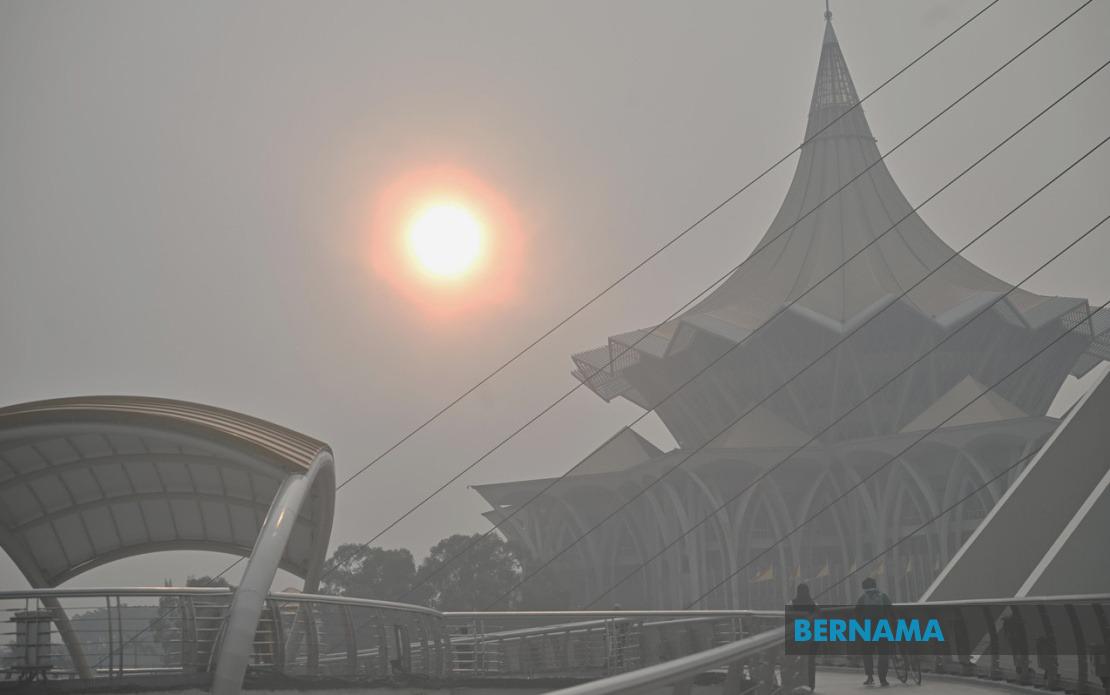
The education system in Sarawak ground to a temporary halt on August 20 as the state Education Department shuttered 591 schools in response to an unrelenting heatwave and drought conditions sweeping across multiple administrative zones. The two-day closure, affecting 197,323 students across primary and secondary institutions, underscores growing concerns about extreme weather patterns in Malaysian Borneo and their cascading effects on public services and community welfare.
The Sarawak Education Department's decision to close schools encompassed 509 primary institutions housing 107,590 pupils and 82 secondary schools with 89,733 students. These facilities operate under ten District Education Offices spanning a geographically dispersed area that includes urban centres like Kuching and Padawan alongside rural regions such as Lundu, Bau, and Lubok Antu. The simultaneous closure of educational facilities across such a wide region reflects the severity and spatial extent of the meteorological crisis confronting the state.
The affected districts tell a story of environmental stress permeating Sarawak's landscape. Kuching, Padawan, Bau, Lundu, Samarahan, Simunjan, Serian, Sri Aman, Lubok Antu and Betong collectively represent a significant population centre and economic hub for the state. When schools across these diverse zones require closure, it signals that authorities view the conditions as posing genuine risks to student health and safety rather than representing an isolated local disruption.
Beyond the immediate inconvenience to families and educators, the prolonged dry spell carries implications that extend far deeper into Sarawak's ecological and economic fabric. The state's Disaster Management Committee flagged critical concerns about forest and peatland fire risks, threats that carry regional significance given Sarawak's vast forest reserves and their role in carbon storage and biodiversity conservation. Peatland fires in particular pose unique dangers, burning underground and releasing substantial carbon emissions while proving difficult to extinguish.
Air quality deterioration provided the most visible manifestation of the crisis. As of early afternoon on August 20, nine locations across Sarawak recorded unhealthy Air Pollutant Index readings, a metric that directly reflects respiratory health risks for vulnerable populations including children, elderly citizens, and those with pre-existing pulmonary conditions. Kuching registered 191 on the API scale, Serian 195, Sri Aman 178, and Lundu 180, all exceeding thresholds considered safe for outdoor activities. Such readings justify school closures, as pupils and staff would face genuine health hazards from extended exposure during physical education, recreational activities, or outdoor transit.
The water supply dimension adds another layer of urgency to Sarawak's situation. Prolonged drought threatens to diminish water availability across the state, a concern that reverberates through domestic consumption, agricultural production, and industrial operations. For an equatorial region accustomed to abundant rainfall, such supply pressures signal climatic departure from historical norms and raise questions about infrastructure resilience and long-term resource management strategies.
Sarawak's Disaster Management Committee adopted a posture of heightened vigilance, establishing monitoring protocols across 18 high-risk locations. This systematic surveillance approach reflects lessons learned from previous fire seasons and represents an attempt to move beyond reactive crisis response toward predictive risk management. Strengthening preparedness measures and implementing prevention strategies in vulnerable zones demonstrates recognition that climate variability and extreme weather events may become recurring phenomena rather than rare aberrations.
The closure also carries economic ripples beyond the education sector. Parents working in formal employment face childcare disruptions and potential productivity losses. Small businesses catering to school populations experience revenue interruptions. The broader supply chain supporting educational activities—from transportation operators to food vendors—absorbs unexpected shocks during periods of institutional closure.
From a regional perspective, Sarawak's experience exemplifies climate adaptation challenges facing Southeast Asian economies. The state sits at the frontlines of environmental change, where tropical ecosystems already operating near thermal limits face incremental warming stress. Malaysia's federal government and Sarawak's state administration must grapple with questions about whether emergency closures represent temporary anomalies or emerging baseline conditions requiring permanent adjustments to institutional calendars, building infrastructure, and community preparedness frameworks.
The incident illustrates how environmental pressures create cascading impacts across multiple governance domains simultaneously. A meteorological crisis triggers public health concerns, which necessitate educational system disruptions, which generate economic consequences and demand interagency coordination among education, disaster management, environmental, and public health authorities. Such complex interdependencies underscore why climate resilience cannot remain the exclusive preoccupation of environmental ministries but must saturate planning across all government functions.
Looking forward, Sarawak's experience may foreshadow patterns requiring systematic institutional adaptation. As extreme weather events become more frequent or prolonged, policymakers face difficult choices about operational continuity versus precautionary closure protocols. Building public understanding of these tradeoffs, investing in predictive early warning systems, and developing comprehensive climate adaptation strategies will determine whether such disruptions become manageable interruptions or chronic destabilisers of essential services.
The temporary closure ultimately represents a pragmatic administrative response to genuine environmental hazards, but it simultaneously signals deeper questions about environmental sustainability, public health resilience, and Malaysia's preparedness for a future where extreme weather increasingly constrains normal economic and social functioning across the nation's regions.

