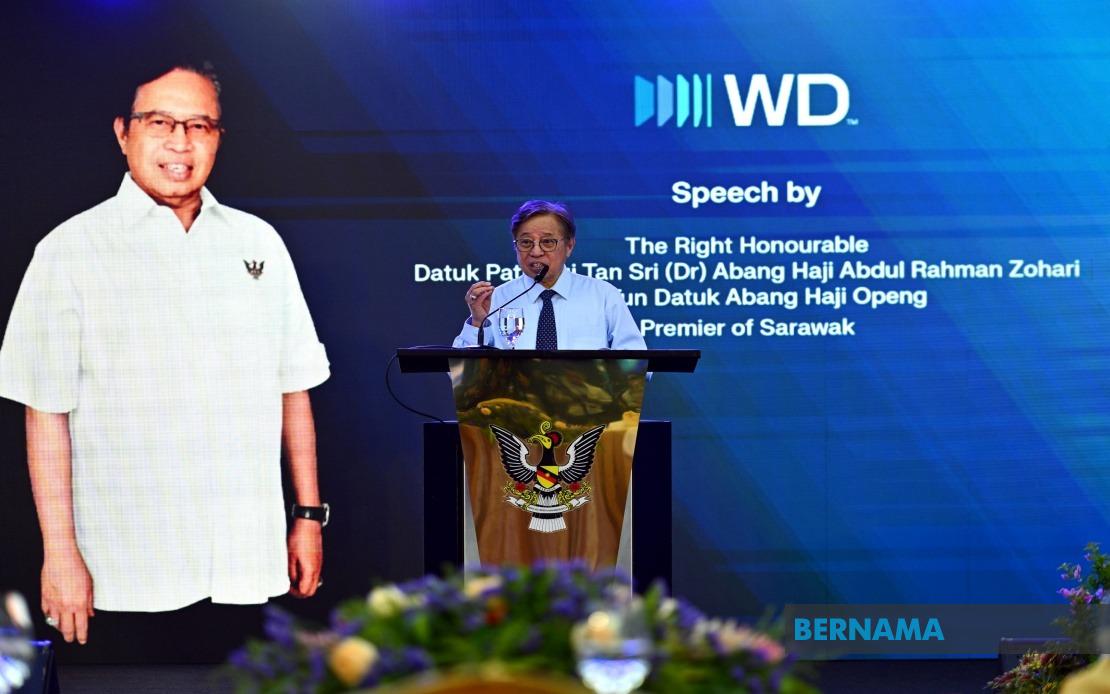
Sarawak's leadership has adopted a pragmatic stance on the prospect of increased federal funding, signalling receptiveness to higher special grant allocations while acknowledging the constraints facing Putrajaya's fiscal position. Speaking in Kuching on July 2, Premier Tan Sri Abang Johari Tun Openg conveyed that any boost to the special grant under Article 112D of the Federal Constitution would be welcomed by the state, contingent on the Federal Government's ability to afford such an increase without compromising its broader economic management.
The Premier's measured comments underscore a delicate balance in centre-state relations, particularly given Sarawak's significant bargaining power within Malaysia's federal structure and the state's strategic importance to national economic development. Abang Johari framed the matter as one requiring mutual understanding, stating that while Sarawak would naturally welcome additional funding, the state grasps the fiscal realities confronting the national administration. This tone contrasts sharply with more aggressive positioning sometimes adopted by state governments seeking expanded allocations from the centre, suggesting a collaborative approach to resolving constitutional entitlements.
Preliminary discussions between Sarawak and the Federal Government have touched upon the special grant question, though without detailed technical negotiations at this stage. During a recent meeting with Prime Minister Datuk Seri Anwar Ibrahim in Bintulu, the topic arose in general conversation rather than as a formal agenda item demanding comprehensive examination. This suggests that while both parties recognise the relevance of the issue, neither has moved aggressively to force rapid resolution, indicating potential room for negotiated settlement within a reasonable timeframe.
Prime Minister Anwar has publicly committed to advancing the special grant negotiations, framing these discussions explicitly within the broader context of the Malaysia Agreement 1963 (MA63). In parliamentary remarks delivered on June 30 during Question Time at the Dewan Rakyat, the Premier confirmed that negotiations remained active and would proceed consistently with the spirit of MA63. For Malaysian observers, this framing carries substantial weight, as the 1963 Agreement established the constitutional and political foundation for Sarawak's integration into Malaysia and continues to define the state's relationship with the federal centre across numerous policy domains.
The MA63 context adds historical and constitutional layers to what might otherwise appear as a straightforward fiscal negotiation. The agreement has long featured prominently in Sarawak political discourse, with successive state governments invoking it as a basis for advancing territorial autonomy and securing enhanced resource allocations. Anwar's explicit reference to honouring the MA63 spirit suggests recognition at the highest federal level that Sarawak's claims to expanded special grant funding possess legitimate constitutional grounding deserving serious engagement rather than dismissal as mere factional demands.
Beyond the immediate matter of grant allocation, Abang Johari seized the opportunity to articulate a compelling long-term economic vision for Sarawak centred on high-technology sectors and advanced manufacturing. At the New Horizon for Western Digital (WD) Sarawak programme, the Premier highlighted the state's enduring partnership with the technology multinational, a relationship spanning approximately three decades and focused increasingly on sophisticated data storage solutions using glass substrate technology. This industrial trajectory positions Sarawak advantageously within Asia's emerging digital economy and reflects strategic thinking about the state's post-oil economic future.
The Premier's observation that data will eventually supersede oil as the primary valuable commodity deserves serious consideration from policymakers across Southeast Asia grappling with economic diversification challenges. Sarawak, long dependent on hydrocarbon extraction, has begun repositioning itself within knowledge-intensive industries, a transition that demands substantial capital investment, technical expertise, and supportive infrastructure development. The state's advantages in renewable energy generation and abundant freshwater supply represent genuine competitive assets in energy-intensive data centre operations, creating authentic economic logic for technology sector expansion rather than mere aspirational rhetoric.
Western Digital's continued confidence in Sarawak as a manufacturing and innovation hub reflects satisfaction with the operating environment and strategic partnership quality. The company's emphasis on glass substrate technology as next-generation recording media capable of dramatically expanding data storage density aligns with global trajectory toward artificial intelligence infrastructure proliferation. For Sarawak, hosting such advanced manufacturing operations generates skilled employment, attracts complementary industrial investment, and builds technological capacity within the regional workforce.
The convergence of improved special grant positioning and accelerating high-technology development underscores Sarawak's dual strategy for enhancing fiscal autonomy. Increased federal grant allocations would expand the state's discretionary financial resources for public investment and service delivery, while simultaneous progress in technology-driven sectors promises longer-term revenue diversification and reduced reliance on federal transfers. This dual approach reflects sophisticated political economy thinking aimed at progressively strengthening Sarawak's financial independence from Putrajaya over successive decades.
From a Southeast Asian perspective, Sarawak's calculated engagement with federal fiscal negotiations and technology sector development carries regional implications. The state's success in negotiating enhanced constitutional allocations while simultaneously building advanced manufacturing capacity could establish precedents influencing centre-state fiscal relationships across the broader region. Malaysian state governments frequently monitor Sarawak's policy achievements and negotiating success, potentially adopting similar strategies in pursuing expanded autonomy and resource allocation.
The timing of these discussions also merits consideration within Malaysia's broader political context. Following recent federal elections and ongoing coalition realignments, the relationship between Putrajaya and state administrations across the peninsula and Borneo remains fluid. Sarawak's measured, non-confrontational approach to the special grant question appears calibrated to maintain constructive working relations with the Prime Minister's administration while advancing legitimate state interests through negotiation rather than confrontation.
For Malaysian investors and observers tracking technological advancement within the country, Sarawak's positioning as a credible hub for data storage innovation and high-technology manufacturing should register as significant. The state's combination of constitutional bargaining power, genuine industrial competitive advantages, and pragmatic political leadership creates conditions for sustained economic expansion beyond traditional resource extraction sectors. The outcome of ongoing special grant negotiations and the trajectory of Western Digital and related technology investments will together determine whether Sarawak successfully executes its strategic vision for post-oil prosperity.

