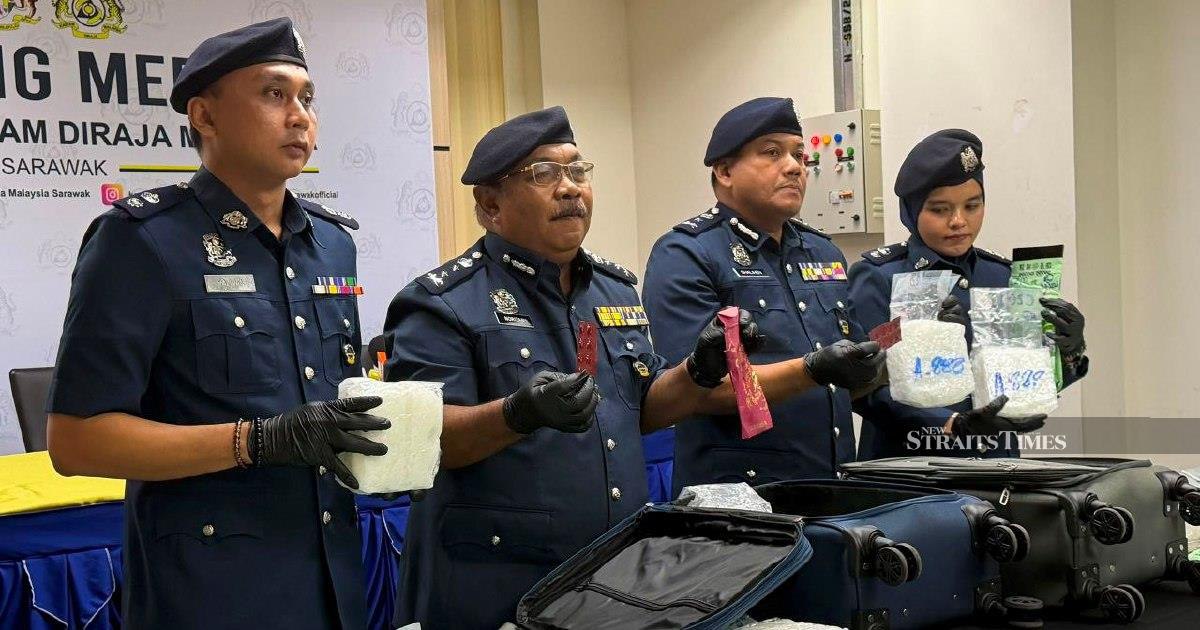
The Sarawak Customs Department successfully disrupted a major narcotics trafficking operation at Kuching International Airport on July 9, preventing the distribution of drugs estimated to be worth RM1.32 million into the region. The interdiction resulted in the arrest of two individuals suspected of orchestrating the smuggling attempt, marking another significant victory in authorities' ongoing efforts to combat drug trafficking through Sarawak's main aviation gateway.
This seizure underscores the persistent vulnerability of international airports across Malaysia and Southeast Asia to sophisticated smuggling operations, despite enhanced screening protocols introduced in recent years. Kuching International Airport, serving as a critical hub for both domestic and international travel in Sarawak, has emerged as a focal point for drug enforcement agencies seeking to intercept contraband before it penetrates deeper into local communities and supply networks.
The Sarawak Customs Department has intensified its operational vigilance across all entry and exit points, particularly following a series of high-profile drug trafficking arrests throughout the state. The successful interception reflects the department's commitment to intelligence-led enforcement and the deployment of trained personnel equipped to identify suspicious patterns in passenger behaviour and luggage movements.
Drug trafficking through Malaysian airports remains a transnational challenge, with organised crime syndicates employing increasingly creative methods to conceal narcotics. These groups often exploit the high volume of daily passenger traffic, relying on the assumption that individual shipments may evade detection amid the operational complexity of modern aviation hubs. The July 9 operation demonstrates that such assumptions are frequently misguided when customs authorities maintain rigorous inspection protocols.
The arrest of two individuals suggests a network that likely extends beyond the airport itself, potentially involving recruitment of couriers, logistics coordinators, and distribution agents across multiple jurisdictions. Customs investigations typically follow the supply chain upstream and downstream to dismantle entire operations rather than simply removing individual shipments from circulation. This approach has proven increasingly effective in disrupting organised trafficking groups operating throughout Southeast Asia.
For Malaysia's enforcement community, the RM1.32 million valuation indicates the substantial criminal profits at stake in regional drug operations. Such financial incentives drive constant innovation in smuggling techniques, from concealment methods integrated into luggage components to the use of multiple low-value shipments designed to bypass cumulative detection thresholds. Sarawak Customs' successful intervention therefore represents more than the seizure of a single consignment; it represents the disruption of a profit opportunity that would have funded further trafficking activities.
The case highlights the critical importance of international cooperation in combating transnational crime. Drugs seized at Sarawak's airports frequently originate from or are destined for markets beyond Malaysia's borders, necessitating coordination between customs agencies, immigration authorities, and international law enforcement partners. Intelligence sharing regarding suspected traffickers, known routes, and evolving smuggling methodologies has become essential to regional security.
Locally, the seizure carries implications for public health and community safety in Sarawak. Drug trafficking directly enables addiction, overdose deaths, and the social disintegration associated with substance abuse. By preventing the distribution of RM1.32 million worth of narcotics, authorities have prevented not only immediate criminal transactions but also the cascade of health and social problems that would have followed widespread circulation through Sarawak's population centres.
The two arrested individuals will face investigation under relevant provisions of Malaysia's Dangerous Drugs Act, which carries severe penalties including lengthy imprisonment and, in circumstances involving trafficking quantities, potential capital punishment. The severity of these sentences reflects Parliament's assessment of drug trafficking as among the most serious threats to national security and public welfare, comparable in some cases to terrorism-related offences.
Looking forward, the Sarawak Customs Department's continued success will depend on sustained investment in training, technology, and intelligence infrastructure. Modern drug enforcement requires not only vigilant frontline officers but also forensic specialists, intelligence analysts, and investigators capable of building cases that withstand courtroom scrutiny and lead to convictions. The July 9 operation appears to represent the consolidation of these capabilities into an effective enforcement response.
The interception also serves as a reminder that airports across Malaysia remain attractive targets for international trafficking organisations because of their connectivity to global supply chains and diverse passenger demographics. Sarawak's geographic position along major transnational drug routes between source countries and consumer markets in East Asia amplifies the operational challenges facing customs authorities, who must maintain vigilance across 24-hour operations with limited resources.
As Southeast Asian countries continue grappling with rising drug trafficking pressures, successful cases such as the July 9 seizure provide both operational lessons and public reassurance that determined law enforcement response can disrupt even well-organised smuggling networks. The Sarawak Customs Department's achievement will likely inform enforcement strategies across other Malaysian states and contribute to the regional dialogue on effective counter-trafficking practices.

