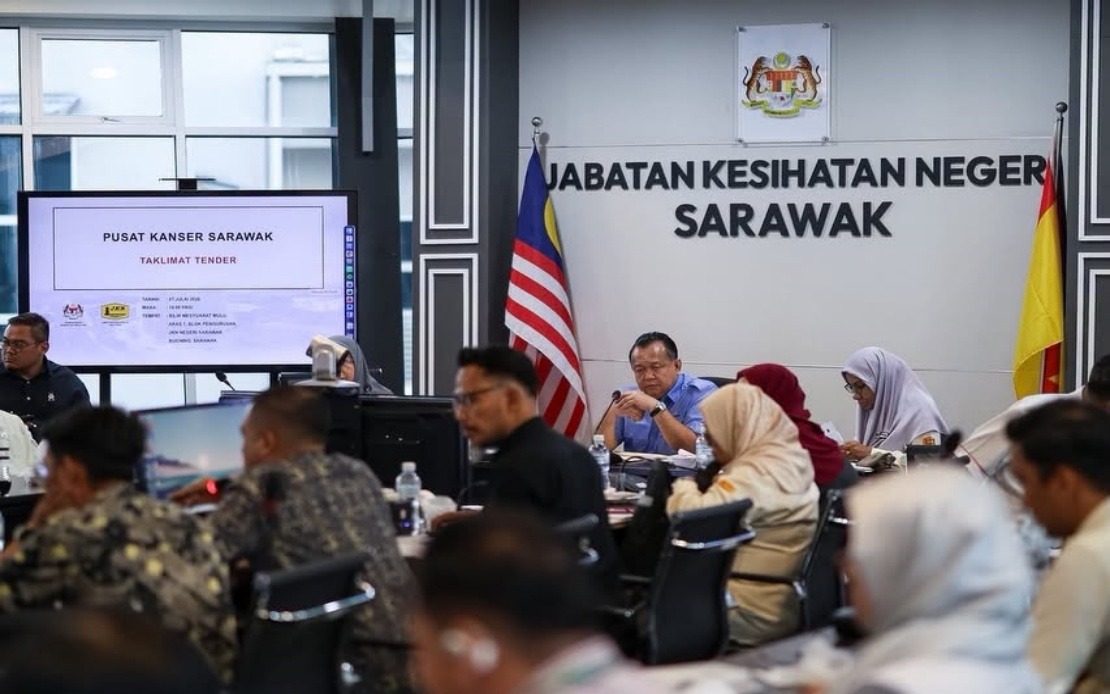
Construction on the Sarawak Cancer Centre is set to launch in early January 2027 once the relevant contractor receives formal notification of their successful bid, according to Works Minister Datuk Seri Alexander Nanta Linggi. The announcement comes as the project progresses through its tender phase, having already attracted significant industry interest among major construction firms competing for what will be one of East Malaysia's most significant healthcare infrastructure undertakings.
The procurement process is currently in the design-and-build stage, where competitive tension among qualified bidders is expected to drive innovation and cost-efficiency in proposals. A total of ten contractors have advanced past the initial screening process and participated in a comprehensive site briefing last week, during which they received detailed documentation outlining the project's technical and operational requirements. This structured approach ensures that only serious contenders with proven capability proceed to the proposal submission phase.
The competitive timeframe remains tight but achievable. Nanta indicated that the pool of qualified contractors will have approximately three months to develop their technical and financial proposals, incorporating both design innovations and construction methodologies. The evaluation committee will then assess submissions against established criteria before making a final determination. This compressed schedule reflects the Sarawak government's commitment to advancing the facility without unnecessary delays.
Once a contractor is selected and formally notified via the Letter of Acceptance in January 2027, the winning firm will receive a 60-month implementation period to complete both design refinement and full construction activities. This five-year timeframe is considered standard for a facility of this complexity and scale. Following practical completion, a two-year Defects Liability Period will ensure that any construction deficiencies are rectified at no additional cost to the government, protecting the public investment.
The health infrastructure itself represents an ambitious undertaking for Sarawak's medical landscape. Positioned on a 10.9-hectare site adjacent to the existing Sarawak Heart Centre in Kota Samarahan, the facility will accommodate 310 inpatient beds alongside comprehensive outpatient treatment capabilities. This dual-focus design enables the centre to serve both urgent oncology cases requiring admission and chronic cancer patients attending regular consultations, chemotherapy sessions, and follow-up appointments.
Design specifications must meet stringent standards established by Malaysia's Health Ministry, ensuring consistency with national healthcare infrastructure protocols and clinical best practices. Simultaneously, the architectural approach incorporates contemporary medical facility design principles, prioritizing patient comfort, infection control, workflow efficiency, and staff working conditions. These dual imperatives sometimes create design tensions that skilled architects must resolve creatively.
Financial arrangements reflect a structured cost-sharing approach between state and federal budgets. The Sarawak government has allocated RM1 billion from its development budget to fund the entire project, which is anticipated to exceed this baseline figure based on preliminary cost estimates. However, this initial allocation will be reimbursed through an agreed mechanism with the federal government, effectively transforming the state's outlay into a federal-state partnership arrangement. This funding structure demonstrates political commitment while managing state fiscal constraints.
The broader significance of this facility extends beyond Sarawak's borders. Currently, cancer patients from Sarawak and surrounding areas often travel to peninsular Malaysia for specialized treatment, incurring substantial costs and enduring family disruption. A comprehensive state-level cancer centre would retain medical spending within the region, reduce patient travel burden, and position Sarawak as a regional medical hub attracting patients from Brunei and Indonesian Kalimantan. The facility represents strategic healthcare decentralization.
Oncology services demand specialized infrastructure that many Malaysian public hospitals cannot adequately provide. Radiotherapy equipment, linear accelerators, imaging facilities, and specialized operating theatres require significant capital investment and expert staffing. By concentrating these resources in a dedicated facility, Sarawak can achieve economies of scale and attract specialist medical professionals through competitive facilities and institutional prestige. This represents more efficient allocation of scarce oncology expertise than dispersing services across multiple smaller hospitals.
The project timeline through 2032 aligns with broader infrastructure development patterns in Sarawak, where multiple major hospital and healthcare facility projects are simultaneously under development or planned. This cluster approach enables workforce development, supply chain optimization, and institutional learning across projects. However, it also creates competition for skilled construction labour and specialized contractors, which may influence competitive dynamics during tender evaluation.
Implementation risks remain manageable but present. Lengthy construction projects face potential cost escalation through material price inflation and supply chain disruptions, as evidenced during recent post-pandemic periods. The contractor will bear significant cost and schedule risk, incentivizing efficient management. However, any major unforeseen site conditions or regulatory changes could impact timelines. Nanta's public timeline commitment suggests confidence in feasibility, though these public declarations sometimes pressure project teams to meet aggressive deadlines.
The cancer centre's opening in 2032 will require concurrent development of supporting services—pathology laboratories, pharmaceutical supply chains, specialist recruitment, and training programmes. These elements cannot simply activate on opening day but require years of preparation. The state health department is presumably developing workforce and operational plans in parallel with construction, though these preparatory activities remain largely invisible to public discussion focused on physical infrastructure.
Ultimately, this facility represents Malaysia's commitment to treating cancer as a public health priority rather than leaving advanced oncology care exclusively to private practitioners. For Sarawak specifically, it signals determination to reduce inter-state medical migration and position the state as a serious healthcare destination within Southeast Asia's increasingly competitive medical tourism landscape.

