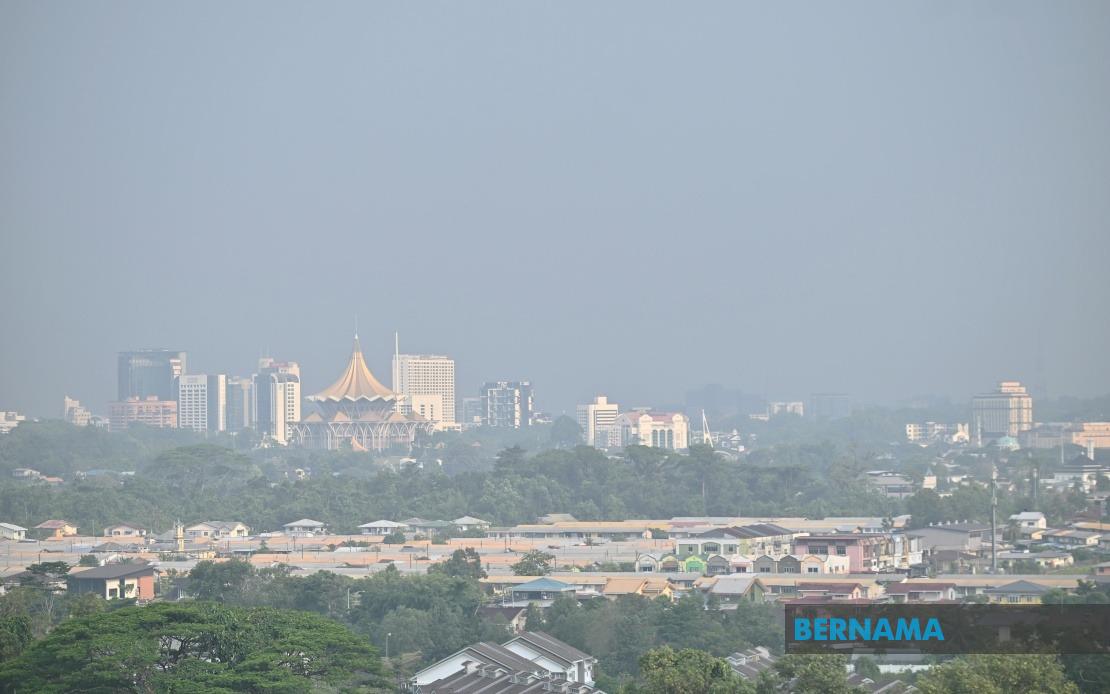
The Malaysian Meteorological Department released an alert on Wednesday warning that Sarawak and neighbouring areas of Borneo will experience an extended period of elevated temperatures and minimal rainfall through August 20, with significant implications for air quality across the region. This weather pattern, driven by persistent southerly winds combined with a substantial number of active hotspots throughout Borneo, creates conditions ripe for the development and persistence of haze that threatens visibility and public health across the affected territories.
By mid-morning on August 14, monitoring data from the Malaysian Air Pollutant Index Management System revealed that ten locations nationwide had already recorded unhealthy Air Pollutant Index readings, demonstrating the immediate impact of these meteorological conditions. The concentration of problematic air quality measurements in Sarawak underscores the particular vulnerability of that state to haze formation during periods of stagnant atmospheric conditions and limited wind circulation capable of dispersing pollutants.
The southern portions of Sarawak face the most acute air quality challenges, where a combination of geographical factors and wind patterns converge to trap airborne particles and reduce visibility to concerning levels. This geographical susceptibility, compounded by the persistence of hotspots throughout Borneo—whether from agricultural burning, peatland degradation, or other sources—creates a compounding environmental stress that extends beyond mere inconvenience to affect respiratory health and economic activity throughout the affected region.
For Malaysian readers, the implications of this extended heat spell deserve careful consideration. Sarawak's exposure to prolonged haze carries ripple effects across Malaysia's eastern regions and potentially into neighbouring Brunei and Indonesian territories, demonstrating how transboundary air pollution transcends political boundaries. The timing through mid-August also coincides with school holidays and increased tourism activity, potentially affecting travel plans and outdoor economic activities dependent on clear visibility and favourable atmospheric conditions.
The meteorological drivers identified by MetMalaysia—southerly winds and abundant hotspots—represent factors that require sustained monitoring and potentially preventative action. While weather patterns remain largely beyond direct human control, the hotspot component contains an anthropogenic element that warrants investigation into their origins and extent. Understanding whether these hotspots derive from legitimate land-clearing activities, agricultural practices, or uncontrolled burning provides crucial information for policymakers considering intervention strategies.
Simultaneously, MetMalaysia issued separate weather warnings for northwestern Peninsular Malaysia, cautioning residents of thunderstorm and heavy rain potential throughout August 14. This contrasting weather pattern—severe dryness in Borneo juxtaposed against heavy precipitation threats in Perlis, Kedah, Penang, and the Federal Territory of Kuala Lumpur—illustrates the complex spatial variation in Malaysia's weather systems during this season. The warning extends to multiple districts within Perak including Kerian, Selama, Larut Matang, Manjung and Bagan Datuk, alongside several Selangor constituencies including Sabak Bernam, Kuala Selangor, Klang, Petaling, Gombak and Hulu Selangor.
This geographical divergence reflects deeper patterns in seasonal meteorology across Malaysia, where the positioning of weather systems can create dramatically different conditions across distances that span merely hundreds of kilometres. The persistence of these disparate conditions simultaneously across Malaysia's territory underscores the importance of regional weather monitoring and localized preparedness planning rather than assuming uniform national conditions.
For residents in the affected regions, MetMalaysia emphasizes the importance of maintaining awareness of evolving weather conditions through multiple information channels. The department maintains a dedicated website, active social media presence, and the myCuaca mobile application—digital infrastructure designed to deliver timely weather updates and actionable warnings directly to the public. This multi-platform approach acknowledges that modern Malaysian society accesses information through diverse technological channels, and redundancy ensures that critical weather information reaches populations regardless of individual communication preferences.
The extended heat wave forecast through August 20 suggests that residents of Sarawak and neighbouring Borneo regions should prepare for sustained periods of poor air quality, potentially necessitating increased use of protective equipment for vulnerable populations including children, elderly individuals, and those with respiratory conditions. Businesses and governmental agencies depending on clear visibility—aviation, shipping, and outdoor commercial activities—face sustained operational challenges if the projected conditions materialize as forecast.
Looking forward, the conclusion of this heat spell beyond August 20 remains uncertain, and residents should monitor updated forecasts regularly as the period approaches. The interplay between wind patterns and atmospheric stability will ultimately determine whether these conditions persist, intensify, or gradually abate. Malaysian authorities and neighbouring jurisdictions continue assessing the situation, particularly given the transboundary nature of air pollution and the regional implications of sustained haze formation.

