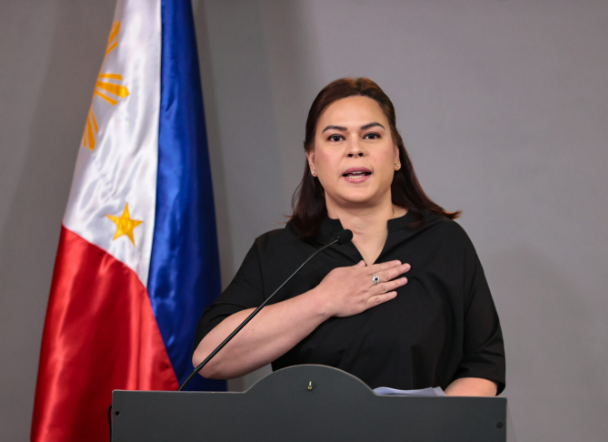
Vice President Sara Duterte seized upon a major gathering of Iglesia ni Cristo members along Epifanio de los Santos Avenue in Manila on Tuesday to articulate what she framed as mounting public disaffection with the administration of President Ferdinand Marcos Jr. Speaking to media after the religious organization's rally, Duterte characterised the thousands who assembled on the iconic thoroughfare as embodying a "growing sentiment" she has repeatedly voiced since the beginning of 2024, one that points to systemic governance failures under the current national leadership.
The timing and framing of Duterte's remarks proved strategically significant. The INC had convened its members ostensibly to protest what the religious sect termed "selective justice" and "distortion of law," following the administration's move to file a plunder complaint against Senator Rodante Marcoleta, an INC member and administration ally. Rather than allow the rally to remain solely about the senator's legal troubles, Duterte broadened its narrative scope, positioning the gathering as a referendum on Marcos Jr's entire presidency. This rhetorical maneuver enabled her to channel discontent across multiple constituencies—not merely INC adherents aggrieved over Marcoleta's predicament, but ordinary Filipinos wrestling with economic distress.
At the heart of Duterte's indictment lies the administration's alleged disconnection from the daily struggles of ordinary citizens. She pointedly accused Marcos Jr of remaining "detached" from the lived experience of millions grappling with spiralling consumer prices, precarious employment prospects, and an ever-expanding cost-of-living burden. The vice president's framing here resonates with Southeast Asian political dynamics broadly, where economic grievance frequently supersedes other voter concerns. In Malaysia, comparable critiques of administrative responsiveness to inflation and wage stagnation have periodically shaped electoral outcomes; Duterte appears to be mining similar emotional and material terrain.
Beyond economic performance, Duterte escalated her attack to encompass what she portrayed as an increasingly authoritarian political atmosphere. She alleged that the administration responds to criticism with intimidation rather than substantive policy adjustments, particularly targeting those who scrutinize allegations of Malacañang corruption, voice dissent regarding presidential performance, or raise concerns directly about the president himself. This framing redefines the political struggle from one of factional competition into a civilisational clash between democratic openness and authoritarian closure, an argument with considerable resonance in Philippine political culture and across the region where democratic backsliding remains a persistent concern.
Duterte's rhetoric on suppression of dissent warrants careful examination. She asserted that the administration's approach to critics raises fundamental questions about free expression, democratic accountability, and the space for legitimate political opposition. By connecting Marcos Jr's alleged intolerance of dissent to broader institutional decay, Duterte positioned herself as a guardian of democratic norms even as she herself faces impeachment proceedings initiated by the House of Representatives. This apparent contradiction—attacking authoritarian tendencies while facing removal from office—reflects the fractious and sometimes incoherent nature of contemporary Philippine elite politics.
The vice president's impeachment trial, scheduled to commence on July 6 before the Senate Impeachment Court, provides essential context for understanding her escalating public statements. The House levelled multiple charges against her, encompassing alleged threats directed at Marcos Jr and his wife, unexplained accumulation of wealth, and purported misappropriation of confidential funds. Her statements condemning the administration's treatment of dissent and critics thus occur within a distinctly self-interested political context. Whether her critique of selective justice gains traction with the public may substantially hinge upon perceptions of her own legal jeopardy and the fairness of proceedings against her.
Duterte fundamentally reframed the debate surrounding her situation and the INC rally by insisting that the underlying issue transcends conventional partisan competition. She asserted that the matter concerns "the honor of the State and the future of a people," language that elevates what might otherwise be dismissed as factional squabbling into a matter of national consequence. This rhetorical move attempts to shift focus from her personal predicament toward systemic dysfunction, asking voters to judge whether their government prioritises accountability and justice or merely suppresses inconvenient voices.
The economic dimensions of her critique align with observable conditions in the Philippines. Inflation has indeed pressured household budgets across income strata, unemployment and underemployment remain persistent challenges, and the purchasing power of ordinary wage-earners has contracted in real terms. Duterte's emphasis on these tangible hardships provides substantive grounds for her broader assault on administrative competence, distinguishing her critique from purely personalised attacks. For Malaysian observers accustomed to similar economic narratives in domestic political discourse, Duterte's approach demonstrates how material grievances translate into political mobilisation across the region.
The Marcos Jr administration faces a conundrum familiar to governments across Southeast Asia: how to balance accountability and rule of law against accusations of weaponising those mechanisms for political purposes. Duterte's intervention in the public debate frames any government response as either vindication of her claims or confirmation of her allegations, depending on political perspective. The administration's approach to both the INC rally and Duterte's escalating rhetoric will substantially influence whether her framing gains broader public acceptance or remains confined to sympathetic constituencies.
Looking ahead to the Senate trial and beyond, Duterte has signalled that she intends to prosecute her defence in the court of public opinion as much as within formal legal proceedings. Her invocation of democratic principles, free expression, and the suffering of ordinary citizens creates a narrative framework within which her own legal troubles become secondary to supposed larger questions about governance and state legitimacy. Whether this strategy succeeds in reshaping political debate or merely compounds her isolation within elite circles remains to be determined as events unfold in the coming weeks and months.

