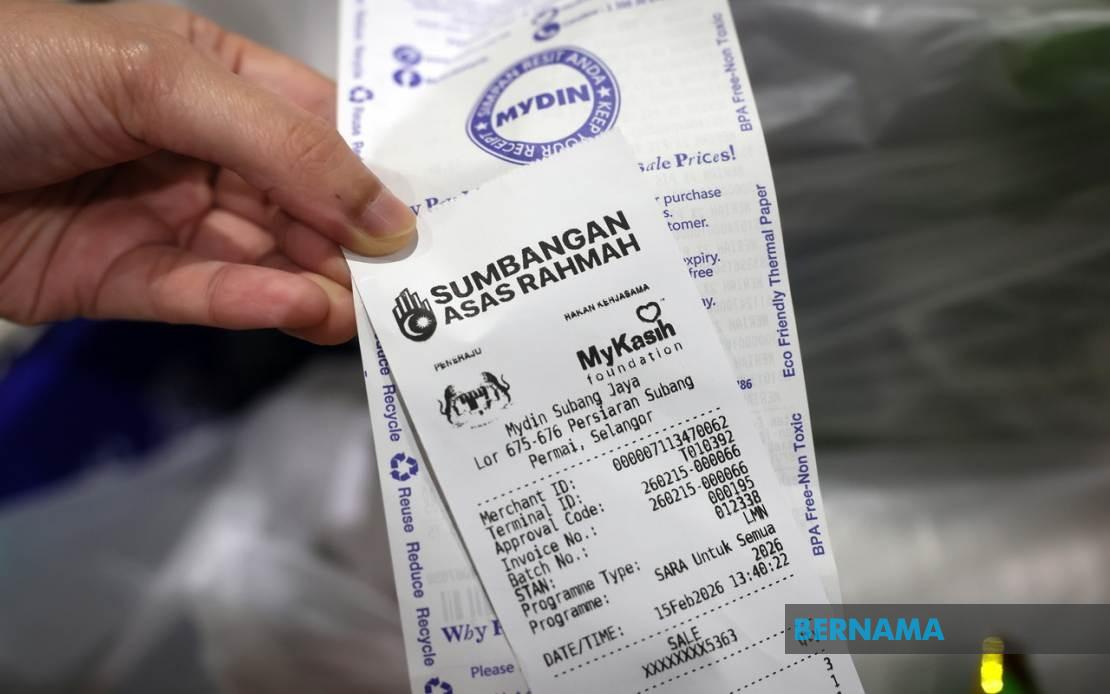
Malaysia's flagship cashless assistance programme, Sumbangan Asas Rahmah (SARA), has demonstrated exceptional reach and effectiveness, with official figures revealing that nearly nine million monthly Sumbangan Tunai Rahmah (STR) recipients are utilising the scheme at a 99 per cent rate. The Ministry of Finance disclosed that spending through SARA has accumulated to RM3.45 billion so far this year, underscoring the programme's role as a significant injection into the local economy and a tangible tool for alleviating cost-of-living pressures on lower and middle-income households.
The broader SARA Untuk Semua initiative has reached approximately 22 million Malaysians, representing 87 per cent of all eligible recipients, who have collectively generated over RM1.77 billion in local market transactions. This expansion of the programme's scope demonstrates the government's commitment to widening the social safety net beyond the core STR population, reflecting acknowledgement of how inflation and rising essential costs have touched a larger cross-section of Malaysian society than traditional poverty metrics might suggest. The emphasis on tracking spending patterns reveals a strategic shift toward evidence-based welfare delivery, where performance metrics serve not merely as reporting tools but as guides for future policy refinement.
The Ministry of Finance articulated in parliamentary response to Datuk Aminolhuda Hassan (PH-Sri Gading) that recipient spending behaviour functions as a crucial performance indicator of how effectively both STR and SARA are delivering relief to target demographics. High utilisation rates signal that recipients perceive the assistance as genuinely useful and aligned with their actual expenditure needs, rather than viewing the aid as a token gesture or bureaucratic exercise. The government further highlighted that the multiplier effects flowing from beneficiary spending represent an indirect economic stimulus, as aid recipients typically spend their entitlements immediately within their local communities, supporting small traders, merchants, and neighbourhood retailers who form the backbone of Malaysia's retail economy.
SARA operates as a distinctly structured intervention in Malaysia's welfare architecture. Rather than providing cash that might be diverted to non-essential purposes, the scheme credits recipients' MyKad with vouchers redeemable exclusively at registered SARA Rakan Niaga outlets for 15 designated essential categories. These encompass basic food staples, personal hygiene products, household cleaning supplies, and medications—items identified through needs assessment as truly fundamental to dignified living. This targeted approach enables the government to maintain real-time visibility into spending patterns, verify that assistance reaches intended recipients, and ensure funds flow toward legitimate necessities rather than potentially harmful or luxury consumption.
The financial commitment to these programmes has intensified markedly as inflation pressures persist across Malaysia. The Ministry disclosed that STR and SARA allocations have expanded to RM15 billion in 2026, up substantially from RM10 billion in 2024, signalling a 50 per cent increase over two years. This escalating investment reflects policymakers' recognition that traditional poverty lines and income thresholds may inadequately capture the stretched circumstances facing millions of Malaysians whose nominal incomes have not kept pace with surging food, utility, and housing costs. The trajectory suggests government understanding that welfare programmes require dynamic resizing to remain responsive to economic realities.
For Malaysian policymakers and economists, the SARA programme's high utilisation and substantial transaction volumes offer both validation and framework. The 99 per cent uptake rate among STR recipients demonstrates that when welfare schemes are designed with genuine attention to beneficiaries' actual needs and delivered through accessible, trusted mechanisms, participation becomes nearly universal. This contrasts starkly with some historical Malaysian initiatives that struggled with awareness gaps or administrative friction. The generation of RM1.77 billion through SARA Untuk Semua additionally indicates that targeted welfare need not be narrowly means-tested or economically blunt; rather, inclusive approaches that reach broader segments of the population can still maintain fiscal sustainability while amplifying positive spillovers through the local economy.
The programme's structure also addresses a persistent tension in welfare policy: maintaining dignity while ensuring accountability. By anchoring assistance to MyKad—Malaysia's universal identity document—SARA eliminates the stigma and logistical burdens associated with physical vouchers or card-based schemes that visibly mark recipients. Simultaneously, the electronic system affords government unprecedented granularity in monitoring programme effectiveness, identifying potential implementation gaps, and preventing fraud or misuse. This technological integration reflects evolution in how developing and middle-income nations approach social protection in the digital era.
Regional peers and international development observers will likely scrutinise Malaysia's SARA experience as a case study in scalable, technology-enabled welfare delivery. As inflation affects populations across Southeast Asia, governments from Thailand to Indonesia face similar pressures to expand or redesign social protection mechanisms. Malaysia's demonstration that a cashless, category-restricted scheme can achieve 99 per cent utilisation suggests that beneficiary acceptance does not require unconditional cash transfers, and that well-designed targeting mechanisms can enhance rather than undermine programme uptake. The emphasis on local economic multiplier effects also resonates with development economics literature highlighting how strategic welfare spending can simultaneously address poverty and stimulate demand for domestic production.
The Ministry of Finance's commitment to ongoing monitoring and adjustment acknowledges that cost-of-living challenges remain fluid and potentially worsening. The escalation from RM10 billion to RM15 billion in allocations reflects not merely inflation adjustment but deliberate expansion of the recipient pool and deepening of support levels. This forward-looking posture suggests the government perceives current pressures as persistent rather than temporary, warranting structural recalibration of the welfare state rather than episodic crisis interventions. For households already enrolled in STR and SARA, the growing budgetary commitment provides some assurance that the safety net will not abruptly contract if economic conditions deteriorate further.
Moving forward, critical questions emerge regarding programme sustainability, optimal coverage boundaries, and integration with complementary interventions. At RM15 billion annually by 2026, SARA and STR will constitute a material claim on the federal budget, requiring careful balance against other spending priorities and revenue generation capacity. The achievement of high utilisation rates and substantial transaction volumes demonstrates technical success and programme design quality, yet policymakers must evaluate whether current allocation levels remain economically sustainable across economic cycles, or whether ceiling effects will eventually emerge as inflation expectations stabilise. The focus on tracking spending patterns and programme effectiveness creates foundation for iterative refinement, ensuring that Malaysia's welfare investments continue generating maximum impact for vulnerable populations amid persistent cost-of-living pressures.

