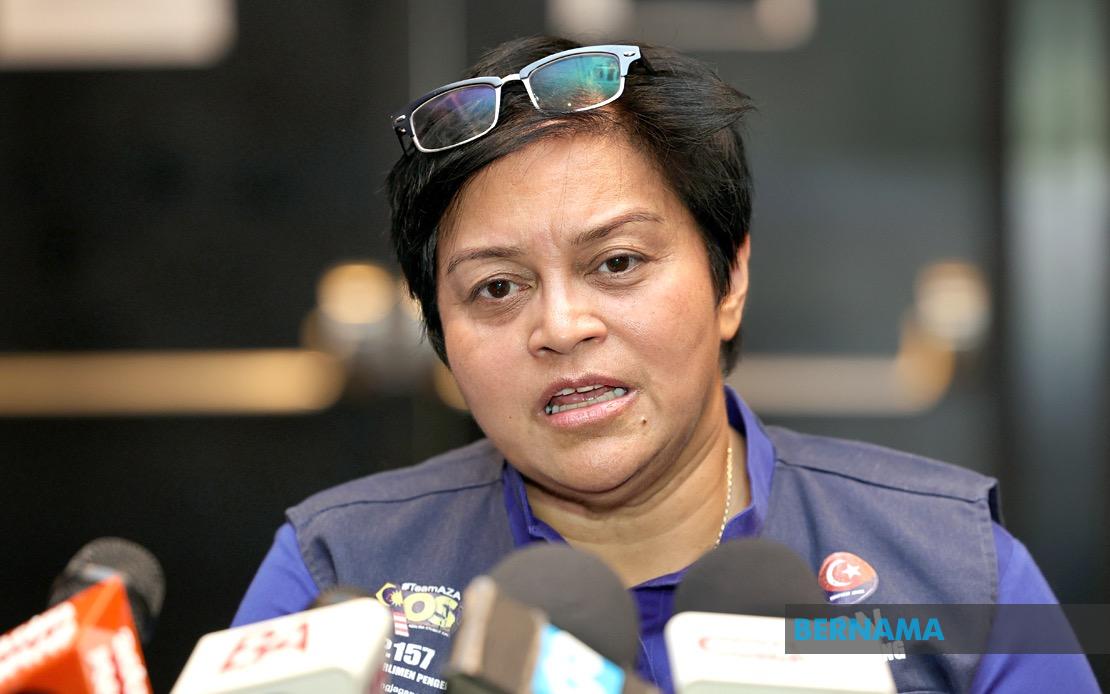
In a forceful intervention into Negeri Sembilan's ongoing state election campaign, UMNO Information Chief Datuk Seri Azalina Othman Said has taken aim at statements made by Kedah Menteri Besar Datuk Seri Muhammad Sanusi Mohd Nor, warning that politically charged commentary about national identity demands careful scrutiny and restraint. Speaking in Seremban on July 25, Azalina specifically objected to Sanusi's framing that "the Chinese have China, the Indians have India, the Cambodians have Cambodia, and the Malays only have Malaysia," contending that such language carries troubling implications for the nation's multiethnic fabric and constitutional order.
The crux of Azalina's concern centres on what she characterises as a misrepresentation of citizenship and belonging. By invoking alternative homelands for Malaysian citizens of non-Malay ethnicity, the statement risks reinforcing a false dichotomy that casts certain groups as perpetual outsiders or temporary residents rather than authentic stakeholders in the nation. This distinction matters profoundly in Malaysian political discourse, where questions of identity, citizenship and constitutional rights remain deeply contested terrain. Azalina's intervention reflects growing sensitivity within UMNO to rhetoric that, however well-intentioned, may alienate the substantial portions of the electorate whose families have been woven into Malaysia's social and economic fabric for generations.
The constitutional dimension of Azalina's rebuttal deserves particular attention, especially for those monitoring Malaysia's evolving political norms. She emphasised that while the Federal Constitution explicitly recognises Islam's position, the institution of the Malay Rulers, and the special rights of Malays and Bumiputera communities, it simultaneously enshrines protections and guarantees for all citizens irrespective of ancestry. This dual constitutional architecture, established at independence and refined through decades of jurisprudence, forms the bedrock upon which Malaysia's plural society rests. Azalina's invocation of these provisions suggests an attempt to recalibrate political messaging around constitutionally grounded principles rather than ethno-nationalist sentiment, a positioning that carries implications beyond immediate electoral calculations.
For millions of Malaysians of Chinese and Indian descent, Azalina stressed, Malaysia represents genuine homeland rather than a way station or provisional arrangement. This assertion responds directly to a vulnerability in the political narrative Sanusi appeared to advance. The suggestion that non-Malay citizens maintain alternative national loyalties has deep historical resonance in Malaysian politics, and periodically resurfaces during election cycles when political actors perceive advantage in mobilising ethnic sentiment. Yet Azalina's framing attempts to reposition this conversation around lived experience and constitutional fact rather than demographic categorisation. Such repositioning may prove consequential as the Negeri Sembilan campaign intensifies and other political actors respond to or amplify Sanusi's rhetoric.
The timing of this clash reveals important dynamics within Malaysia's political landscape. Amid the heated atmosphere surrounding the 16th Negeri Sembilan state election, Azalina called explicitly for political discipline and responsibility. She argued that leaders and campaign machinery must exercise restraint in deploying language around race, religion and the royal institution, particularly when such rhetoric serves the purpose of generating electoral advantage through fear or anger. This intervention simultaneously serves two functions: it positions UMNO as the guardian of moderation and constitutional propriety, while implicitly criticising opposition or rival actors who deploy more divisive messaging.
Azalina's appeal for campaign focus on substantive governance questions reflects an interesting tension within Malaysian politics. While ethnic and religious identity remain undeniably important in electoral competition, there exists a competing narrative—articulated here through emphasis on cost of living, employment, housing, education, healthcare and local development—that appeals to voters' material concerns and aspirations for tangible improvement. By pivoting toward these issues, Azalina suggests that Barisan Nasional offers superior grounds for voter support than fear-based appeals, positioning the coalition as embodying stability, experience and moderation while still respecting the constitutional recognition of Malay-Muslim and Bumiputera status.
The broader implications of this exchange extend beyond Negeri Sembilan's electoral contest. Malaysia's transition to a more democratic, competitive political system following the 2018 general election has unleashed forces that make elite political communication more fluid and less easily contained. Statements by senior figures in one state resonate nationally, particularly when they touch on fundamental questions of belonging and constitutional order. Sanusi's remarks, whether intended provocatively or as straightforward identity politics, triggered institutional response because they articulated themes that other actors fear may become normalised within political discourse. Azalina's intervention represents an attempt to establish boundaries around acceptable political rhetoric, framing certain kinds of identity-based messaging as incompatible with constitutional pluralism.
In the Malaysian context, where stability and social cohesion remain perpetual concerns, such boundary-setting carries weight. The lesson appears to be that while ethnic and religious identity remain legitimate and important elements of political messaging, their deployment must avoid crossing into suggestions that certain citizens occupy a fundamentally different or subordinate position within the national polity. This represents a delicate calibration—one that respects constitutional recognition of particular communities while resisting rhetoric that implies exclusion of others. How effectively such boundaries hold as electoral competition intensifies will likely determine whether Malaysia's plural democracy can manage identity politics without succumbing to polarisation.

