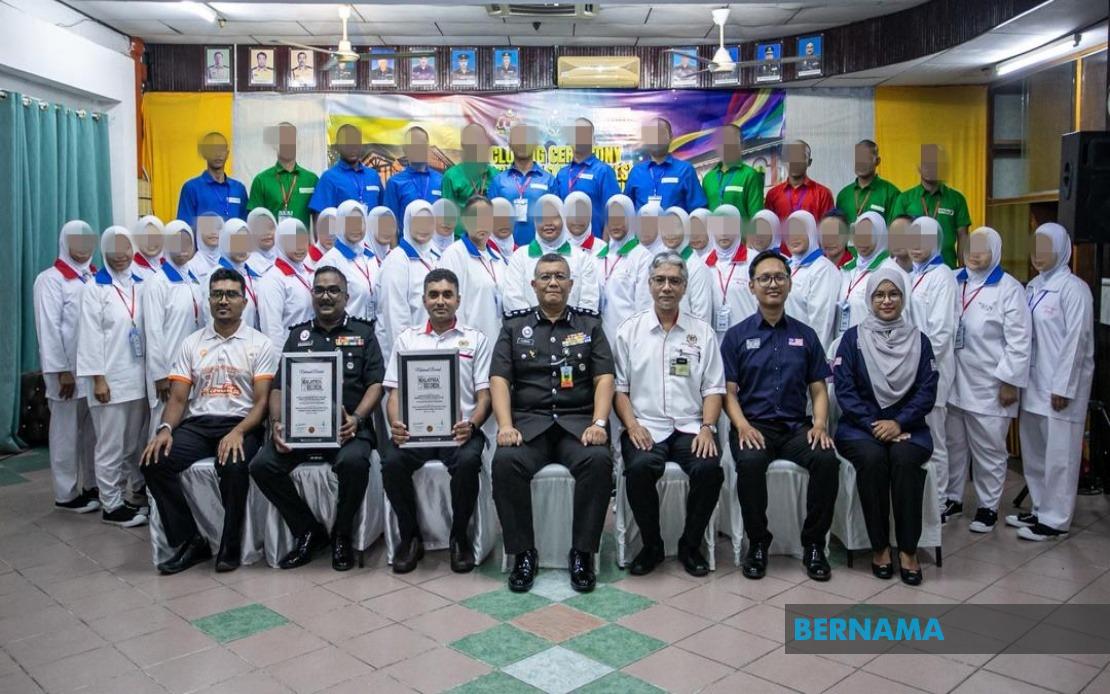
Home Minister Datuk Seri Saifuddin Nasution Ismail has lauded the Malaysian Prisons Department for earning a Malaysia Book of Records entry, with particular recognition directed toward the Batu Gajah Correctional Centre. The achievement stems from the facility's organisation of a Basic Life Support and Automated External Defibrillator training initiative that engaged 42 inmates as participants. In a statement posted on social media, the minister framed the accomplishment as a milestone that extends beyond traditional custodial operations, signalling a meaningful shift in how the department approaches its core mandate.
The Home Minister articulated a vision that distinguishes modern correctional practice from antiquated models of incarceration. Rather than positioning prisons solely as sites of punishment and confinement, he emphasised their evolving function as institutions dedicated to transformative rehabilitation and personal renewal. This philosophical reorientation recognises that individuals within the system retain the capacity for meaningful change and reintegration into society, a perspective that has gained increasing acceptance among corrections practitioners and policymakers across Southeast Asia.
According to Saifuddin, the training programme succeeds on multiple levels simultaneously. Beyond the technical acquisition of life-saving competencies, participants gain formal recognition of skills that carry practical value in civilian settings. The BLS and AED certification represents credentials that former offenders can present to prospective employers, potentially strengthening their prospects for legitimate employment upon release. This dual benefit—combining humanitarian capability with workforce development—demonstrates how strategic programming can serve both immediate institutional safety and longer-term social outcomes.
The minister highlighted the inculcation of values as equally consequential as technical skill transfer. Through structured training environments, inmates absorb lessons in discipline, responsibility, and human dignity that extend far beyond emergency response protocols. By positioning participants as capable of mastering complex procedures and serving community welfare, the programme fosters self-confidence and agency. These psychological and moral dimensions prove essential for those preparing to navigate the challenges of reintegration, particularly when facing employment discrimination and social stigmatisation upon discharge.
Central to Saifuddin's commentary is the articulation of departmental philosophy that prioritises rehabilitation as the primary correctional objective. This framing carries particular resonance in the Malaysian context, where debates surrounding penal policy have increasingly emphasised recidivism reduction and community safety through offender transformation rather than retributive incapacitation. The Batu Gajah programme exemplifies this approach operationally, converting correctional space into a classroom for human development.
The underlying premise acknowledges that most individuals incarcerated in Malaysian facilities will eventually rejoin their communities. The department's ultimate objective, as articulated by the Home Minister, involves ensuring that these returning members possess marketable skills, prosocial values, and genuine confidence in their capacity to contribute productively. This forward-looking orientation recognises that public safety depends substantially on the successful reintegration of released prisoners rather than extended confinement alone.
Saifuddin's remarks reflect broader international trends in corrections management, though their implementation in Malaysia remains uneven across different facilities and programmes. The Batu Gajah initiative demonstrates feasibility and scalability within the local context, suggesting that similar high-impact interventions could be deployed systemwide. The Malaysia Book of Records recognition provides institutional validation that may encourage replication and expansion, potentially creating a template for other correctional centres seeking to enhance their rehabilitative capacity.
The Home Minister's call for expanded replication of such programmes indicates governmental commitment to embedding rehabilitation more deeply throughout the prison system. This aspiration carries implications for resource allocation, staff training, and facility management priorities. Implementing life-skills training across multiple institutions requires investment in curriculum development, certified instructors, and operational coordination—commitments that signal sustained policy direction beyond rhetorical endorsement.
For Malaysian inmates, programmes of this calibre offer tangible benefits extending beyond the immediate period of incarceration. Individuals who complete recognised training courses gain objective evidence of capability and commitment to self-improvement that can influence parole decisions, rehabilitation narrative in reintegration proceedings, and ultimately employer assessments during job-seeking. This cumulative effect positioning skill acquisition as central to the correctional mission rather than peripheral enrichment.
The Batu Gajah Correctional Centre's achievement also reflects broader institutional evolution within Malaysia's custodial system. Facility leadership demonstrated initiative in designing and executing programming that served both internal security needs and external social benefit. The recognition garnered through the Malaysia Book of Records validates such innovative approaches, potentially inspiring other correctional administrators to develop similarly ambitious initiatives within their institutions.
Saifuddin's emphasis on the social reintegration agenda underscores recognition that successful rehabilitation requires coordinated effort extending beyond institutional walls. Released prisoners must find community acceptance, employment opportunities, and social support networks conducive to lawful living. Training programmes that provide recognised credentials contribute meaningfully to this ecosystem by equipping individuals with capabilities valued by employers and communities alike.
The philosophical framework articulated by the Home Minister—that prisons serve purposes beyond punishment—represents a maturation of Malaysian correctional thinking. This perspective aligns with evidence-based practices that demonstrate rehabilitation and reintegration approaches produce superior long-term outcomes regarding recidivism reduction and public safety compared to punitive-focused models. The Batu Gajah initiative thus exemplifies not merely administrative success but alignment with internationally validated approaches to correctional effectiveness.

