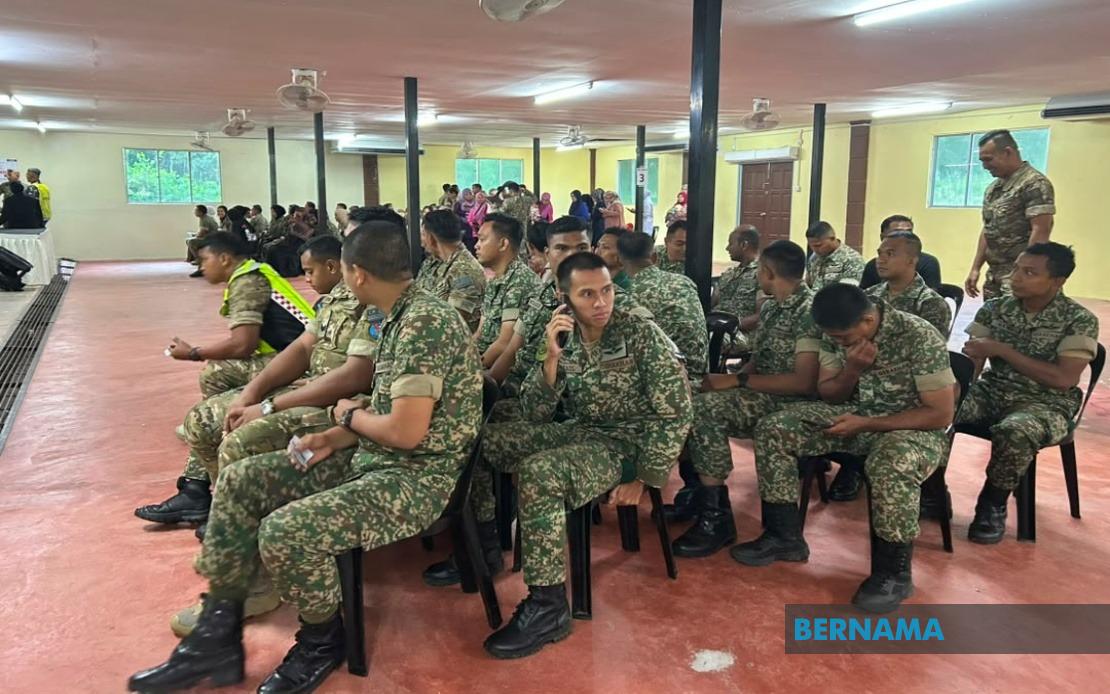
Security personnel in Johor fulfilled their civic obligations on July 7 as the state embarked on its early voting process for the 16th state election, with senior government figures emphasizing the importance of democratic participation among those in uniform. Home Minister Datuk Seri Saifuddin Nasution Ismail and Defence Minister Datuk Seri Mohamed Khaled Nordin each took to social media to encourage the 24,751 registered early voters—primarily members of the armed forces and police along with their spouses—to approach the ballot box with integrity and a genuine commitment to the nation's democratic principles.
Saifuddin Nasution, who additionally serves as Pakatan Harapan (PH) secretary-general, framed voting as both a right and a responsibility, calling on participants to exercise their franchise with full awareness of its significance within the democratic framework. His message reflected broader concerns about maintaining electoral integrity and ensuring that the campaign atmosphere remained rooted in democratic values rather than becoming unnecessarily contentious. The appeal carried particular weight given the role of security personnel in maintaining national order, with their participation in elections serving as a symbolic affirmation of the democratic process they help protect.
Defence Minister Mohamed Khaled struck a similar chord, though his emphasis centred on the connection between individual voting choices and collective state progress. He positioned the early voting exercise as an opportunity for security personnel to directly influence Johor's developmental trajectory, framing electoral participation as integral to sustaining the stability and advancement the state has achieved. This messaging strategy acknowledged that military and police voters often view their participation through a lens of national interest and security considerations, making the link between voting and state welfare particularly resonant for this demographic.
Menteri Besar Datuk Onn Hafiz Ghazi, representing the Barisan Nasional (BN) coalition, tailored his appeal specifically toward securing early voter support for BN candidates. His call for trust in BN representatives emphasised continuity in the governing coalition's agenda, which he characterised as grounded in stability, progressive development, and comprehensive public welfare initiatives. The different messaging from BN and PH leaders reflected the competitive nature of the election while maintaining the appearance of institutional unity in encouraging voters to participate.
The logistical operation supporting this early voting exercise demonstrated the scale of electoral administration in Johor. A total of 64 dedicated early voting centres opened their doors at 8 am, with staggered closing times between noon and 6 pm adapted to accommodate varying numbers of registered voters at different locations. This phased approach allowed election officials to manage the flow of security personnel without creating bottlenecks while ensuring the process remained orderly and secure throughout the day. The decision to hold separate early voting sessions for military and police personnel reflects standard practice in Malaysian elections, recognizing that these uniformed services require flexibility in their voting arrangements due to operational commitments.
The composition of early voters underscored the substantial security force presence in Johor's electoral equation. Among the 24,751 early voters, 12,041 represented Malaysian Armed Forces members and their spouses, while 12,710 came from police ranks and their families. This breakdown highlighted how security sector participation—encompassing both defence and law enforcement communities—constitutes a significant voting bloc within the state, particularly relevant given these voters' generally conservative political leanings and institutional stakes in electoral outcomes. Their concentrated participation through early voting mechanisms meant their preferences would be documented before the general population cast ballots on Saturday.
The broader electoral contest framing these early voting efforts involved both major coalitions contesting all 56 state seats with a total of 172 candidates, reflecting a highly competitive political landscape in Johor. The involvement of 172 candidates across 56 constituencies indicated multiple multi-cornered contests in various areas, complicating vote distribution calculations and potentially fragmenting support bases. This complexity made the early voting process particularly significant, as security personnel votes could prove decisive in closely contested seats, especially given their concentrated geographic distribution across multiple constituencies.
All three leaders—Saifuddin Nasution, Mohamed Khaled, and Onn Hafiz—collectively invoked hopes for a smooth, peaceful, and orderly voting process, emphasizing the shared institutional interest in electoral integrity transcending political rivalry. Their prayers for successful execution and their wishes for voter comfort reflected conventional rhetoric in Malaysian elections, yet underscored genuine concerns about maintaining public confidence in electoral systems. The emphasis on procedural smoothness and official competence served to legitimize the electoral process itself, regardless of ultimate outcomes.
For Malaysian observers and regional analysts tracking Johor's political trajectory, the emphasis placed on early voter engagement and security sector participation carried implications extending beyond the immediate state election. Johor remains a significant political bellwether within Malaysia's broader federal context, with its state politics often foreshadowing national trends. The coalitional alignments and messaging strategies deployed during this election cycle provided insights into how BN and PH intended to compete across other state elections and the anticipated 15th general election whenever it occurs. The security forces' voting preferences, though often predictable, influence not just state outcomes but also contribute meaningfully to overall parliamentary mathematics at the national level.

