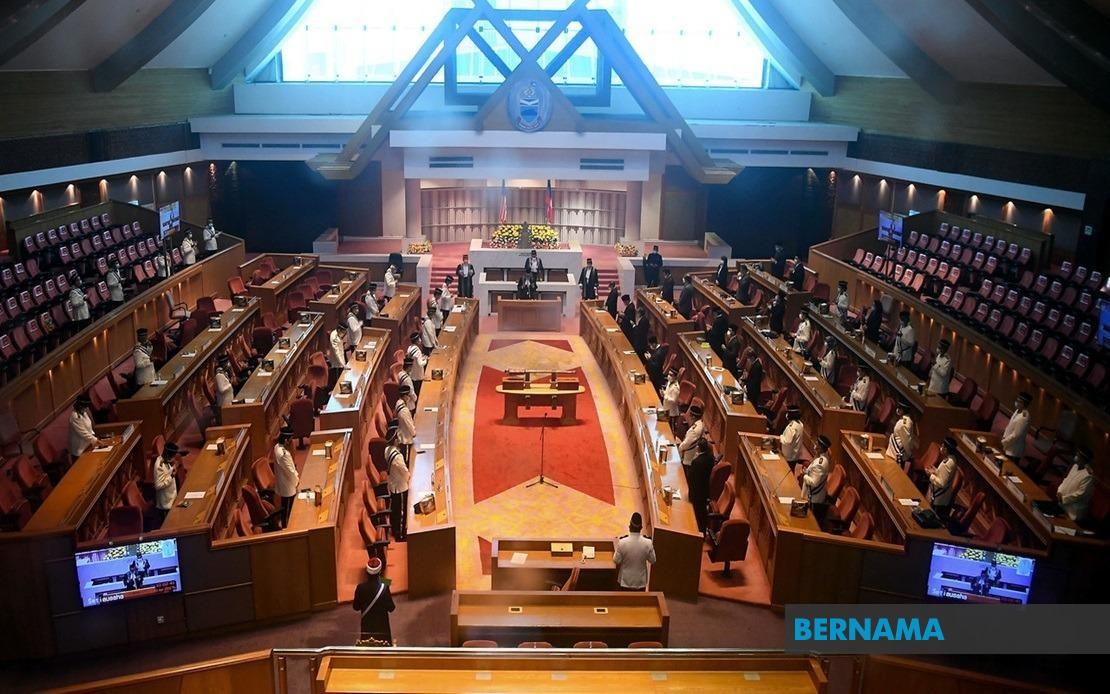
Sabah is confronting a pressing water infrastructure problem that has reached critical proportions, with nearly 60 per cent of the state's water supply classified as non-revenue water—water that is lost before reaching consumers through leaks, theft, and measurement inaccuracies. The state legislative assembly heard this week that the recorded non-revenue water rate stood at 59.6 per cent in the previous year, a figure that has prompted authorities to establish an ambitious recovery target of 45 per cent by the end of the decade. This reduction would represent a substantial improvement in operational efficiency and delivery performance for Sabah Water Department.
Addressing the assembly, Datuk Limus Jury, the Assistant Minister of Works and Utilities, outlined the comprehensive strategy being deployed to reverse the deteriorating water infrastructure situation. The approach reflects acknowledgement that water loss at this scale represents both an economic drain and a sustainability concern for the rapidly developing state. Rather than pursuing a single remedial pathway, Sabah Water Department has adopted an integrated operational framework designed to simultaneously address multiple sources of water loss, from physical infrastructure degradation to deliberate illegal connections that bypass legitimate billing systems.
The operational initiatives encompass several complementary streams of activity. Critical pipeline networks throughout the state are being systematically replaced, a foundational requirement given that ageing infrastructure is typically responsible for the majority of physical water losses through cracking and ruptures. Simultaneously, the department is upgrading consumer measurement capabilities by retiring faulty meters and replacing instruments that have exceeded their seven-year service life. These meters represent a critical control point in the system, since inaccurate measurement directly contributes to recorded non-revenue losses and can mask genuine delivery problems.
Pressure management across distribution networks forms another pillar of the strategy. By regulating water pressure at optimal levels—neither excessively high, which accelerates pipe deterioration, nor excessively low, which creates service complaints—Sabah Water Department can extend infrastructure lifespan while reducing stress-induced leakage. Working in tandem with this approach is the deployment of advanced leak detection systems and rapid response repair protocols. Rather than waiting for customers to report water service interruptions, the department is taking proactive steps to identify emerging leaks and address them before they escalate into major losses.
The restoration effort is being pursued through multiple concurrent funding mechanisms reflecting the scale of required investment. The 13th Malaysia Plan has enabled the formulation of a holistic programme spanning 30 districts across Sabah, with the Federal Government providing financing for intervention in 18 districts while state government resources are being directed toward 12 additional districts. This dual-funding arrangement indicates recognition that water infrastructure challenges transcend state-level capacity to address alone, requiring partnership between federal and state authorities to achieve meaningful outcomes.
Specialised projects targeting the highest-loss districts represent the most intensive component of this strategy. The NRW Rehabilitation, Monitoring and Maintenance Active Leakage Control Project concentrates resources on three major urban and commercial centres: Kota Kinabalu, Tawau, and Lahad Datu. The Kota Kinabalu phase, which commenced in September 2022, is expected to conclude this September with a projected reduction of 10 million litres per day in non-revenue losses. This represents the quantum of water that will be preserved within the distribution system rather than being lost to waste.
The projects operating in Tawau and Lahad Datu commenced more recently in February 2024 and are scheduled for completion in February 2027, providing a three-year implementation window for what are evidently complex infrastructure rehabilitation undertakings. Tawau's project targets a reduction of 14 million litres daily, while Lahad Datu aims to reduce daily losses by 10 million litres. Combined, these three major initiatives should deliver approximately 34 million litres daily of recovered water supply—a substantial addition to available capacity without requiring new source development.
For Malaysian readers, Sabah's water challenge carries particular resonance as the state experiences rapid urbanisation and population growth. The loss of nearly three-fifths of treated water through non-revenue pathways represents an unjustifiable waste of an increasingly precious resource, particularly given the substantial capital investment required to treat and distribute water. The financial implications extend beyond the immediate cost of lost supply; they encompass the environmental impact of excessive extraction from water sources and the depreciated return on investment in treatment facilities and distribution infrastructure.
The regional context further amplifies the significance of Sabah's water management challenge. Southeast Asia faces mounting pressure on freshwater resources from competing demands arising from urbanisation, industrialisation, and agricultural activity. States that fail to manage existing supply efficiently may face acute shortages as future demand grows, potentially constraining development opportunities. Conversely, successful reduction of non-revenue water creates space for accommodating population growth and economic expansion without proportionally escalating demand on source reserves.
The 2030 target of 45 per cent represents an ambitious but achievable reduction trajectory if implementation proceeds consistently with the outlined programmes. International experience demonstrates that water utilities operating in developed systems typically maintain non-revenue water rates in the range of 8 to 15 per cent, meaning Sabah's target, while substantial, still falls considerably short of best-practice performance. This gap suggests that successful achievement of the 2030 goal should be viewed as an intermediate milestone rather than an endpoint, with continued refinement potentially driving further improvements beyond the decade.
The success of these initiatives depends fundamentally on sustained operational discipline and adequate maintenance funding across the three-year and seven-year implementation horizons. Water infrastructure projects frequently encounter delays and cost overruns, particularly in complex geological and climatic environments. Maintaining consistent focus on project objectives and ensuring that completed infrastructure receives adequate ongoing maintenance will prove as critical as the initial rehabilitation effort in determining whether the projected benefits materialise.

