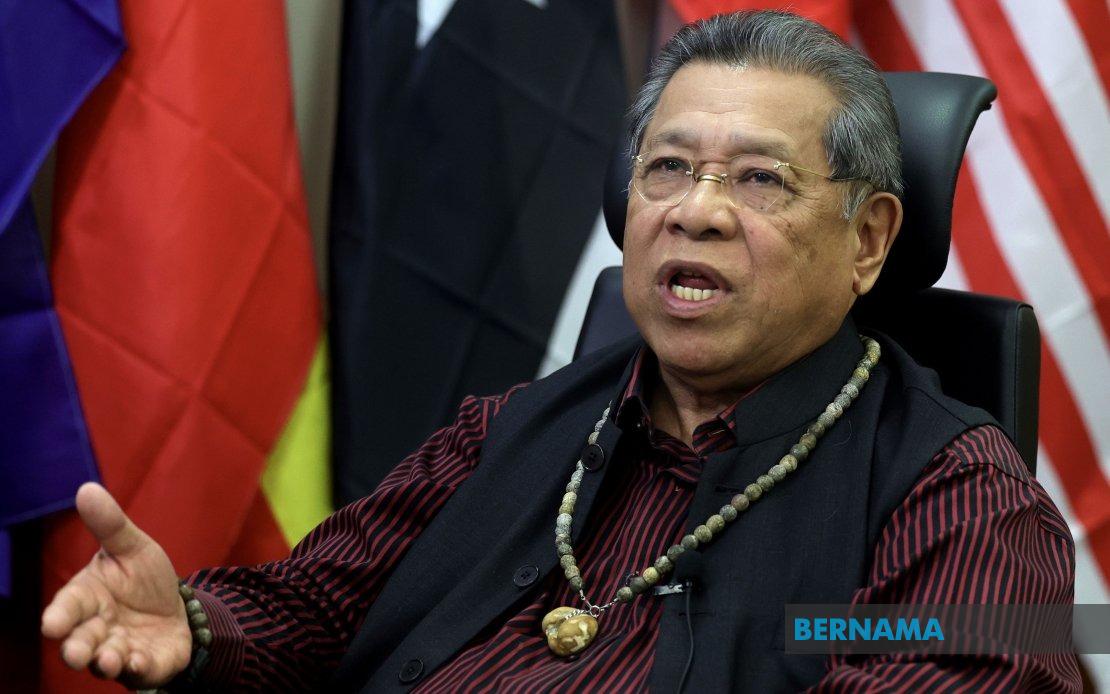
A significant increase in federal funding for Sabah will unlock opportunities for extensive development across the state, creating tangible benefits for residents, according to United Sabah National Organisation president Tan Sri Pandikar Amin Mulia. Speaking at the 2026 PKR National Congress in Melaka on August 15, Pandikar Amin emphasised that higher federal allocation translates directly into more infrastructure and development projects reaching communities in Sabah, ultimately strengthening the nation's economic foundation.
The funding injection represents a substantial commitment to one of Malaysia's largest states by land area and population. Prime Minister Datuk Seri Anwar Ibrahim outlined the magnitude of this boost during his presidential address at the congress, revealing that federal allocations to Sabah have risen dramatically by 35 per cent over a four-year period. The allocation jumped from RM13 billion in 2022 to RM17.6 billion in 2026, underscoring the government's intent to prioritise development in the East Malaysian state.
For Malaysian policymakers and Sabah residents alike, this funding trajectory signals a reversal of historical patterns where the resource-rich state sometimes felt marginalised in federal development spending. The RM4.6 billion increase demonstrates that Kuala Lumpur is making a deliberate policy choice to invest in Sabah's infrastructure, healthcare, education, and economic diversification projects. This commitment becomes particularly significant given Sabah's geographic challenges, including its vast terrain and scattered communities requiring substantial investment in connectivity and basic services.
Pandikar Amin's endorsement carries political weight in the context of Sabah's coalition dynamics. By publicly supporting the funding arrangement and the Prime Minister's broader approach, the USNO president signals stability in the federal government's East Malaysian base. His statement that Malaysia "still needs" Anwar Ibrahim in both international and domestic politics reflects confidence in the current administration's direction, though it also hints at ongoing negotiations over resource distribution and political positioning within the ruling coalition.
The government's narrative around these allocations directly addresses longstanding criticisms that certain states have been sidelined under the MADANI administration. Anwar explicitly rejected such claims, noting that funding variations across states reflect different priorities and development needs rather than deliberate neglect. This position acknowledges the reality that different states face distinct challenges—Sabah's substantial funding increase differs from allocations to more urbanised peninsular states, reflecting tailored approaches to regional development.
From a broader Southeast Asian perspective, Sabah's development trajectory matters beyond Malaysia's borders. As a gateway to Brunei, Indonesia, and the Philippines, the state's economic growth and infrastructure improvements have implications for regional trade and connectivity initiatives. Enhanced federal funding for roads, ports, and telecommunications in Sabah could facilitate cross-border commerce and strengthen ASEAN integration efforts centred on the Sulu-Sulawesi region.
The RM17.6 billion allocation invites scrutiny regarding implementation efficiency. Historical patterns in Malaysian development spending show that large allocations do not automatically translate into successful projects or equitable distribution of benefits. The critical question now centres on how these funds will be deployed—whether they will fund megaprojects that primarily benefit urban centres or whether they will reach rural and interior communities where infrastructure gaps remain most acute. Project selection and execution timelines will determine whether Sabah residents experience meaningful improvements in their daily lives.
For Sabah's business community and investors, this funding announcement creates a more favourable environment for economic activity. Improved infrastructure typically reduces transaction costs, attracts private investment, and creates employment opportunities. Companies operating in sectors ranging from agriculture to tourism stand to benefit from better roads, logistics networks, and communication systems. The funding could also catalyse public-private partnerships that multiply the impact of government spending.
The political calculus underlying this allocation reflects the delicate balance Anwar's government must maintain within its coalition. Sabah, along with Sarawak, provides crucial parliamentary support for the federal administration. By demonstrating tangible commitment through increased federal funding, the government reinforces these partnerships and builds goodwill ahead of future political contests. The 35 per cent increase serves as both a development strategy and a political investment.
Pandikar Amin's remarks underscore confidence that Sabah's development will proceed smoothly under current leadership. However, implementation challenges remain substantial. The state's geographic complexity, the need for skilled workforce development, and potential environmental considerations all demand careful project planning. Furthermore, coordination between federal and state governments becomes crucial when deploying funds across multiple jurisdictions and agencies.
Looking forward, stakeholders in Sabah should monitor how this increased allocation translates into specific projects, timelines, and measurable outcomes. Success will be gauged not merely by budget size but by tangible improvements in transportation networks, educational facilities, healthcare infrastructure, and economic opportunities that reach ordinary Sabahans. The coming years will reveal whether this funding commitment represents genuine commitment to equitable regional development or primarily serves political objectives.

