Sabah's state government is pressing the Federal Government to release the outstanding RM900 million from its RM1.5 billion interim special grant before the year closes, following an initial disbursement of RM600 million on June 12. The push comes as state officials insist that the interim payment should not be viewed as settling the state's financial relationship with Kuala Lumpur, emphasising Sabah's entitlement under constitutional provisions that remain contested and unresolved.
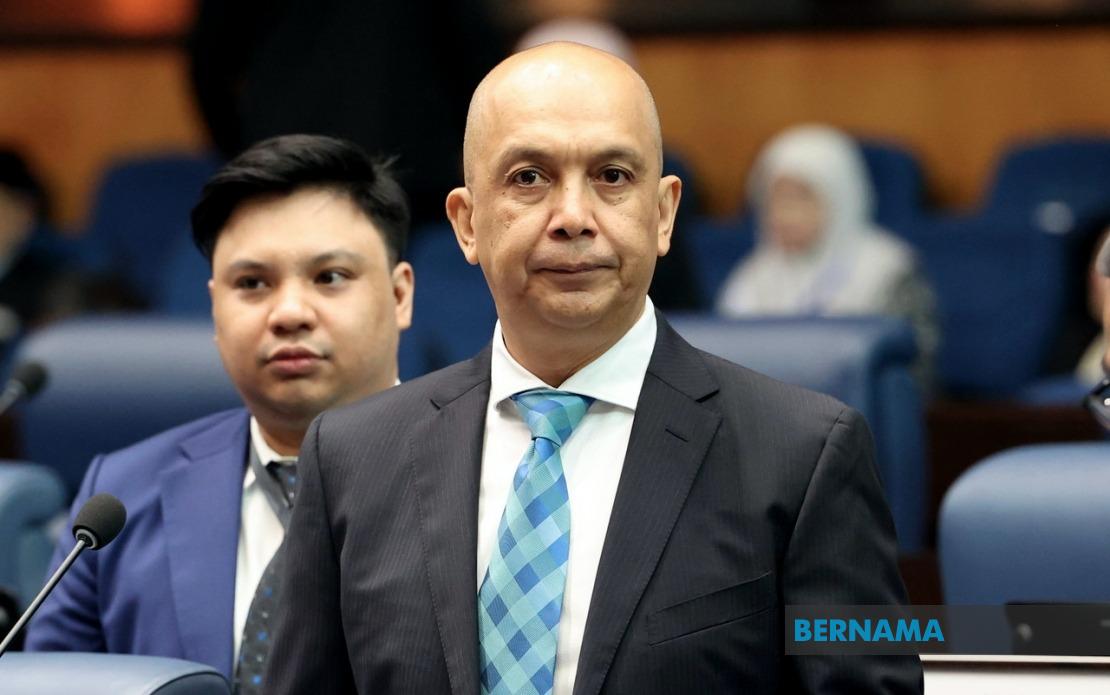
Datuk Mohd Ishak Ayub, Sabah's Assistant Finance Minister II, clarified to the state assembly that accepting the interim tranche carried no legal concession regarding the final amount Sabah is entitled to receive. He stressed that the state's position rests on Articles 112C and 112D of the Federal Constitution, which define revenue-sharing arrangements between the federation and constituent states. This distinction is crucial because it preserves Sabah's legal standing in any future negotiations or disputes with the federal authorities over the full scope of its financial entitlements.
The 40 per cent formula remains the centrepiece of Sabah's financial claim. This formula, enshrined in the Federal Constitution, theoretically guarantees the state a specified proportion of certain federal revenues. Mohd Ishak made clear that Sabah's government would not abandon this constitutional position regardless of interim payments, signalling that the state views this latest transfer as a confidence-building gesture rather than a substantive resolution of longstanding grievances.
The sequence of events leading to this interim grant highlights the political dimensions of centre-state fiscal relations in Malaysia. Prime Minister Datuk Seri Anwar Ibrahim announced the increased interim payment during Sabah's Kaamatan Festival celebration on May 30, a symbolically significant moment that reflected federal acknowledgement of Sabah's financial pressures. Subsequent correspondence between federal and state governments dated June 9, 19, and 26 then formalised the arrangement, demonstrating that negotiations occurred at multiple levels before the RM600 million reached state coffers.
For Malaysian observers watching federal-state relations, Sabah's dual strategy—accepting interim relief while rejecting any permanent settlement—illustrates the complexity of managing a federal system where constitutional provisions are interpreted differently by different stakeholders. Sabah, as one of Malaysia's two states with special constitutional status following the 1963 formation of Malaysia, operates within a framework that differs from peninsular states, yet the full implementation of revenue-sharing arrangements has remained contentious for decades.
Beyond fiscal grants, state welfare programmes also reflect Sabah's financial constraints. Datuk Rina Jainal, the state's Assistant Minister of Women, Health and People's Wellbeing, informed the assembly that existing welfare assistance levels would be maintained between RM200 and RM350 per recipient. However, any expansion of these payments hinges on improved financial conditions for the state, effectively linking social welfare spending to the outcome of federal-state fiscal negotiations. This connection underscores how constitutional disputes over revenue-sharing directly impact vulnerable populations who depend on state-level assistance.
The state has also adjusted eligibility thresholds for welfare support. The poverty line income ceiling used to determine household eligibility increased from RM1,198 in 2025 to RM1,236 in the current year, a modest upward revision that permits slightly more families to qualify for assistance. While this expansion broadens the welfare net, the small increment suggests that state resources remain tightly constrained, preventing more generous adjustments despite acknowledged need.
For federal welfare programmes administered through Sabah, the state government has no direct control over benefit increases, which depend on decisions made during the annual federal budget presentation to Parliament. This bifurcation of welfare administration between federal and state systems means that residents of Sabah experience different benefit trajectories depending on the programme type, a complexity that reflects Malaysia's dual-track social safety net arrangements.
The broader significance of Sabah's negotiating stance extends beyond the state's boundaries. How the Federal Government responds to Sabah's insistence on the 40 per cent formula will likely influence expectations in other states regarding their own constitutional entitlements and negotiating positions. Sabah's willingness to accept interim arrangements without conceding long-term rights demonstrates a calculated approach to managing federal relations—taking available funds while preserving legal leverage for future claims.
Sabah's fiscal situation reflects deeper structural challenges facing Malaysian states that depend heavily on federal transfers. Unlike resource-rich states that generate substantial own-source revenues, Sabah's limited revenue base necessitates substantial reliance on federal allocations and grants. This dependency, while necessary, constrains state autonomy in budgeting and limits social spending without federal support. The interim grant, while significant, remains insufficient to address the state's comprehensive fiscal needs across infrastructure, healthcare, education, and social welfare.
Looking forward, the question of whether Sabah receives the remaining RM900 million before year-end carries both immediate and symbolic importance. A prompt disbursal would demonstrate federal commitment to addressing Sabah's grievances, whereas delays might intensify perceptions that the state's constitutional claims receive inadequate federal recognition. Meanwhile, Sabah's continued assertion of constitutional rights suggests that this interim arrangement represents a temporary accommodation rather than a definitive settlement of issues that have simmered throughout Malaysia's post-independence history.

