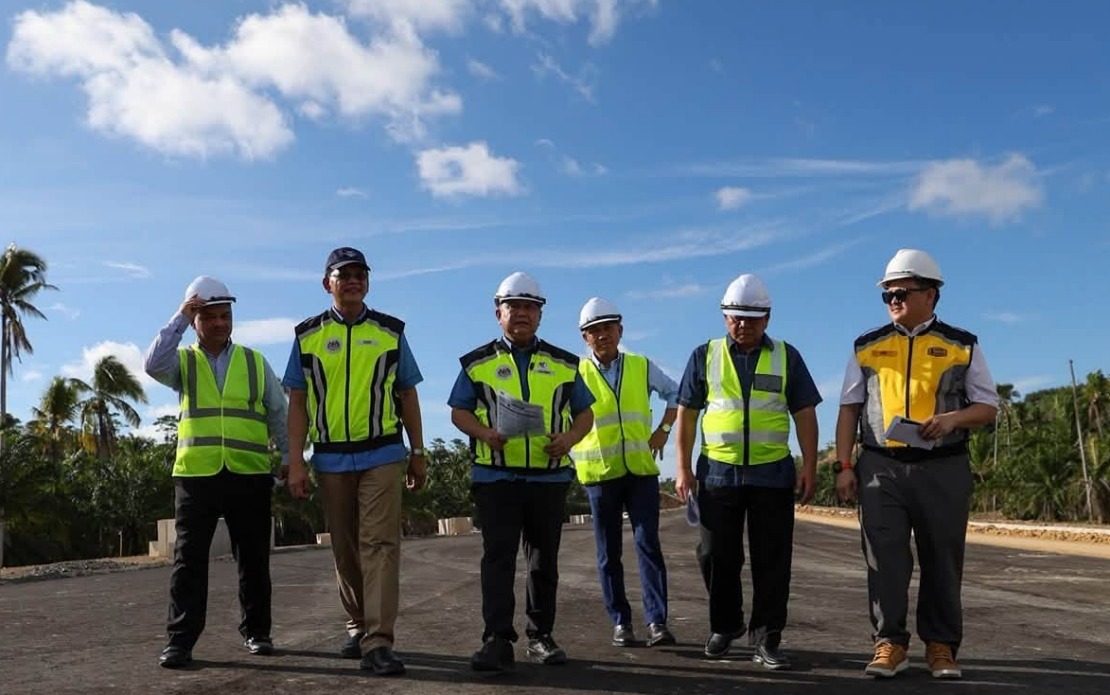
The contractor responsible for Sabah Pan Borneo Highway Work Package 11 has submitted a comprehensive recovery plan designed to address significant delays that have accumulated during the project's implementation. Works Minister Datuk Seri Alexander Nanta Linggi announced the initiative in Kota Kinabalu, emphasising the government's commitment to delivering the RM167.48 million infrastructure project within its contractual timeframe of September 29, 2026.
The work package, spanning the 7.3-kilometre Rampayan Laut-Sarang alignment as part of Phase 1B of the broader Pan Borneo Highway development, had accumulated a 32-day delay by the time the recovery plan was submitted. As of late June, the project had achieved 61.76 per cent physical progress, though this figure fell 4.35 per cent behind the originally planned schedule. This gap indicates that without corrective intervention, the project would face further slippage beyond its target completion date.
The recovery plan represents a collaborative effort involving multiple government bodies and private stakeholders. The Works Ministry, working alongside the Sabah Public Works Department, project consultants, and the main contractor, has committed to closely monitoring implementation of the corrective measures. Officials have set an ambitious intermediate target of reducing the accumulated delay to just 14 days by August 2026, demonstrating confidence that intensified coordination can substantially mitigate the schedule overrun during the final months of construction.
The delays have primarily stemmed from logistical and coordination challenges that extend beyond the contractor's direct control. Utility relocation work has proven particularly problematic, involving multiple service providers including Sabah Electricity Sdn Bhd, the Sabah State Water Department, and Celcom Timur Sabah Sdn Bhd. These agencies operate under separate governance structures and priorities, creating complexity in synchronising their work with the main highway construction schedule. Additionally, land acquisition issues have compounded the difficulties, requiring negotiation and administrative processes that have slowed on-site progress.
Minister Nanta emphasised that successful execution of the recovery plan depends fundamentally on improved coordination among all parties involved. He stressed that stakeholders must adopt a more integrated and proactive approach to resolving outstanding issues, rather than allowing siloed departmental interests to dictate the pace of work. This appeal reflects a broader challenge facing major infrastructure projects in Malaysia, where multiple government agencies and private utilities must align their timelines and resource allocation without clear overarching coordination mechanisms.
Beyond the technical completion target, the minister articulated the substantial economic and social benefits that the completed alignment will deliver to Sabah. The new 7.3-kilometre route will provide commuters and freight operators with a safer and more efficient alternative to existing highways in the region. Most significantly, the alignment will shorten travel distances to Simpang Mengayau and Kudat by up to 30 kilometres, with corresponding reductions in travel time of between 30 and 60 minutes depending on origin and destination points.
The infrastructure development carries particular significance for Sabah's tourism sector. The improved connectivity will enhance access to what the government terms the Tourism Belt and support implementation of the Northern Sabah Coastal Tourism Master Plan. By reducing travel friction to the state's northern tourism destinations, the project will facilitate more convenient visitor access to coastal attractions and potentially stimulate economic activity in peripheral communities currently disadvantaged by geographic isolation.
Beyond tourism, the minister highlighted the broader economic implications of improved infrastructure connectivity. Enhanced accessibility typically catalyses investment in peripheral areas, as developers and entrepreneurs gain confidence in the viability of ventures in previously remote locations. The completed highway package will likely stimulate employment opportunities in hospitality, retail, and supporting services across northern Sabah, while potentially attracting manufacturing and processing facilities to areas with improved transportation access. For the local communities in the project corridor, these indirect benefits may prove as significant as the direct travel time savings.
The government's emphasis on quality, safety, and integrity throughout project delivery underscores awareness that infrastructure longevity and performance depend on construction standards, not merely project completion. Minister Nanta's commitment to maintaining rigorous quality oversight during the accelerated final phase suggests recognition that rushing work to meet deadlines while compromising standards would prove counterproductive for Sabah residents relying on this highway for decades.
The Pan Borneo Highway initiative itself represents a major strategic investment in Sabah's infrastructure, with Work Package 11 forming one component of a larger regional connectivity programme. The attention devoted to recovery planning for this particular package reflects the project's importance within the broader development framework. Successful completion of WP11 to acceptable standards will demonstrate the government's capacity to manage complex, multi-stakeholder infrastructure projects effectively, potentially building confidence in subsequent phases of the programme.
Looking forward, the July 2026 intermediate deadline for reducing delays to 14 days will serve as a critical checkpoint for assessing whether the recovery plan's measures are yielding tangible results. If achieved, this milestone would validate the effectiveness of enhanced coordination mechanisms and suggest confidence in meeting the September 2026 completion target. Conversely, failure to meet this benchmark would signal deeper structural challenges requiring more fundamental intervention. The coming months will prove decisive in determining whether Sabah's Pan Borneo Highway Work Package 11 ultimately becomes a model for effective infrastructure delivery or a cautionary tale about the challenges of coordinating complex public works projects in Malaysia.

