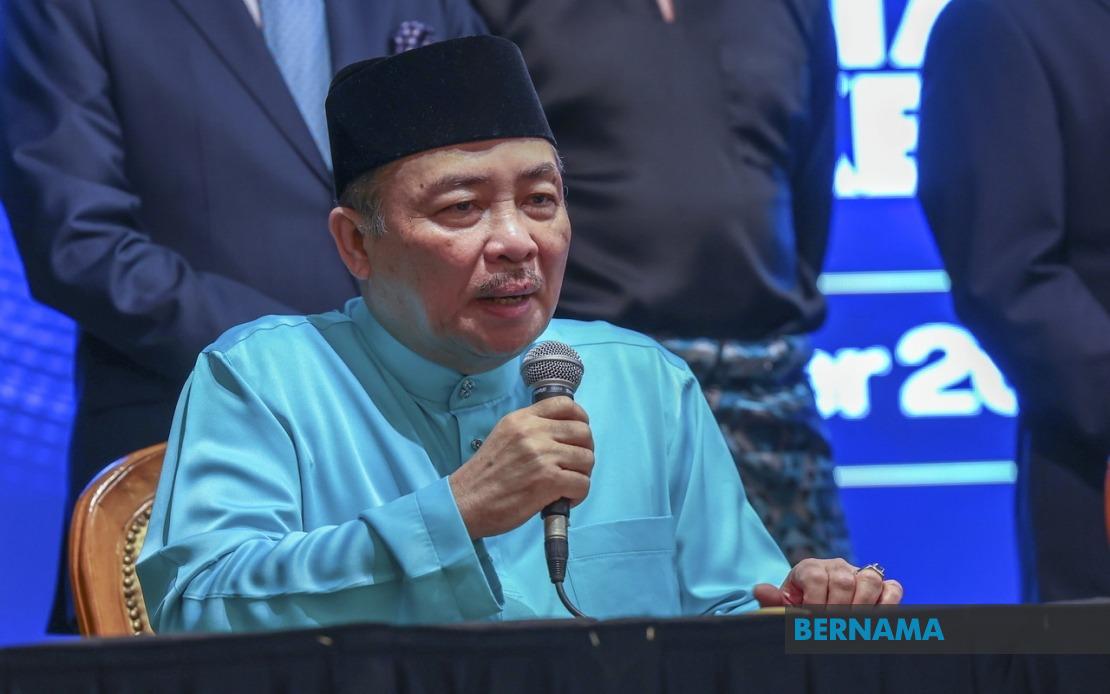
Sabah has committed substantial financial resources to advance educational opportunities for its citizens, with Chief Minister Datuk Seri Hajiji Noor announcing an allocation exceeding RM100 million for the Sabah State Government Scholarship (BKNS) programme in 2024. The funding addresses both current scholarship holders and newly eligible candidates, with approximately 2,182 students expected to receive inaugural awards through the initiative.
The scale of the state's investment reflects growing recognition that education serves as a cornerstone for economic development and social mobility across East Malaysia's largest state. The scholarship scheme currently supports 13,389 students across multiple educational levels, demonstrating the breadth of Sabah's commitment to reducing financial barriers that might otherwise prevent talented young people from pursuing tertiary qualifications. This expansion proves particularly significant given Malaysia's broader push towards developing a knowledge-based economy increasingly dependent on skilled professionals.
Sabah's emphasis on science, technology, engineering and mathematics disciplines aligns with regional and national workforce development priorities. By directing scholarship resources toward STEM fields, the state government acknowledges that these sectors will drive innovation and productivity growth across Southeast Asia over the coming decades. The strategic focus also reflects Malaysia's positioning within global supply chains, where demand for STEM-qualified graduates continues to outpace domestic supply in many technical specialisations.
Beyond the flagship BKNS programme, Sabah has rolled out a comprehensive ecosystem of educational support mechanisms since 2021. These complementary initiatives—including the one-off Higher Education Institution Registration Cash Assistance (BUDI), Special Examination Cash Assistance (BAKTI), Ihsan Computer Assistance (BAIK), Sabah Student Flight Ticket Assistance (GRS-SUBFLY), and State Higher Education Student Contribution (SENTOSA)—acknowledge that direct tuition costs represent only one component of students' financial pressures. The multi-layered approach addresses hidden costs that frequently prevent disadvantaged students from completing qualifications, including examination fees, technology requirements, and travel expenses.
The timing of these investments carries particular weight given Malaysia's current economic climate. Rising living costs have squeezed household budgets nationwide, with education expenses consuming increasingly larger portions of family incomes. For students from lower and middle-income backgrounds—often the primary targets of state scholarship programmes—such support directly influences whether they can access higher education at all. Sabah's allocation demonstrates recognition that scholarship assistance functions as both a social policy tool and an economic development strategy.
Hajiji's emphasis on human capital development positions education spending as foundational rather than supplementary to state governance priorities. This framing suggests Sabah views its scholarship investments not as discretionary expenditure but as essential infrastructure for building a competitive workforce. The philosophy reflects understanding that states competing for investment and talent must demonstrate commitment to developing local human resources capable of meeting employer demands for knowledge workers and specialists.
The particular focus on oil, gas and energy sectors, technical and vocational training (TVET), and artificial intelligence reveals Sabah's strategic sector targeting. The Petronas oil and gas operations remain central to Sabah's economy, creating sustained demand for engineers, geoscientists, and technical specialists. Simultaneously, the emphasis on TVET recognises that not all valuable career pathways require university degrees; skilled trades increasingly command competitive salaries and face chronic labour shortages across Malaysia. The inclusion of artificial intelligence signals forward-looking planning for emerging technologies that will reshape employment landscapes over the coming decade.
Vocational and technical education holds particular relevance for Sabah and wider Southeast Asia. While Malaysia has invested heavily in university expansion, TVET pathways remain undersupported despite offering faster entry to employment and addressing immediate skills gaps in manufacturing, construction, hospitality, and services sectors. By allocating scholarship support toward TVET alongside traditional university routes, Sabah demonstrates more nuanced understanding of educational diversity than some competitor states.
The scholarship programme's scale also matters for regional competitiveness. Neighbouring jurisdictions competing with Sabah for talented students and investment will scrutinise the generosity of support mechanisms. Well-funded scholarship programmes signal institutional commitment to meritocracy and can influence high-achieving students' decisions about where to pursue further education. This becomes increasingly consequential as regional labour mobility increases and tertiary students gain greater choice about study locations.
Implementing such comprehensive support requires robust administrative capacity to process applications, disburse funds, and monitor recipient progress. The success of Sabah's scholarship ecosystem ultimately depends on these operational foundations working effectively. Poorly administered schemes—however well-intentioned—can fail to reach intended beneficiaries or create perverse incentives that undermine programme objectives.
Looking forward, Sabah's educational investments position the state to address medium-term demographic and economic shifts. Malaysia faces demographic challenges as birth rates decline and population ages, making efficient utilisation of human capital increasingly critical. States that successfully develop their indigenous talent pools through scholarship support gain competitive advantages in retaining skilled workers and reducing dependency on migrant professionals. For Sabah, this consideration carries particular weight given historical outmigration of university graduates to Peninsular Malaysia.
The sustainability of such ambitious scholarship commitments warrants monitoring. At over RM100 million annually, the BKNS programme represents significant state budgetary allocation. Maintaining this funding level across future budget cycles will depend on Sabah's broader fiscal health and competing priorities. Economic downturns or revenue shortfalls could pressure these commitments, necessitating difficult policy choices about balancing education investment against other social and development spending.
Ultimately, Sabah's RM100 million scholarship allocation represents more than simple financial transaction. It embodies policy choices about who deserves access to education, which fields merit particular development, and how state resources should be deployed to address market failures in credit and capital allocation. By substantially backing these commitments with dedicated funding, Sabah signals genuine determination to build human capital sufficient for competing effectively within Malaysia's diverse regional economy.

