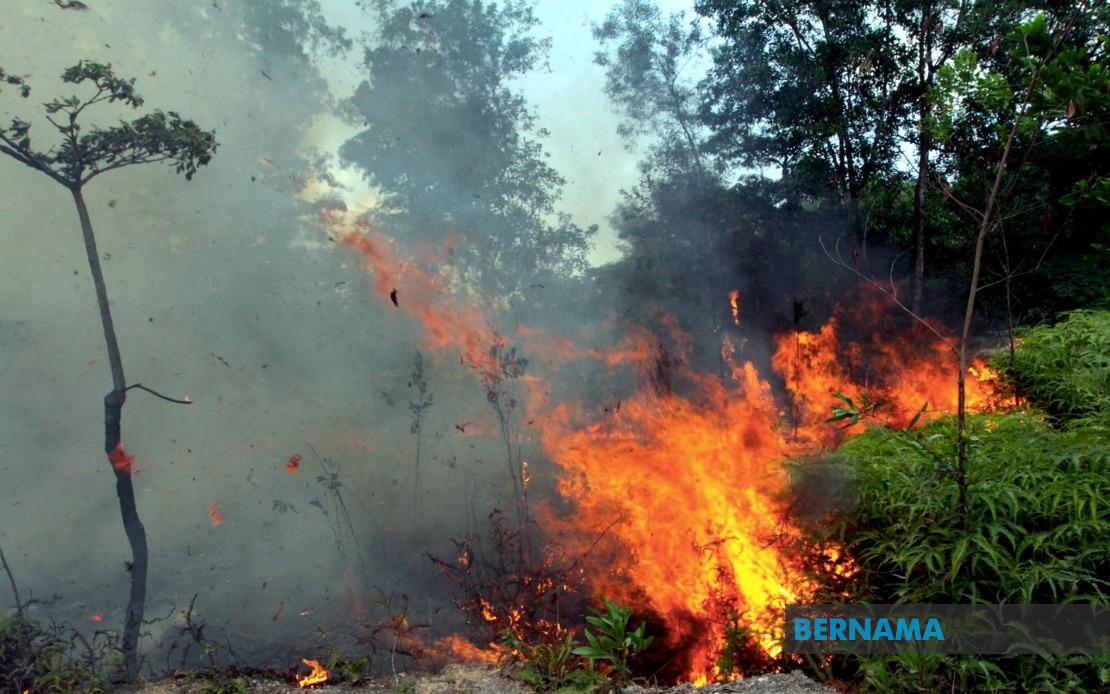
The Sabah Fire and Rescue Department has issued an urgent public advisory against open burning activities as thick haze originating from forest fires in Kalimantan, Indonesia, begins to degrade air quality across the state. The transboundary pollution phenomenon, driven by prevailing southerly and central Borneo wind patterns, has started affecting visibility and atmospheric conditions in key population centres including Kota Kinabalu and Kimanis, prompting renewed calls for strict compliance with environmental protection measures.
Mohd Pisar Aziz, the department's director, emphasised that the combination of seasonal weather patterns and ongoing fires in the neighbouring Indonesian region presents a compounding environmental challenge for Sabah. The southern wind systems are actively transporting dense smoke plumes northward across the Sulu and Celebes seas toward the northern Bornean coastline, creating hazardous conditions that threaten public health and safety. His statement underscores the interconnected nature of air quality management in Southeast Asia, where transboundary pollution regularly crosses international boundaries with minimal regard for jurisdictional lines.
According to real-time monitoring data from the Air Pollutant Index Management System as of mid-afternoon on August 11, Sabah's air quality remained classified at moderate levels, though readings had begun climbing in several areas. Kota Kinabalu registered the highest measurement at 83, with Politeknik Kota Kinabalu following at 81 and Kimanis at 76. While these figures fall short of the unhealthy threshold, the upward trajectory and continued smoke importation suggest deterioration is possible, particularly if Kalimantan fire activity intensifies or wind patterns shift to channel more pollution toward populated zones.
Despite the current moderate classification, Mohd Pisar stressed that certain demographic groups remain particularly vulnerable to air quality degradation at all API levels. Children, elderly citizens, and individuals managing chronic respiratory conditions such as asthma require heightened vigilance and preventive measures even when official indices remain within acceptable ranges. This public health consideration reflects established medical evidence that sensitive populations experience physiological stress from particulate matter and chemical pollutants at concentrations that may not trigger broader population-level warnings.
The fire department has identified two additional municipalities meeting the stringent criteria for formal open-burning prohibitions. Both Keningau and Pitas had registered seven consecutive days without precipitation through August 10, satisfying the meteorological threshold that triggers regional bans. These restrictions specifically target the intentional burning of domestic waste, dried vegetation, garden trimmings, construction debris, and comparable combustible materials that would compound atmospheric pollution during periods of elevated fire risk and reduced atmospheric mixing.
The regulatory framework governing open burning operates across multiple enforcement layers in Malaysia, with state-level fire authorities implementing bans when dry conditions substantially elevate wildfire susceptibility. The seven-day rainfall criterion represents an evidence-based threshold used to identify periods when vegetation moisture content drops sufficiently to make accidental fire propagation probable. By restricting deliberate burning during these vulnerable windows, authorities aim to eliminate anthropogenic ignition sources that could trigger landscape-scale fires similar to those occurring across the Kalimantan region.
Public health authorities and fire safety officials have jointly recommended that residents modify outdoor activity patterns during the period of peak haze impact. Limiting exposure during the hottest and typically haziest daylight hours between 11 am and 4 pm provides a practical risk-reduction strategy for those unable to remain indoors entirely. Supplementary guidance includes maintaining adequate hydration to support respiratory tract lubrication, employing properly fitted face masks in affected areas to filter inhaled particles, and conducting household electrical inspections to identify fire hazards that might be exacerbated by dry conditions and reduced visibility impairing emergency response.
Cigarette disposal practices warrant particular attention during heightened fire risk periods, as discarded cigarette butts represent a frequently overlooked but statistically significant source of unintended ignition. Even in developed economies with robust fire prevention infrastructure, carelessly discarded smoking materials initiate thousands of fires annually. In tropical climates where vegetation desiccation occurs rapidly and fire behaviour becomes unpredictable, this casual transmission vector poses elevated danger to property and life. The department's emphasis on responsible disposal reflects lessons drawn from past fire incidents where individual carelessness cascaded into community-scale emergencies.
The public reporting mechanism remains a critical element of the fire prevention and response apparatus, with the emergency hotline 999 providing immediate access to professional firefighters and rescue personnel. Reporting suspicious activities or observations of active fires enables rapid response while fires remain small and manageable, before conditions allow unchecked propagation through dry vegetation. Community vigilance and willingness to contact authorities, combined with professional rapid-response capabilities, constitute the most effective defence against fire emergencies spreading beyond initial ignition zones.
The current episode exemplifies the recurring transboundary air pollution challenge confronting Southeast Asia, where dry seasons and agricultural land conversion create conditions favouring widespread landscape burning in Indonesia. Sabah and other Malaysian states lying downwind from Kalimantan face periodic degradation of air quality despite maintaining strict domestic environmental controls, highlighting the limitations of unilateral pollution management efforts. Regional cooperation mechanisms and bilateral agreements regarding fire prevention and suppression capacity remain essential for addressing this persistent environmental challenge, particularly as climate variability continues altering precipitation patterns and extending fire seasons.

