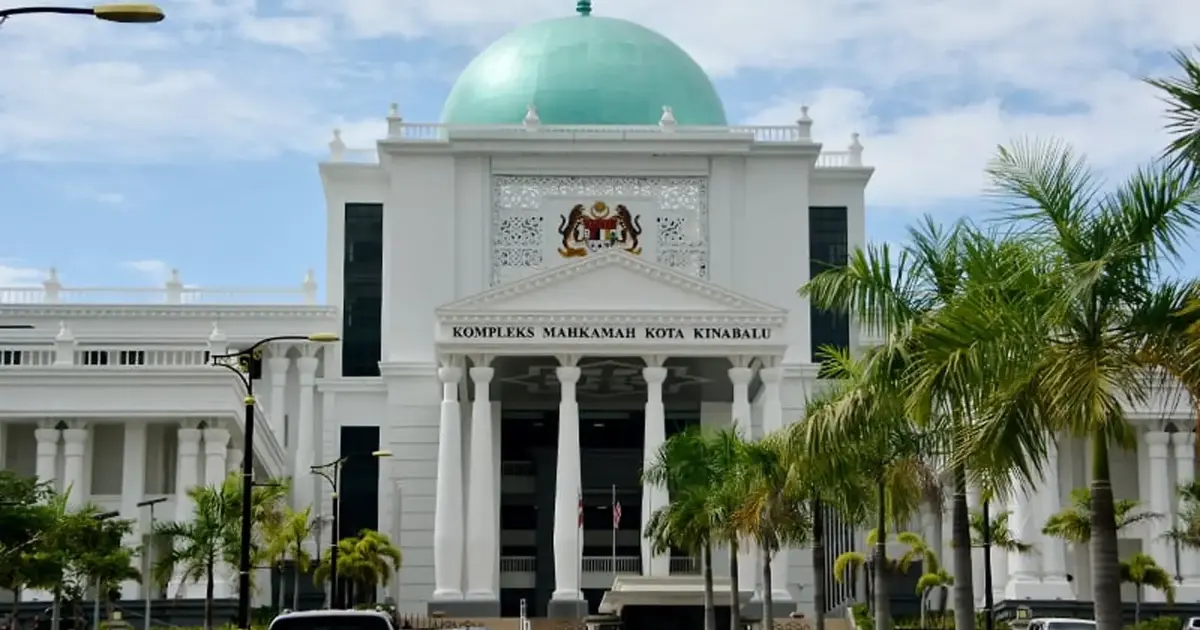
A Sessions Court in Sabah has ruled in favour of the state minerals corporation in a high-profile defamation dispute involving politician Albert Tei, concluding that contested statements made by the company did not constitute the alleged injury to his reputation. Judge Monica Linsua delivered the decision after carefully examining the language and context of the disputed communication, determining that when considered holistically rather than through isolated phrases, the company's position statements did not bear the meaning Tei claimed they conveyed.
The case centred on allegations that the minerals firm had issued statements implying Tei's involvement in partisan political activity, a charge that would have exposed him to public ridicule and damaged his standing. Tei had pursued legal action seeking damages and a declaration that the company's communications were defamatory. However, the court's examination of the full body of text revealed a substantially different picture than what the plaintiff contended.
Judge Linsua's reasoning hinged on a textual analysis approach that privileges the overall tenor and meaning of contested statements rather than selective quotations. This methodological approach reflects established Malaysian jurisprudence on defamation cases, where courts must determine whether a reasonable reader or listener would draw the conclusions alleged by the plaintiff. The judge's ruling emphasises that context, surrounding language, and the internal coherence of a statement significantly influence how an audience would interpret its meaning.
The dismissal carries implications for political figures in Sabah navigating disputes with state-linked corporations and statutory bodies. When politicians publicly challenge communications from government-affiliated entities, courts will assess not merely whether certain words appear problematic in isolation, but whether the full statement, reasonably interpreted, actually suggests what the politician claims. This standard offers both protection and risk: companies cannot hide behind ambiguous phrasing, but political figures must demonstrate genuine defamation rather than selective reading of corporate communications.
Tei's lawsuit reflects broader tensions in Malaysian politics around the interplay between commercial interests, state institutions, and political actors. Minerals extraction remains a contentious issue across Malaysian territories, particularly in East Malaysia where resource wealth and governance raise complex questions about benefit-sharing, environmental stewardship, and political influence. When politicians dispute corporate communications, the legal machinery becomes an arena for articulating competing interests and establishing whose narrative prevails in the public sphere.
The case also illustrates the evidentiary hurdles facing defamation plaintiffs in Malaysian courts. Beyond demonstrating that a statement was false, a plaintiff must prove that it was published to third parties, that reasonable people would identify them as the subject, and that the statement causes actual reputational harm. Judge Linsua's determination that the company's statements did not carry the defamatory meaning Tei attributed to them effectively resolved the case at an earlier threshold, without requiring extensive findings on damages or remedies.
For politicians and political movements in Sabah, the decision underscores the importance of precision in legal claims and the limitations of court proceedings as a venue for political vindication. While defamation law remains available as a tool for protecting reputation, courts apply rigorous interpretive standards and require substantial evidence that published material actually bore the harmful meaning claimed. Political disputes resolved through litigation rather than electoral or democratic processes carry inherent risks of unfavourable outcomes.
The minerals sector in Sabah constitutes a significant portion of state revenue and employment, making communications from major resource companies matters of genuine public interest. Corporations operating in resource-rich regions must navigate complex relationships with local politicians, communities, and state authorities. When such entities publish statements addressing political dimensions of resource management or development, the potential for legal dispute increases. This ruling provides guidance that comprehensive, contextually clear communications offer better legal protection than ambiguous or potentially inflammatory language.
For corporate communicators and state-linked entities operating across Malaysia and Southeast Asia, the judgment reinforces that courts will scrutinise contested statements through a holistic lens. Companies cannot assume that careful corporate language automatically protects against defamation claims, nor can they hide behind vague formulations. The standard requires genuine consistency between the claims made and the overall message conveyed, assessed from the perspective of reasonably informed readers.
The dismissal also reflects judicial confidence in the capacity of contextual analysis to reveal actual meaning in contested communications. Rather than treating language as purely technical or mathematical, where each word carries fixed weight, courts recognise that meaning emerges from overall structure, supporting evidence, and reasonable interpretive frameworks. This approach offers greater flexibility in resolving disputes but also requires litigants to present comprehensive arguments about what statements actually conveyed to their intended audiences.
Moving forward, the case illustrates that Sabah's judicial system actively processes disputes involving politicians, corporations, and state interests. As the state continues developing its resource sectors and engaging in complex governance questions, similar disputes may arise. The precedent established by this decision—that courts will apply stringent textual analysis to defamation claims—may influence future litigation strategies and how political actors frame their legal challenges.

