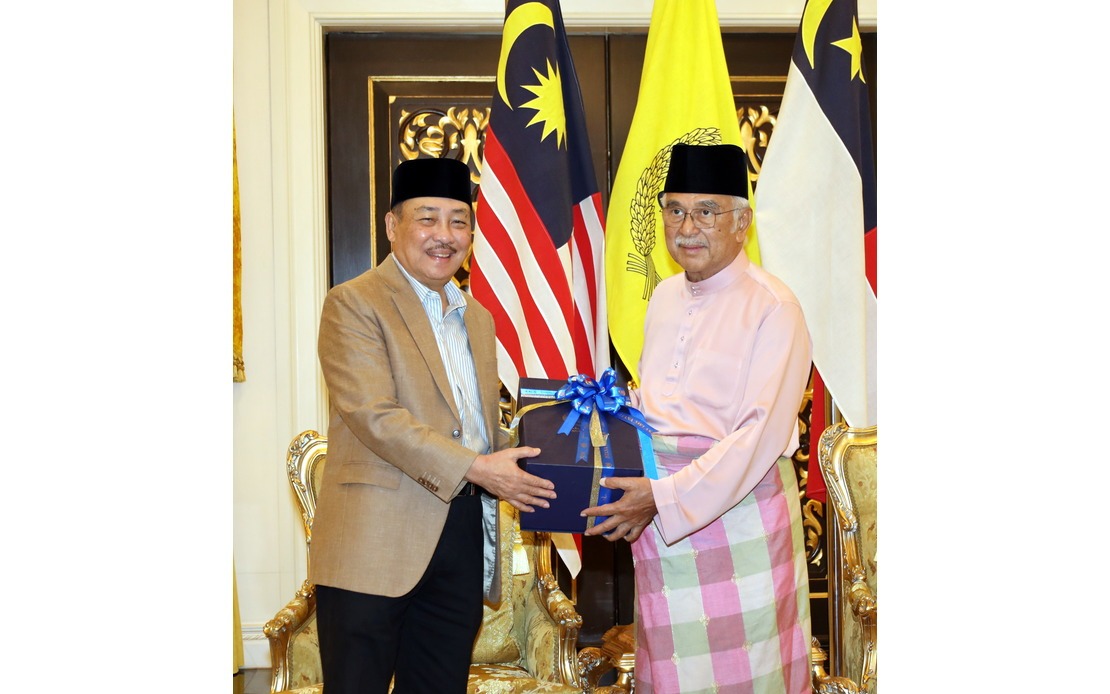
Sabah Chief Minister Datuk Seri Hajiji Noor visited Melaka on Wednesday to pay his respects to the state's Yang Dipertua Negeri Tun Dr Mohd Ali Mohd Rustam, marking another step in efforts to foster closer collaboration between Malaysia's eastern and peninsular territories. The meeting at Istana Melaka in Bukit Beruang underscores the ongoing importance of bilateral engagement among Malaysian states, particularly as Sabah navigates its role within the federal system and seeks partnerships that benefit its constituents.
The delegation from Sabah arrived at approximately 3.35 pm and was formally received by Tun Mohd Ali at the residence. Such courtesy visits, while ceremonial in appearance, often serve as significant diplomatic opportunities for state-level leaders to address shared challenges and identify areas for cooperation. In the Malaysian context, where state governments manage distinct portfolios ranging from agriculture to rural development, these encounters frequently yield practical outcomes beyond symbolic gestures.
According to Hajiji's office, the discussion encompassed various matters of mutual interest to both Sabah and Melaka. Although specific agenda items were not disclosed publicly, the mention of mutual concerns suggests the conversation likely touched on areas where the two states might collaborate or learn from each other's approaches to governance and development. Melaka, as a peninsular state with significant economic and historical importance, and Sabah, as a major contributor to Malaysia's agricultural and natural resource sectors, occupy distinct positions that could support mutual learning and resource-sharing initiatives.
Hajiji's entourage included several key state ministers, reflecting the substantive nature of the visit. Sabah Rural Development Minister Datuk Rubin Balang, Agriculture, Fisheries and Food Industry Minister Datuk Jamawi Jaafar, and Nominated Member of the State Legislative Assembly Datuk Mohd Razali Mohd Razi accompanied the Chief Minister. The presence of the rural development and agricultural ministers indicates that economic and infrastructural topics likely featured prominently in discussions, particularly given Sabah's substantial rural population and the importance of primary industries to the state's economy.
For Malaysian observers, such ministerial delegations signal how state governments approach interstate diplomacy. By bringing sector-specific ministers, Hajiji's team was positioned to discuss practical cooperation in areas where expertise could be directly applied. The participation of the agriculture minister, for instance, may have explored possibilities for technology transfer, best practice sharing, or collaborative procurement initiatives that could benefit farming communities in both regions.
The formal setting and structured nature of the engagement reflect Malaysia's diplomatic protocols for state-level interactions. These courtesy calls, though sometimes appearing routine, help maintain the collaborative fabric essential for the federation's functioning. For a state like Sabah, which has historically emphasized its distinct identity and interests within Malaysia, such initiatives demonstrate a commitment to integration and constructive engagement with other regions.
The visit also provided an opportunity for informal relationship-building between leadership circles. Tun Mohd Ali, as the ceremonial head of Melaka, represents continuity and institutional authority within that state. His formal reception of Hajiji and his delegation strengthened personal connections between their respective administrations, potentially facilitating future communication and cooperation at both official and informal levels.
From a broader perspective, these bilateral state visits contribute to Malaysia's internal cohesion and demonstrate that notwithstanding political differences at the federal level or variations in state-level governance, productive dialogue remains possible and valued. In an era when Malaysian politics sometimes emphasizes divisions along party or regional lines, visible efforts to build bridges between states serve important symbolic and practical purposes.
The meeting concluded with an afternoon tea hosted by Tun Mohd Ali, a gesture that personalizes official engagement and demonstrates hospitality characteristic of Malaysian state protocols. Such informal settings often afford opportunities for candid discussion that formal plenary sessions might not permit, potentially allowing leaders to discuss sensitive issues or explore partnership possibilities in a more relaxed atmosphere.
For Sabah specifically, engagement with other Malaysian states carries significance beyond protocol. As the country's second-largest state by land area but with a smaller population relative to Peninsular states, Sabah benefits from networking that can amplify its voice in national policy discussions and secure support for its developmental priorities. Strategic visits like this one help ensure that Sabah's interests—whether in infrastructure investment, agricultural support, or resource management—receive consideration at state leadership levels.
Looking forward, the outcomes of such meetings often manifest gradually through increased administrative cooperation, joint initiatives, or coordinated advocacy for federal policies that benefit both regions. While immediate announcements of specific programs or agreements may not always follow such visits, they frequently lay groundwork for longer-term partnerships. The presence of multiple ministers suggests that follow-up coordination is likely, with individual ministerial offices potentially pursuing specific collaborative projects in their respective portfolios.

