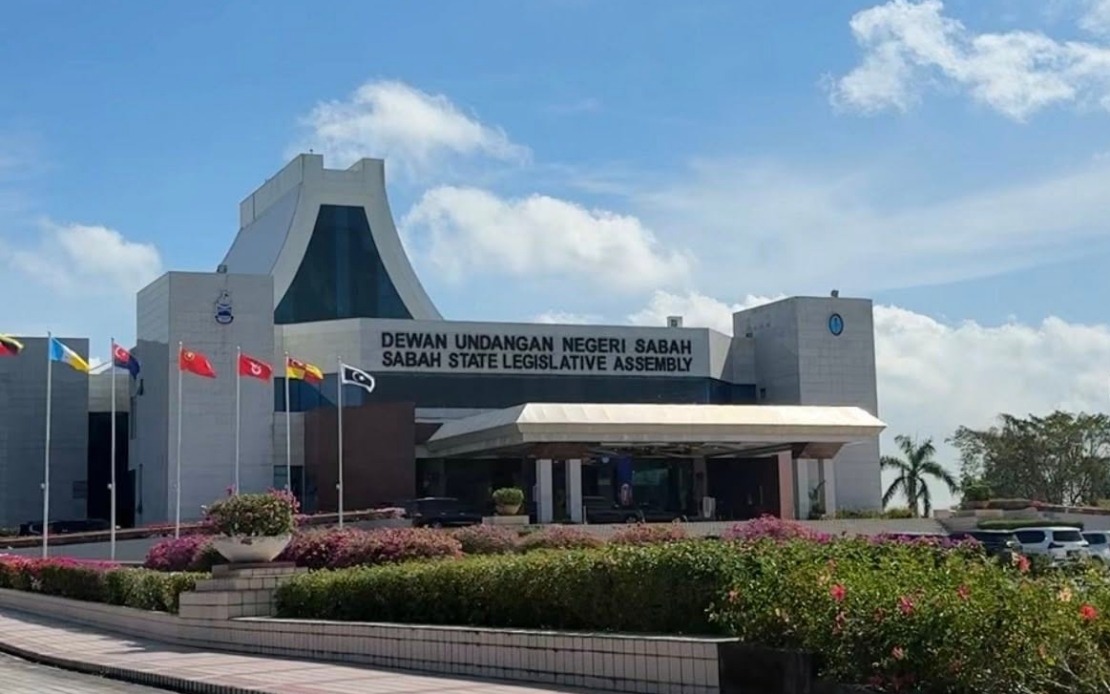
Datuk Seri Wilfred Madius Tangau, the assemblyman for Tamparuli under Gabungan Rakyat Sabah (GRS), has called for a constitutional amendment to elevate the Native Court's legal standing during debate on the Native Court Bill 2026 at the Sabah State Legislative Assembly. Currently, the customary judicial institution operates within a constrained legal framework, recognised by civil courts merely as a tribunal rather than enjoying the constitutional status afforded to the Syariah Court, a distinction that Madius argues undermines the institution's authority and legitimacy.
The push for constitutional recognition represents a significant shift in how Sabah's indigenous legal traditions are perceived within Malaysia's federal system. Madius emphasised that his proposal does not seek to expand the Native Court's jurisdiction into civil or religious matters, but rather to grant the existing institution the formal constitutional standing that would reflect its actual role in dispensing justice to Sabah's native communities. This carefully calibrated approach suggests recognition that jurisdictional boundaries between different courts must remain clear while advocating for parity in constitutional rank.
The assemblyman grounded his argument in the Malaysia Agreement 1963, the foundational document that established the terms under which Sabah joined the Malaysian federation. By invoking this agreement, Madius linked the constitutional amendment to the original constitutional bargain made with Sabah, implying that the Native Court's current subordinate status may contravene the spirit of that foundational compact. This constitutional argument carries weight in Sabah's political discourse, where the Malaysia Agreement remains a touchstone for discussions about state rights and autonomy.
Madius's intervention in the legislative debate demonstrates a strategic understanding of how institutional legitimacy functions within the Malaysian legal system. He rejected the notion that a court's importance should be measured solely by its caseload, instead proposing that true institutional stature rests upon public confidence in fair adjudication, reasoned decision-making, and independence from external pressures. This philosophical position reframes the Native Court not as a minor tribunal handling marginal disputes, but as a cornerstone institution in Sabah's justice architecture.
The Native Court system in Sabah has historically served indigenous communities by applying customary law to matters such as land disputes, inheritance, and social conflicts. However, its operation within a framework that does not accord it constitutional status comparable to other courts has created practical and symbolic constraints. Litigants may perceive such courts as less authoritative, and enforcement of judgments can encounter difficulties when the civil courts do not grant them equivalent standing. These institutional weaknesses could gradually erode the Native Court's effectiveness and public trust.
For Malaysian observers and policymakers, this proposal illuminates a broader tension within the federation's legal system. Malaysia recognises multiple legal traditions—civil law, Islamic law, and customary law—yet the constitutional hierarchy does not always reflect the genuine importance these systems hold for their respective communities. The Syariah Court's constitutional elevation reflects recognition of Islam's constitutional position in Malaysia, but no equivalent constitutional foundation exists for indigenous customary law systems, despite their deep historical roots in Sabah and Sarawak.
The timing of the Native Court Bill 2026 appears strategic, as it provides an opportunity to address structural deficiencies in the customary judicial system ahead of potential litigation or political pressure. By framing the amendment as part of honouring the Malaysia Agreement rather than as a narrower institutional reform, Madius connects the proposal to fundamental questions of federalism and state autonomy. This approach may generate support across different political constituencies that value the original constitutional bargain.
Implementing constitutional change in Malaysia requires substantial parliamentary support, making legislative strategy crucial. The assemblyman's measured framing—specifically disavowing any intention for the Native Court to encroach upon civil or Syariah functions—addresses likely concerns from other stakeholders who might worry about jurisdictional conflicts or dilution of other courts' authority. By positioning the amendment as a recognition rather than an expansion, the proposal becomes more politically feasible.
For indigenous communities in Sabah, constitutional recognition of the Native Court would carry significant symbolic weight beyond legal technicalities. It would affirm that customary legal traditions merit constitutional respect equivalent to other recognised systems, strengthening cultural identity and autonomy. Young people from indigenous backgrounds might view such recognition as validating their heritage within Malaysia's modern institutional framework, countering perceptions that indigenous legal traditions are peripheral to the nation's legal order.
Regionally, this proposal resonates with broader movements across Southeast Asia to recognise indigenous legal systems and customary law within national frameworks. Countries including the Philippines, Indonesia, and Thailand have grappled with similar questions about how to integrate customary judicial institutions into modern state structures. Sabah's approach, if implemented, could offer a model for other Southeast Asian nations considering constitutional recognition of indigenous legal traditions.
The Native Court Bill 2026 and its accompanying constitutional amendment proposal also reflect evolving discussions about plural legal systems in Malaysia. Rather than viewing customary law as an obstacle to overcome or a relic to be superseded, the proposal positions it as a legitimate component of Malaysia's legal pluralism, deserving of formal recognition. This represents intellectual and political progress in acknowledging Malaysia's cultural and legal diversity.
The success of Madius's proposal will depend on broader political considerations within Sabah and at the federal level. Support from the Sabah state government and backing from federal parliamentarians will be essential. The proposal's grounding in the Malaysia Agreement may prove persuasive to those who view constitutional fidelity as important, while its careful limitation to constitutional status rather than jurisdictional expansion may assuage concerns from those protective of existing court hierarchies.

