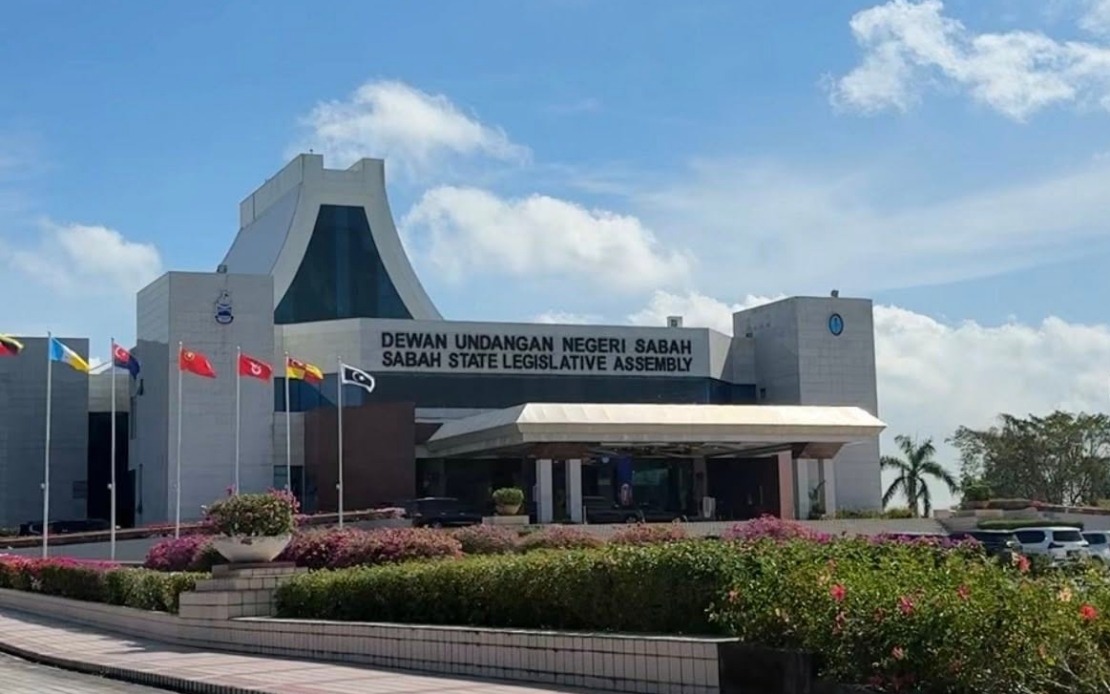
The Sabah Legislative Assembly has passed two significant pieces of legislation designed to modernise the state's legal frameworks for both Islamic inheritance matters and customary justice. On July 22, lawmakers approved the Muslim Succession Bill 2026 and the Native Courts Bill 2026, both tabled by Sabah Local Government and Housing Minister Datuk Dr Mohd Arifin Arif, who also oversees the state's Islamic Affairs portfolio. The dual legislative push marks an ambitious attempt to bring coherence and contemporary application to two distinct yet equally important pillars of Sabah's legal system.
The Muslim Succession Bill 2026 emerged from extensive deliberation, with five assemblymen contributing to the debate before state assembly speaker Datuk Seri M Kadzim Yahya presided over its passage. The Native Courts Bill 2026 underwent similarly robust discussion, involving twelve assemblymen under the guidance of deputy speaker Datuk Richard Wong We Kong. This level of legislative engagement suggests the bills address matters of considerable concern to Sabah's diverse population, encompassing both Muslim and indigenous communities whose interests these instruments seek to protect.
According to Minister Mohd Arifin, the Muslim Succession Bill 2026 represents groundbreaking territory within Malaysia's legal landscape. The legislation constitutes the first piece of statutory law specifically designed to govern the administration of Muslim estates under the jurisdiction and powers of the Syariah Courts. Rather than relying on fragmentary guidelines or interpretations, this consolidated framework aims to establish systematic, transparent, and effective protocols for managing inheritance matters in accordance with Islamic principles.
The bill's architects identified four critical objectives guiding its formulation. First, it establishes a more systematic legal framework for governing Muslim inheritance, moving beyond ad-hoc interpretations toward codified procedures. Second, the legislation prioritises protecting the rights and interests of all heirs and other parties with legitimate claims to an estate, ensuring equitable treatment across diverse family structures and circumstances. Third, the bill seeks to streamline how deceased estates are administered in line with syariah principles, reducing bureaucratic obstacles while maintaining religious compliance. Fourth, it strengthens enforcement mechanisms to prevent estate assets from being misused, concealed, disposed of improperly, or administered without authorisation, addressing longstanding concerns about accountability in estate management.
For Malaysian readers, particularly those managing family inheritance matters or working within Islamic legal spheres, this legislation offers greater clarity and predictability. The absence of a unified framework has historically created complications for executors, heirs, and Syariah Courts navigating competing interpretations. By consolidating best practices into statutory form, Sabah's assembly has effectively reduced legal uncertainty, potentially serving as a model for other Malaysian states grappling with similar challenges in Islamic estate administration.
The Native Courts Bill 2026 addresses an equally pressing need within Sabah's judicial system. The existing enactment governing native customary courts has remained largely unchanged since 1992, meaning it has operated for more than three decades without comprehensive reform. While preserving the roots, identity, and uniqueness of Sabah's indigenous customs, the new legislation introduces structural improvements reflecting contemporary judicial best practices and the diverse aspirations of Sabah's native communities.
A central innovation within the Native Courts Bill involves restructuring the judicial hierarchy. The legislation establishes three tiers comprising the Native District Court, Native High Court, and Native Court of Appeal, creating a more organised appellate structure. This hierarchical approach mirrors conventional court systems but remains grounded in customary law principles, potentially offering clearer pathways for dispute resolution and appeals within the native justice framework.
Particularly noteworthy is the bill's approach to judicial appointments. The legislation introduces a Native Judicial Appointments Advisory Committee tasked with assessing and recommending judicial candidates based on transparent criteria emphasising merit, qualifications, experience, knowledge of customary law, and personal integrity. This represents a significant departure from historical practice, wherein appointments often reflected administrative positions rather than genuine judicial capability. By prioritising substantive competence over bureaucratic rank, the reform acknowledges that effective justice administration requires judges genuinely equipped to interpret and apply customary law.
For Southeast Asian observers, these developments reflect broader regional trends toward strengthening indigenous and minority legal systems. Many countries across the region maintain parallel customary justice mechanisms serving indigenous populations, yet these systems frequently suffer from institutional neglect, unclear procedures, and appointment practices that prioritise administrative convenience over judicial competence. Sabah's reforms demonstrate a commitment to modernising such systems while preserving cultural authenticity—a balance many jurisdictions struggle to achieve.
The legislative work completed in Kota Kinabalu also carries implications beyond Sabah's borders. Malaysia's constitutional framework grants states considerable autonomy over Islamic affairs and native customary law, meaning that judicial and legislative innovations in one state sometimes influence neighbouring jurisdictions. Should these bills prove effective in practice, other Malaysian states may draw upon Sabah's experience when considering similar reforms to their own Islamic estate administration procedures or customary court systems.
Implementation will prove crucial to determining whether these legislative frameworks deliver their intended benefits. Stakeholders—including estate administrators, legal practitioners, judges, and members of native communities relying on customary courts—will be observing whether the new structures genuinely streamline processes, reduce disputes, and enhance fairness. Administrative capacity, judicial training, and resource allocation will significantly influence whether the bills' theoretical advantages translate into practical improvements.
The passage of both bills reflects Sabah's recognition that legal systems must evolve to serve contemporary populations effectively whilst respecting cultural and religious values. By addressing gaps in Islamic estate law and revitalising the customary justice framework, the state has undertaken substantial legislative work aimed at strengthening social stability and institutional legitimacy across its diverse communities.

