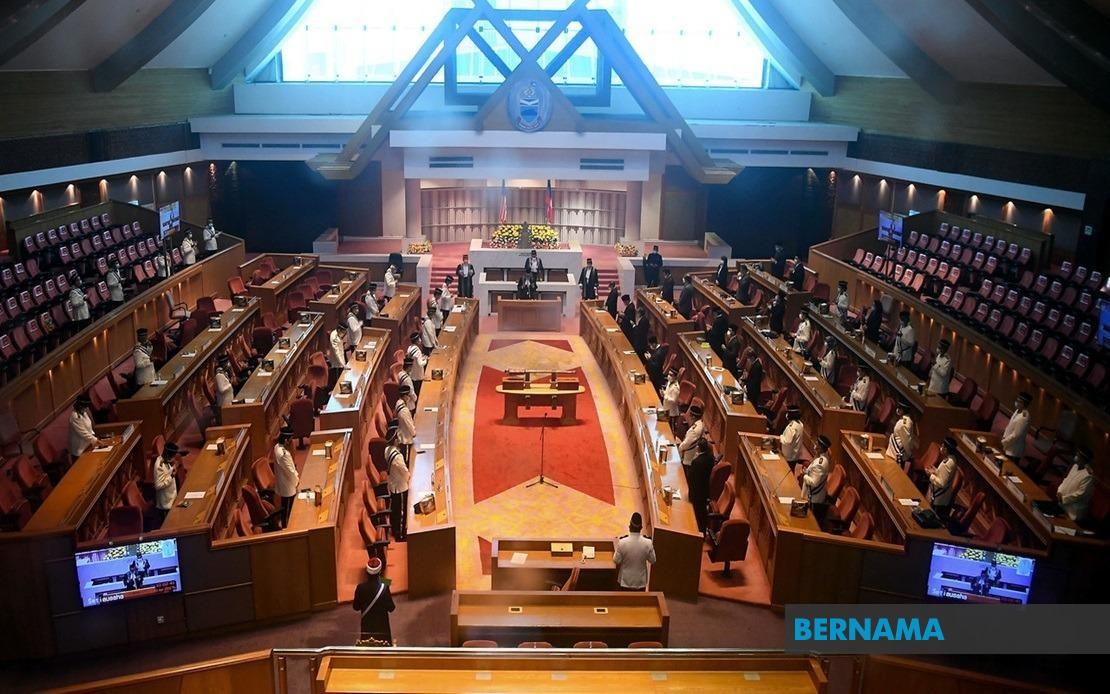
The Sabah State Legislative Assembly has formally endorsed the Sabah Ports Authority (Amendment) Bill 2026, marking a legislative response to administrative changes implemented across the state government. The measure, which passed on July 22 following parliamentary debate, represents a technical but significant realignment of bureaucratic authority as Sabah consolidates governance structures in key economic sectors.
Deputy Chief Minister III Datuk Ewon Benedick, who holds the concurrent portfolio of state Minister of Industrial Development, Entrepreneurship and Transport, championed the bill through the chamber. The legislative process involved substantive discussion from six elected assemblymen, with Deputy Speaker Datuk Al Hambra Tun Juhar overseeing the sitting. The relatively focused debate suggests broad recognition among legislators of the necessity for legislative clarity following the cabinet reorganisation.
The amendment directly addresses confusion that arose when the state government redistributed ministerial responsibilities on December 3, 2025. Prior to this restructuring, port affairs fell nominally under the Ministry of Public Works and Utilities. The cabinet reordering transferred oversight of port management to the Industrial Development, Entrepreneurship and Transport Ministry, creating a legislative inconsistency that required formal correction. Port authorities, being statutory bodies with defined enactments, cannot operate effectively when their supervising minister is undefined or outdated in law.
The core issue resolved concerns the definition of "Minister" contained in Section 2 of the original 1981 enactment. The outdated language explicitly referenced the minister responsible for communications and public works, language rendered inoperative by the December restructuring. This amendment modernises those references to reflect the contemporary institutional arrangement, ensuring the legal framework genuinely corresponds to operational reality. Without such correction, ambiguity could complicate the authority's decision-making and accountability structures.
For Sabah's port sector, this amendment carries practical implications. The ports authority manages critical maritime infrastructure serving Sabah's export industries, including timber, palm oil, and energy products. The reassignment to an industrial development ministry suggests strategic intent to integrate port development more closely with broader economic diversification efforts. By aligning ports management with entrepreneurship and transport policy, the state government appears to be positioning ports as central economic infrastructure rather than as purely utility operations.
Ewon clarified that the amendment carries no direct financial burden for the state government, indicating this reform represents administrative housekeeping rather than a costly expansion of state functions. The revision does not alter the core powers, functions, or policy framework governing the Sabah Ports Authority itself. The authority maintains its statutory independence and operational mandate; the change addresses only the ministerial supervision and accountability line within state government structures.
A crucial transitional provision embedded within the amendment protects the legal continuity of port authority operations. All decisions, approvals, and administrative actions previously taken by the minister previously responsible for port affairs remain valid and enforceable. This protection ensures that commercial contracts, port usage agreements, and regulatory determinations made under the prior arrangement retain full legal standing. Without such continuity provisions, port operators and shipping interests could have faced uncertainty regarding the validity of arrangements negotiated under the old ministerial framework.
The legislative passage of this amendment reflects broader governance trends in Malaysian states as they refine administrative structures to match contemporary economic priorities. Sabah's decision to relocate ports oversight to an industrial development ministry signals recognition that ports function as engines of economic activity rather than mere public utilities. This positioning aligns with regional trends whereby port authorities increasingly partner with governments to drive trade facilitation, foreign investment attraction, and regional connectivity initiatives.
For Malaysian business interests engaged in Sabah trade and shipping, the amendment's passage provides institutional clarity and reassurance. The formal legislative resolution removes potential legal ambiguity that could have complicated port contracting or regulatory compliance. Companies relying on Sabah's ports for export operations can proceed with confidence that ministerial supervision, administrative approvals, and policy direction flow through clearly defined institutional channels. Such clarity becomes increasingly important as Sabah seeks to enhance its competitive position within Malaysia's broader maritime and logistics sector.
The amendment also positions Sabah's port sector within the state's post-pandemic economic recovery strategy. Enhanced integration between port management and industrial development policy suggests deliberate coordination of infrastructure investment with enterprise development initiatives. As Malaysia's federal government pursues regional economic balancing, Sabah's clarification of institutional arrangements for port management may facilitate smoother coordination with national maritime and transport policies. The legislative action demonstrates state-level responsiveness to institutional efficiency, potentially enabling faster decision-making on port infrastructure upgrades or regulatory innovations that could benefit regional trade flows.

