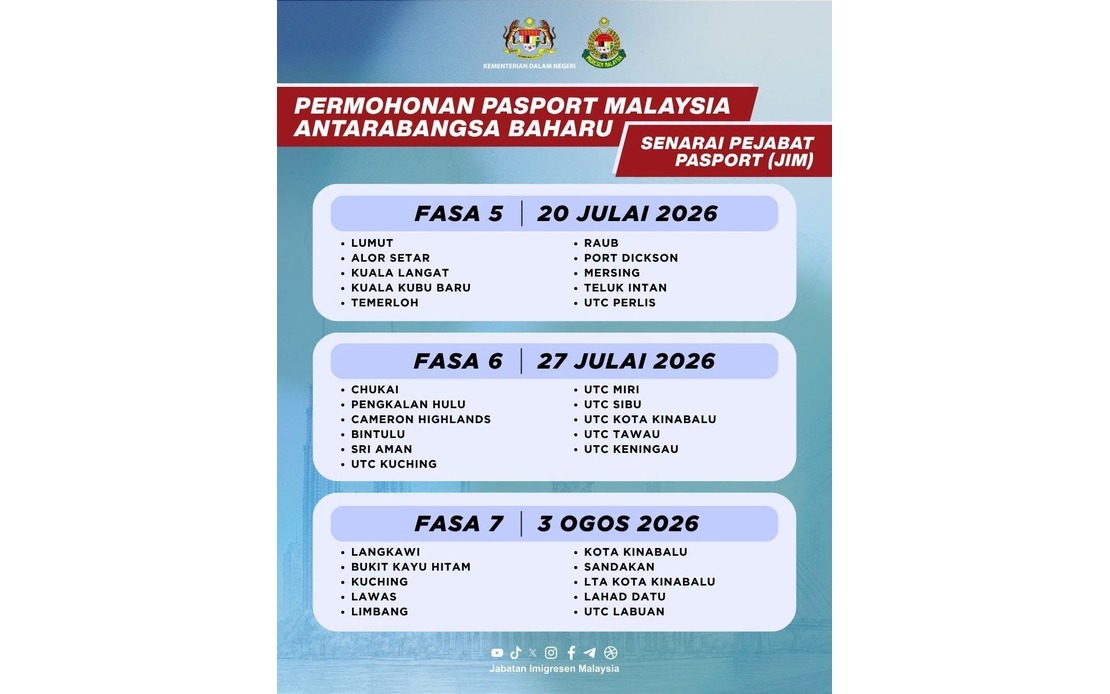
The Immigration Department has initiated the phased rollout of Malaysia's new international passport across Sabah and Sarawak, representing a significant milestone in the nationwide implementation of the upgraded travel document. The expansion marks the transition to Phase 6 and Phase 7 of the distribution programme, which began in early July following Prime Minister Datuk Seri Anwar Ibrahim's launch of the redesigned passport on June 30.
The enhanced Malaysian passport incorporates 94 distinct security features designed to combat fraud and strengthen border control measures across Southeast Asia and beyond. This technical advancement reflects growing international standards for travel documentation and positions Malaysia competitively within the region's emerging digital economy. The sophisticated security architecture addresses modern counterfeiting techniques while maintaining user accessibility for legitimate travellers.
Under Phase 6, which commenced on July 27, eight passport-issuing offices began accepting applications for the new document. These locations include the Urban Transformation Centres in Bintulu, Sri Aman, Kuching, Miri, Sibu, Kota Kinabalu, Tawau, and Keningau. Each centre has been equipped with the necessary systems and trained personnel to process applications efficiently, ensuring minimal disruption to ongoing services.
Phase 7 commences on August 3 and covers an additional set of strategic locations across both East Malaysian states. The Kuching, Lawas, and Limbang offices in Sarawak join Kota Kinabalu, Sandakan, Kota Kinabalu International Airport, Lahad Datu, and the Labuan Urban Transformation Centre in Sabah. The inclusion of Kota Kinabalu International Airport underscores the government's recognition of high-traffic processing points, allowing travellers to renew or apply for passports near major departure gateways.
Citizens aged 18 and above can voluntarily transition to the new passport system, with applications having been accepted since July 1. The document offers flexibility in validity periods, allowing applicants to choose between five or ten-year options depending on their travel frequency and planning horizons. This adaptability accommodates diverse lifestyle patterns across Malaysia's population.
The government has advised the public against unnecessary urgency in applying for the new passport. Existing documents remain valid and can continue to be used until six months before their expiration date, providing a comfortable transition window. This measured approach prevents overwhelming service centres and allows the Immigration Department to manage capacity while gradually transitioning the entire population to the enhanced standard.
The rollout strategy has been deliberately phased to optimise administrative efficiency and learn from implementation challenges in earlier stages. The initial launch targeted 14 high-volume offices, generating operational data that informed subsequent expansion decisions. By late July, the network had grown to encompass 71 nationwide locations, with the Sabah and Sarawak expansion representing progress toward complete coverage anticipated by early August.
For Malaysian readers in East Malaysia, the phased approach reflects recognition of the region's distinct geographical and administrative circumstances. Sabah and Sarawak represent significant population centres and international gateways, with the dual-phase rollout ensuring adequate resource allocation and service continuity. The emphasis on Urban Transformation Centres demonstrates efforts to consolidate government services and improve accessibility for residents across both states.
The new passport's advanced security features carry implications beyond travel convenience. Enhanced document integrity strengthens Malaysia's standing in international security cooperation frameworks and supports broader regional initiatives addressing transnational crime and irregular migration. The technological investment signals government commitment to modernising critical infrastructure while maintaining robust identity verification systems.
Perspective from the Immigration Department emphasises that citizens should verify their local office's participation status before scheduling applications. The staggered rollout, while administratively sound, requires awareness among potential applicants to avoid unnecessary travel to facilities not yet offering the new service. Clear communication regarding participating locations remains essential for public cooperation throughout the transition period.
The broader context involves Malaysia's positioning within an increasingly competitive Asian travel landscape where document security and processing efficiency influence business and tourism flows. Countries throughout the region have undertaken similar modernisation programmes, making Malaysia's upgrade strategically important for maintaining competitiveness in facilitating legitimate cross-border movement while preventing document-related fraud and security risks.
As the rollout progresses into August, the Immigration Department will likely monitor application volumes, processing times, and system performance to inform subsequent phases and any necessary operational adjustments. Feedback from citizens utilising the new service will prove valuable for refining procedures and identifying any technical or administrative improvements required before full nationwide deployment concludes.

