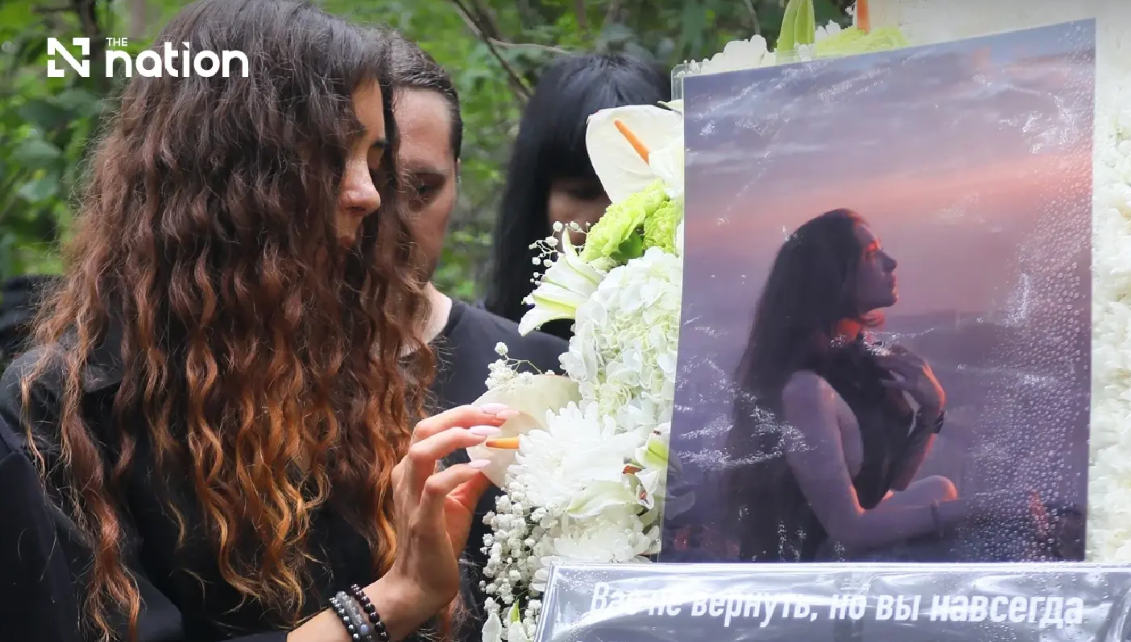
Sharina Nazimova gathered with Thai and foreign mourners in Chon Buri province on Thursday to bid final farewell to her two children, Russian siblings Diana and Roman, whose deaths in July sparked widespread sympathy across Thailand. The ceremony at Huai Yai subdistrict in Bang Lamung district brought together representatives of provincial authorities, police and civil servants to honour not only the young Russians but also three members of a Thai family allegedly killed by the same perpetrators. The gathering underscored the unusual circumstance of multiple victims from different nationalities united by tragedy and a shared investigative case that has drawn attention to rural safety concerns in eastern Thailand.
The memorial service reflected Buddhist traditions meaningful to the family, with monks chanting prayers and performing rites dedicated to all five victims. Attendees maintained respectful silence, pressed palms together in the Thai wai gesture, and paid solemn tributes to the deceased. The ceremony's structure blended Thai cultural practices with the family's own spiritual beliefs, creating a space where both local and international mourners could participate meaningfully in the remembrance process. Such cross-cultural memorial practices have become more common in Thailand's tourist regions, where foreign deaths occasionally intersect with Thai communities in ways that require sensitive handling of diverse mourning traditions.
Floral tributes dominated the physical memorial, with mourners arranging white carnations, lilies and roses at the site. These flowers carry symbolic weight in Western funeral traditions, representing purity and peaceful passage—meanings that transcend cultural boundaries and conveyed the family's grief in universally understood terms. Beyond the formal flowers, the family placed a cup of coffee beside the memorial, selecting Diana's favourite beverage as a deeply personal touch that transformed the ceremony into something intimate and specific. This small gesture proved emotionally resonant with those gathered, prompting visible reactions from mourners who recognised in the coffee cup an authentic expression of familial love and shared memories now forever past.
Nazimova herself became the emotional centre of the ceremony, weeping openly as she witnessed the tributes to her children. Surrounded by relatives, friends and strangers whose lives had been touched by following this tragedy, she delivered remarks expressing profound gratitude toward the Thai authorities, volunteers and general public who had supported her family through shock and devastating loss. Her expressions of appreciation acknowledged not merely official assistance but also the spontaneous compassion shown by ordinary Thai citizens who felt moved by the family's suffering. Such public acknowledgment of Thai kindness carries importance beyond the immediate family, reinforcing positive narratives about Thailand's capacity for empathy toward foreign victims in circumstances that might otherwise generate tension or resentment.
The two men arrested in connection with the deaths are Thana "Pong" Kerdthong, 43, and Thongchai "Thong" Srinil, 39, apprehended on July 31 following an intensive manhunt in Wang Sombun district of Sa Kaeo province. Police allege that the suspects encountered Diana and Roman beside a roadway, presented themselves falsely as law enforcement officers, and forcibly restrained the siblings before transporting them to a remote wooded location. Investigators characterised the apparent motivation for these actions as theft—specifically targeting the siblings' motorcycle—a detail that illustrates how seemingly minor criminal intent sometimes culminates in extreme violence during confrontations that spiral beyond their original purpose.
The suspects have provided conflicting accounts of subsequent events, with investigators indicating that their explanations remain incomplete and inconsistent with forensic evidence and other investigative findings still under examination. This discrepancy between the two men's narratives presents a complication for prosecutors seeking to establish precisely what occurred and whether the deaths resulted from premeditated violence or escalating circumstances that became lethal during the encounter. Following their arrests, both men cooperated with authorities in locating burial sites, leading investigators to the spot where Diana and Roman were found and subsequently to an adjacent grave containing the remains of the Thai family of three.
The discovery of the Thai family's remains during expanded investigation added unexpected dimensions to what initially appeared as a crime targeting foreign tourists. This revelation expanded the case from a singular tragedy affecting a Russian family to a broader pattern of alleged violent criminal activity occurring in the rural margins of Chon Buri and Sa Kaeo provinces. The connection between the murders suggests systemic vulnerability in these regions, where sparse population density, minimal surveillance, and limited police presence may create environments permitting criminal actors greater operational freedom than exists in more densely populated or heavily policed areas.
For Malaysian and broader Southeast Asian observers, this case illuminates persistent security challenges confronting tourists and long-term residents throughout the region's less developed zones. Thailand, despite its well-established tourism infrastructure in major destinations, continues to experience pockets where law enforcement capacity remains strained and criminal elements operate with relative impunity. The integration of Thai victims alongside foreign nationals in this tragedy underscores that these vulnerabilities extend beyond tourism sectors to affect local populations equally or perhaps more severely, given disparities in resources available to Thai versus foreign families pursuing justice.
The public memorial ceremony itself represented a significant step in the investigative and justice process, allowing community closure while keeping attention focused on accountability for the five victims. Mourners explicitly expressed hope that judicial proceedings would proceed decisively against those found responsible, reflecting recognition that true resolution requires not merely arrest but conviction and sentencing reflecting the severity of the crimes alleged. The gathering thus served dual purposes—honouring the deceased while simultaneously reaffirming collective commitment to ensuring that the legal system delivers justice worthy of the lives lost.
The family's Buddhist faith provided essential framework for navigating grief and finding meaning through the memorial service, with Nazimova having raised both Diana and Roman according to Buddhist principles despite their Russian heritage. This spiritual grounding enabled the mother to articulate her gratitude in terms that resonated across Thai cultural contexts, positioning her family's suffering within frameworks of karma, merit-making, and the cyclical nature of existence that underpins Buddhist philosophy. By embracing Thai memorial practices, Nazimova implicitly honoured the place where her children's lives ended and where Thai mourners who never knew them grieved alongside the family.

