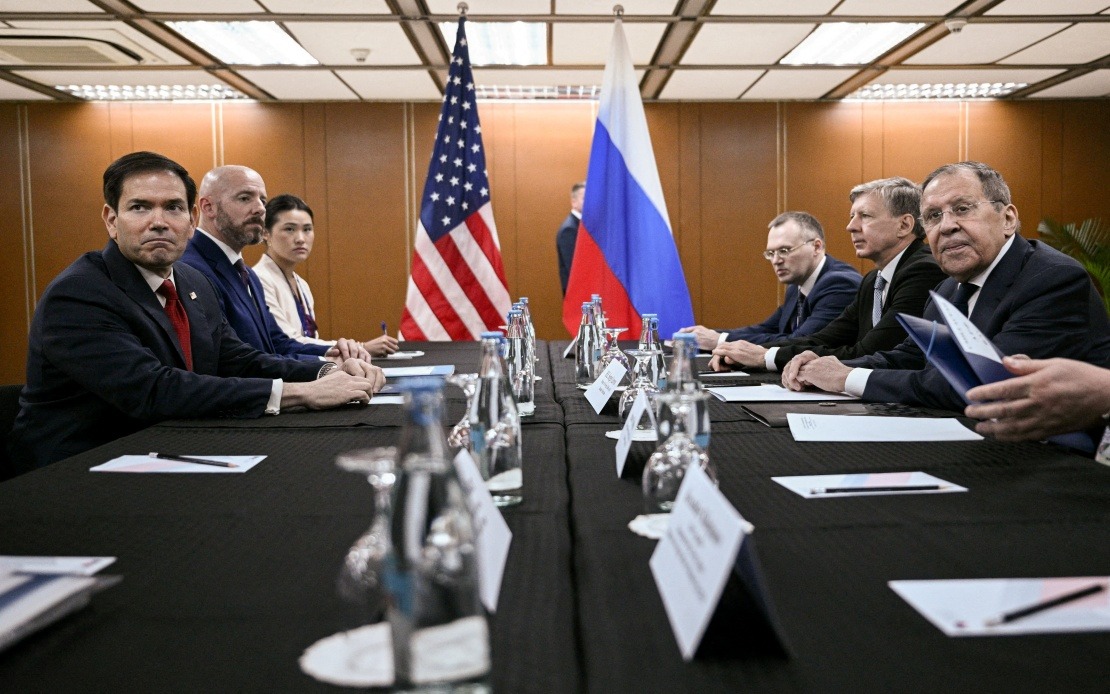
In a significant gesture toward maintaining communication channels amid broader geopolitical friction, Russian Foreign Minister Sergey Lavrov and United States Secretary of State Marco Rubio have agreed to preserve and expand diplomatic contacts between their respective foreign ministries. The accord, reached during their Manila meeting and announced by Russia's Foreign Ministry on Thursday, signals a willingness from both capitals to prevent the complete deterioration of official relations despite deep disagreements over fundamental strategic issues. The agreement underscores the persistent importance both nations place on preserving mechanisms for dialogue, even as their underlying positions on numerous international matters remain fundamentally opposed.
The framework for continued engagement specifically encompasses interactions conducted through multilateral and international organisations where both Russia and the United States maintain active participation. This approach allows the two governments to maintain substantive discussions on matters of mutual concern without necessarily implying a broader warming of bilateral relations or a fundamental shift in their respective foreign policy positions. Such arrangements have historically provided valuable space for dialogue during periods of heightened tension, enabling both sides to manage crises and prevent miscalculations that could escalate confrontations.
Beyond the commitment to ongoing ministerial contacts, Lavrov and Rubio also directed their attention toward the practical challenges facing diplomatic operations. Both officials discussed measures aimed at normalising the working conditions for Russian and American diplomatic missions stationed in each other's capitals. This focus on the operational aspects of diplomatic presence reflects recognition that functional embassy and consulate operations remain essential infrastructure for any credible diplomatic relationship, regardless of the broader political climate. Improved working conditions for diplomatic staff can facilitate more effective communication and reduce unnecessary friction in day-to-day relations.
A particularly notable development emerging from the talks involves space cooperation. Both the Russian Foreign Ministry statement and the reported exchange indicate that Lavrov and Rubio welcomed the resumption of full-scale engagement between Roscosmos, Russia's state space agency, and the National Aeronautics and Space Administration (NASA). This represents a significant area of potential collaboration, as space exploration has historically transcended political divisions and provided opportunities for scientific cooperation. The two space agencies have maintained certain cooperative programmes even during periods of strained relations, recognising that space research benefits from international coordination and resource-sharing.
The emphasis on reviving space partnerships carries implications that extend beyond the technical realm of rocket launches and orbital mechanics. Cooperation in space exploration serves symbolic purposes, demonstrating that even deeply divided nations can find common ground in pursuing knowledge and technological advancement. For Southeast Asian nations monitoring superpower relations, renewed space cooperation can provide reassurance that dialogue channels remain viable and that the two powers maintain incentives to prevent their rivalry from spinning completely out of control.
The two officials also championed the development of interparliamentary exchanges between Russia and the United States. Such legislative contacts provide additional channels for dialogue beyond executive-level diplomacy, potentially offering opportunities for substantive discussions on bilateral issues and international challenges. Parliamentary exchanges have historically served as valuable venues for building personal relationships between political leaders and for exploring common ground on specific policy matters. Strengthening these connections can help prevent mutual misunderstandings and create networks of trust across the legislative divide.
Cultural ties featured prominently in the discussion as well, with both Lavrov and Rubio calling for expanded people-to-people connections and cultural exchanges. The emphasis on cultural engagement reflects understanding that sustainable diplomatic relations rest upon broader foundations than official communications alone. Culture, academia, and artistic endeavour create human connections that can endure even when political relations grow strained. Educational exchanges, artistic partnerships, and cultural festivals maintain threads of mutual understanding that can facilitate reconciliation if and when political circumstances change.
The Manila setting for this diplomatic encounter carries its own significance for regional observers. The Philippines has long served as a venue for important diplomatic conversations, and choosing Manila underscores both nations' commitment to maintaining open channels within the Asia-Pacific context. For Malaysia and other Southeast Asian countries concerned about superpower competition and its potential spillover effects in the region, demonstrations of Russian-American willingness to engage constructively provide some reassurance that the region will not become trapped in an uncontrolled great power conflict.
The timing of this agreement reflects evolving assessments within both Moscow and Washington regarding the sustainability of their confrontational posture. Complete diplomatic rupture carries costs and risks that both sides recognise, regardless of their profound disagreements over Ukraine, NATO expansion, and other fundamental security concerns. Maintaining institutional channels for communication preserves the possibility of preventing accidents or miscalculations from spiralling into larger conflicts, a concern that has driven great power diplomacy for centuries.
For regional stakeholders including Malaysia, observing such diplomatic gestures provides insight into how superpower rivalry operates in practice. Rather than total isolation or confrontation, the pattern reflects a complex mixture of competition and selective cooperation. Nations navigating between competing powers must understand this nuanced reality—that even adversaries maintain relationships, that dialogue persists alongside disagreement, and that various spheres of interaction (cultural, scientific, parliamentary) can function independently from broader political disputes. This recognition helps guide regional nations as they craft balanced foreign policies that engage with multiple major powers without being forced into exclusionary alignments.
The agreement to continue contacts ultimately reflects a mature understanding of international relations. Complete severance of diplomatic ties typically occurs only in the most severe circumstances, such as declared wars or fundamental recognition disputes. Russia and the United States, despite their serious disagreements, continue to recognise their mutual status as major powers whose interaction shapes global developments. Preserving communication channels serves the interests of both nations and contributes to international stability, a consideration that gains additional weight when examining how superpower relations influence regional equilibrium throughout Asia and beyond.

