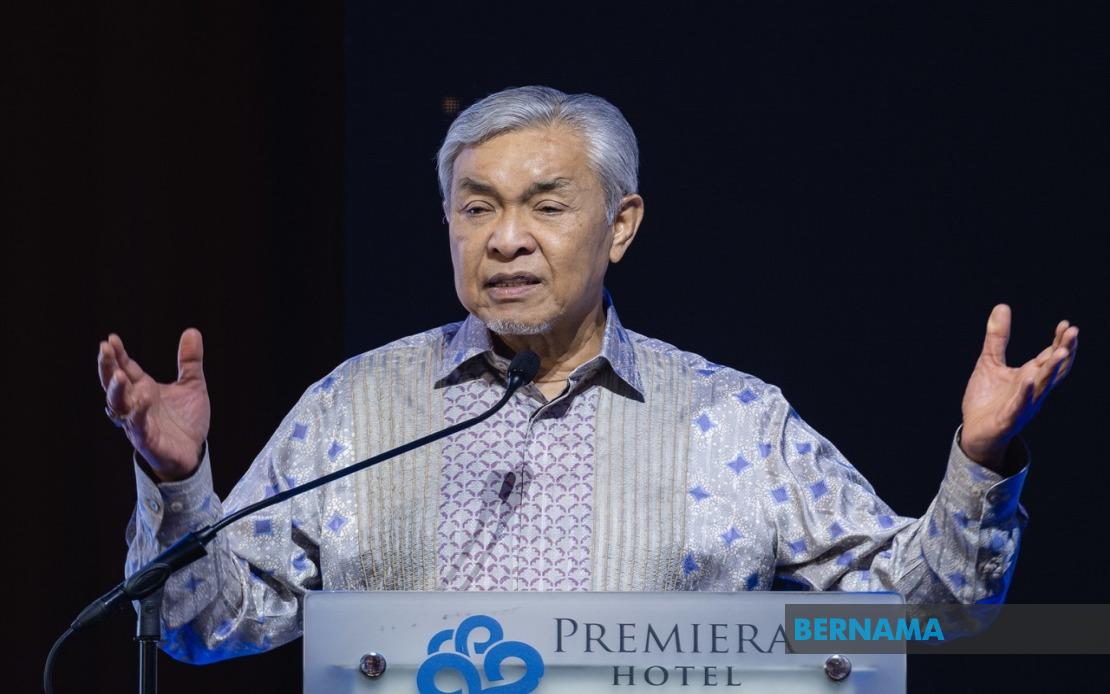
Deputy Prime Minister Datuk Seri Dr Ahmad Zahid Hamidi has pledged that outstanding proposals for new rural road projects in Sabah and Sarawak will receive consideration during the Budget 2027 planning cycle. In remarks delivered after the Ministry of Rural and Regional Development's annual awards ceremony in Kuala Lumpur on June 29, Ahmad Zahid, who doubles as Minister of Rural and Regional Development, emphasised that infrastructure connectivity remains a core responsibility of his ministry, particularly where remote settlements lack established links to regional commercial hubs.
The commitment reflects growing political attention to infrastructure gaps across East Malaysia, where vast distances and challenging terrain have historically constrained rural connectivity. Ahmad Zahid framed the pledge within a broader framework of fiscal prudence, noting that all such initiatives must ultimately satisfy the gatekeeping requirements imposed by the Ministry of Finance and the Public Works Department. This procedural caveat underscores the reality that ministerial enthusiasm for projects must navigate the formal approval machinery before capital allocation can occur, a process that has frequently delayed rural infrastructure rollout across the country.
The Deputy Prime Minister articulated a vision extending beyond mere road construction, calling on the ministry to adopt what he termed a "new discipline" in project management and resource deployment. This philosophy centres on ruthlessly evaluating existing programmes against tangible community outcomes, with underperforming initiatives facing termination rather than indefinite continuation. Ahmad Zahid's framework explicitly separates successful ventures meriting expansion from sluggish programmes requiring acceleration or programmes demonstrating insufficient developmental impact requiring elimination altogether. This efficiency-focused approach signals an attempt to counter persistent critiques that rural development spending often produces infrastructure with limited real-world utility or insufficient community benefit.
The conceptual reframing of rural development itself formed a significant component of Ahmad Zahid's message. He stressed that infrastructure construction, while foundational, represents only the initial stage of genuine rural progress. Contemporary rural development strategy, he argued, must transcend bricks-and-mortar approaches to establish comprehensive ecosystems capable of generating sustainable employment and income generation at the community level. This perspective aligns with international development discourse emphasising that roads and utilities alone cannot drive prosperity without corresponding economic opportunities and human capital investment.
For Malaysian policymakers, the budgetary commitment carries particular significance given the historical pattern of infrastructure promises in East Malaysia that have proceeded slowly or incompletely. Sabah and Sarawak, collectively representing over 40 per cent of the nation's land area yet housing only around 16 per cent of the population, have long contended with proportionally lower infrastructure investment relative to their geographic expanse. Rural communities in both states frequently depend on unsurfaced or poorly maintained tracks that become impassable during monsoon seasons, constraining economic activity, educational access, and health service delivery.
The inclusion of proposed rural roads in Budget 2027 deliberations does not guarantee funding approval, as Ahmad Zahid's careful language about procedural compliance with Finance Ministry protocols demonstrates. However, the explicit commitment to consider such requests signals that East Malaysian rural infrastructure needs have achieved visibility at the highest decision-making levels. This represents a modest shift from periods when rural road allocations appeared determined primarily by established budgetary conventions rather than responsive assessments of connectivity deficits.
Ahmad Zahid's emphasis on public service reform extending beyond mechanistic digital transformation deserves particular attention given the ministry's historical execution challenges. He contended that modernisation must commence with mindset changes, institutional courage to make difficult decisions, and organisational readiness to depart from established practices. This framing implicitly acknowledges that technological upgrades alone cannot resolve implementation deficiencies rooted in institutional culture or decision-making processes. The appeal for lifelong learning, innovation cultivation, and integrity reinforcement addresses persistent concerns about service quality and accountability within rural development bureaucracies across Malaysia.
The consultation process that Ahmad Zahid referenced as prerequisite to finalising project details remains undefined in scope and timeline. Effective consultation with state governments in Sabah and Sarawak, local authorities, rural community representatives, and infrastructure specialists would theoretically strengthen project selection and design. However, consultation processes can themselves extend timelines for implementation, particularly in East Malaysia where geographical distances complicate stakeholder engagement. The balance between inclusive deliberation and timely decision-making will substantially influence whether this budgetary pledge translates into tangible road construction.
For Southeast Asian context, Malaysian policy discussions regarding rural infrastructure reflect broader regional challenges of ensuring inclusive development across geographically dispersed populations with uneven economic integration. Thailand, Indonesia, and the Philippines grapple with comparable rural-urban disparities and infrastructure distribution questions. Malaysia's institutional capacity and financial resources position it to address such challenges more decisively than many regional peers, yet implementation patterns suggest structural barriers beyond budgetary availability.
The Deputy Prime Minister's framing of rural development as ecosystem-building rather than project completion reflects international best practice but demands complementary policies addressing human capital, market access, and productive capacity. Road construction without corresponding agricultural extension services, vocational training, or market linkage support risks producing infrastructure serving primarily as conduits for rural-to-urban migration rather than rural income generation. Whether the ministry's operational decisions match this conceptual sophistication remains an outstanding question.
Ahmad Zahid's commitment to Budget 2027 consideration of rural road proposals establishes a temporal checkpoint for assessing governmental responsiveness to East Malaysian infrastructure advocacy. Constituent demands for improved rural connectivity carry legitimate developmental rationale, and acknowledgment at the deputy premier level provides modest grounds for cautious optimism. Nevertheless, the gap between budgetary consideration and actual implementation remains substantial, and Sabah and Sarawak residents would reasonably expect detailed project schedules and transparent selection criteria before celebrating infrastructural breakthroughs.

