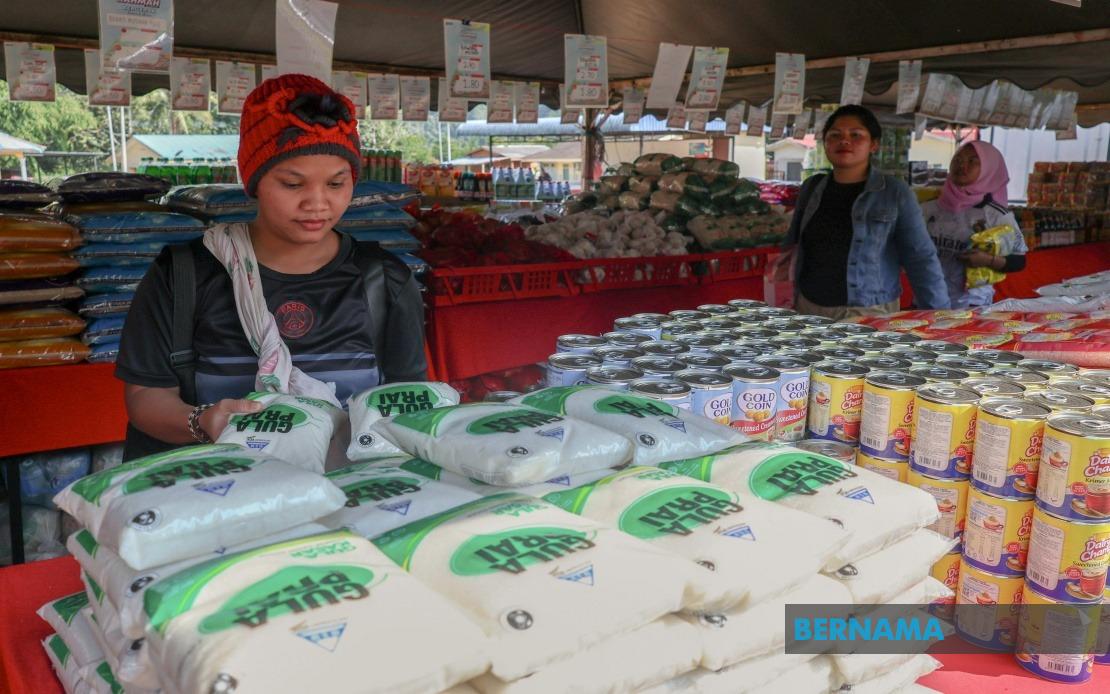
The Domestic Trade and Cost of Living Ministry has reported substantial progress in its Essential Goods Distribution Programme, which aims to bring price parity between urban and remote communities across Malaysia. Speaking in Parliament on July 16, the ministry highlighted tangible savings for residents in isolated zones where geographical barriers have historically inflated consumer costs for basic necessities.
Prior to the programme's introduction, rural dwellers bore a disproportionate financial burden simply due to limited infrastructure and difficult logistics. The LPG cylinder price in Pulau Libaran, Sabah, illustrates this disparity starkly. What once cost residents RM39 per cylinder—a 47 per cent premium over the standard controlled rate—now stands at RM26.60, bringing locals into alignment with prices in more accessible areas. Similarly, packet cooking oil prices have fallen from RM3.50 to RM2.50, a 29 per cent reduction that meaningfully impacts household budgets in communities where discretionary income remains limited.
The 2024 iteration of the programme commands a RM250 million annual budget, reaching 1.03 million people across six target states: Sabah, Sarawak, Terengganu, Kelantan, Pahang and Kedah. This geographical spread reflects a strategic focus on Malaysia's most isolated regions, where market competition is weakest and distribution costs highest. The infrastructure supporting delivery is itself impressive, spanning 212 distinct zones, 828 distribution areas, and 1,532 individual points-of-sale where residents can purchase controlled items at regulated prices.
Sabah represents the largest beneficiary, receiving RM107.3 million in allocation and serving 492,566 residents through an extensive network of 78 zones, 228 distribution areas and 587 points-of-sale. Within Sabah, the Libaran parliamentary constituency—represented by Datuk Suhaimi Nasir, who raised the question in the Dewan Rakyat—receives focused attention with RM1.76 million dedicated to nine points-of-sale serving 17,061 residents across eight distribution areas. This localised commitment suggests responsiveness to constituency-specific advocacy in Parliament.
The controlled items included in the programme represent the essentials of Malaysian household life: sugar, wheat flour, packet cooking oil, white rice, liquefied petroleum gas, RON95 petrol and diesel. These commodities touch every household regardless of income level, making price standardisation a matter of basic economic fairness. For rural families already shouldering higher transport costs and limited employment opportunities, any reduction in the price of cooking fuel or cooking oil translates directly to improved purchasing power for other necessities.
Ensuring programme integrity has required the ministry to implement rigorous control mechanisms. Standard operating procedures govern all deliveries, reducing opportunities for diversion or illegal resale at market prices. Monitoring and coordination committees operate at both federal and state levels, creating multiple oversight layers that discourage corruption or leakage. This structural approach acknowledges that good intentions alone prove insufficient—sustained effectiveness demands institutional checks and transparent accountability.
An independent Programme Outcome Evaluation Committee assessed the initiative's real-world impact on intended beneficiaries, finding strong endorsement among respondents. Survey data indicated that most participants perceived direct relief in their cost of living, validating the premise that price controls meaningfully improve household finances. Importantly, beneficiaries expressed desire for programme continuation, suggesting that what government initially framed as temporary intervention has become recognised as essential ongoing support.
For Malaysian policymakers, this programme addresses a fundamental tension in market economies: how to protect vulnerable populations from geographic disadvantage without creating perverse incentives or unsustainable fiscal burdens. The RM250 million investment targets precisely those communities where market mechanisms have failed to deliver competitive pricing. Rural residents in Sabah and Sarawak cannot shop across multiple retailers to find better prices; their geographical isolation makes them captive consumers vulnerable to monopolistic pricing. Government intervention equalises their access to essential goods.
The programme also carries significance for Malaysia's political economy. Rural constituencies, particularly in East Malaysia, have historically felt marginalised in development discussions dominated by urban concerns. This direct investment in price stability for rural communities represents implicit recognition that inclusive growth requires attending to purchasing power in less economically dense regions. The responsiveness to Datuk Suhaimi Nasir's parliamentary question—providing detailed figures for his specific constituency—demonstrates how parliamentary oversight can translate into tailored policy application.
Looking forward, the sustainability of this programme warrants examination. At RM250 million annually, it represents a manageable fiscal commitment, yet depends on continued government prioritisation. Inflation in distribution costs, changes in global commodity prices, or shifts in political focus could alter the programme's scope. Additionally, while price controls prevent profiteering, they may inadvertently reduce merchant incentives to expand distribution networks into even more remote areas, potentially creating a ceiling on the programme's reach.
The success metrics also deserve scrutiny. Evaluation committees have measured beneficiary satisfaction, yet longer-term assessments regarding entrepreneurship, market development, or economic resilience in participating communities remain unclear. A programme that perpetually subsidises consumption without fostering local production capacity may provide relief without enabling genuine development. The challenge for KPDN involves balancing immediate affordability with sustainable rural economic transformation.
For Southeast Asian readers observing Malaysia's approach, the programme offers a model of how middle-income countries can leverage targeted state intervention to address market failures without abandoning market mechanisms entirely. Rather than imposing price controls nationally—which would distort supply chains and create shortages—Malaysia concentrates support where genuine market failure exists. This geographic targeting combined with institutional oversight represents pragmatic policy design suited to developing economies with significant regional inequality.
Ultimately, the Essential Goods Distribution Programme demonstrates that addressing rural disadvantage requires sustained investment and systematic thinking. By reducing LPG costs from RM39 to RM26.60 and cooking oil from RM3.50 to RM2.50, the ministry has concretely improved living standards for over one million Malaysians. Whether this intervention becomes a permanent feature of Malaysia's social infrastructure or remains a cyclical initiative depends on continued political commitment and demonstrated programme effectiveness—metrics the government now actively measures.

