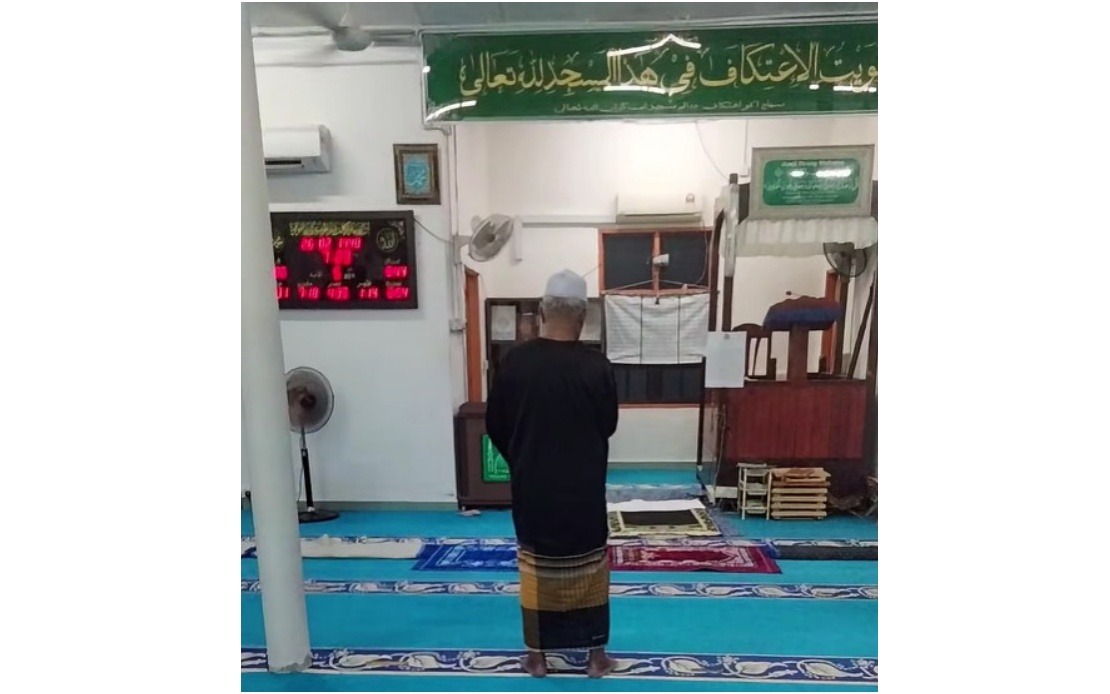
A video that recently circulated online depicting sparse congregation numbers at Masjid Tanjung Resang in Mersing has reignited discussion about the demographic pressures facing rural communities across Malaysia. The 15-second clip, shared widely across Facebook and WhatsApp, showed a solitary worshipper conducting prayers while simultaneously fulfilling the roles of imam and bilal, drawing observers' questions about the mosque's operational capacity and management effectiveness. However, local officials and mosque leadership have countered the narrative, attributing the apparent emptiness not to institutional failure but to the broader exodus of residents from rural areas seeking employment and better opportunities elsewhere.
Mersing Member of Parliament Muhammad Islahuddin Abas, who himself resides in the village, framed the situation as emblematic of modern rural Malaysia rather than a crisis specific to the mosque. He explained that despite the proliferation of residential buildings throughout the area, the actual population base has shrunk considerably as families have relocated to urban centres or taken work assignments that keep them away from the village for extended periods. This pattern mirrors trends visible across many Malaysian rural districts, where aging infrastructure and abundant housing stock sit alongside dwindling year-round populations. Yet despite these demographic headwinds, Muhammad Islahuddin emphasized that the mosque has maintained its regular schedule of religious programmes, which includes weekly talks, educational lectures, and congregational recitations such as Yasin sessions.
The viral video caught even the MP by surprise when a colleague in Kuala Lumpur forwarded him a screenshot via WhatsApp, illustrating how quickly content can circulate beyond its original context and reach audiences with little familiarity of local conditions. Muhammad Islahuddin acknowledged the initial shock value of the imagery but adopted a notably pragmatic perspective, identifying an unexpected benefit within the controversy. He suggested that the very act of the video going viral had inadvertently served a promotional function, introducing Masjid Tanjung Resang to people across the country who might otherwise never have learned of its existence. This framing transforms a moment of perceived embarrassment into an opportunity for the mosque to gain recognition and potentially attract visits from those previously unaware of its presence.
One significant barrier to awareness that Muhammad Islahuddin highlighted is the mosque's location relative to main transportation routes. Situated off the primary road network, the facility remains somewhat hidden from casual observation, meaning that even residents of the broader Mersing district and casual visitors may not realize the mosque is there. This geographic isolation, while perhaps contributing to the demographic challenge, also underscores the importance of the facility for specific communities. Muhammad Islahuddin described the mosque as particularly welcoming to visitors of all faiths, and emphasized its role as a convenient stopping point for hikers using the facilities at Gunung Arong. The provision of amenities for trekkers represents a form of community service that extends beyond the traditional congregational function, positioning the mosque as a resource for a wider array of stakeholders than its core Muslim population.
Masjid Tanjung Resang's chairman, Abdul Syamil Abdul Fadzil, moved quickly to address the viral narrative by contacting relevant authorities and providing context to the situation. The Johor Islamic Religious Affairs Department (JAINJ) reached out following the social media circulation, and Abdul Syamil took the opportunity to explain the actual circumstances at the mosque. He clarified that the individual shown in the video was performing a voluntary prayer as the mosque's noja, or assistant, rather than representing typical congregational prayer times. This distinction carries significance in Islamic practice, as voluntary prayers conducted outside mandatory congregation times follow different protocols and expectations regarding participation numbers.
Abdul Syamil stressed that the snapshot captured in the video fundamentally misrepresents the mosque's operational reality and overall vitality. He stated unequivocally that Masjid Tanjung Resang continues to host various religious activities on a regular, consistent basis, maintaining its role as a functioning centre for Islamic practice and learning within the community. The chairman's emphasis on continuity and regular programming suggests that while attendance may fluctuate due to demographic factors, the institution itself remains organizationally active and committed to its religious mission. The JAINJ's awareness and apparent acceptance of the situation indicates that state-level Islamic authorities understand the context and have not viewed the viral video as evidence of systemic problems requiring intervention.
The incident highlights a broader tension within rural Malaysia between physical infrastructure and resident population. Many villages possess substantial buildings and facilities constructed during periods of greater prosperity or population, yet face the reality of diminished communities today. Masjid Tanjung Resang appears to be caught within this paradox—a well-maintained facility that serves its committed congregants consistently, yet occasionally appears underutilized to outside observers unfamiliar with local demographic patterns. The mosque's ability to continue programming despite lower attendance numbers speaks to the dedication of its volunteer leadership and the resilience of religious institutions in maintaining community functions even under challenging circumstances.
For rural Malaysia more broadly, the Mersing mosque situation encapsulates challenges that extend well beyond religious institutions. Schools, community centres, and local government services across the country face similar pressures as working-age populations migrate cityward. The visibility of this particular case through social media amplification underscores how narratives about rural decline can spread rapidly without full contextual understanding, potentially affecting perceptions of community capacity and viability. Muhammad Islahuddin's willingness to provide transparent explanation rather than defensive dismissal offers a model for how local leaders might engage with viral content that touches on sensitive community issues.
The response from both the MP and mosque leadership also reveals the complex relationship between rural communities and digital connectivity. The very factors that have contributed to population decline—improved transportation, employment opportunities in cities, access to telecommunications—also mean that events in remote villages can achieve instant national exposure. This creates new challenges for rural institutions and leaders who must navigate public perception and manage narratives about their communities. Masjid Tanjung Resang's experience suggests that transparency and context-provision represent more effective responses than dismissal or attempts to suppress information.
Ultimately, the viral video controversy surrounding Masjid Tanjung Resang serves as a microcosm of rural Malaysia's contemporary challenges and resilience. The mosque continues its religious functions and maintains community engagement despite population pressures that many institutions cannot withstand. Rather than viewing the incident as a crisis, local leaders have framed it as an opportunity to increase awareness and counter misconceptions about what constitutes a functioning rural mosque. This perspective may prove instructive for other communities navigating the tension between demographic realities and institutional expectations in an increasingly urbanized nation.

