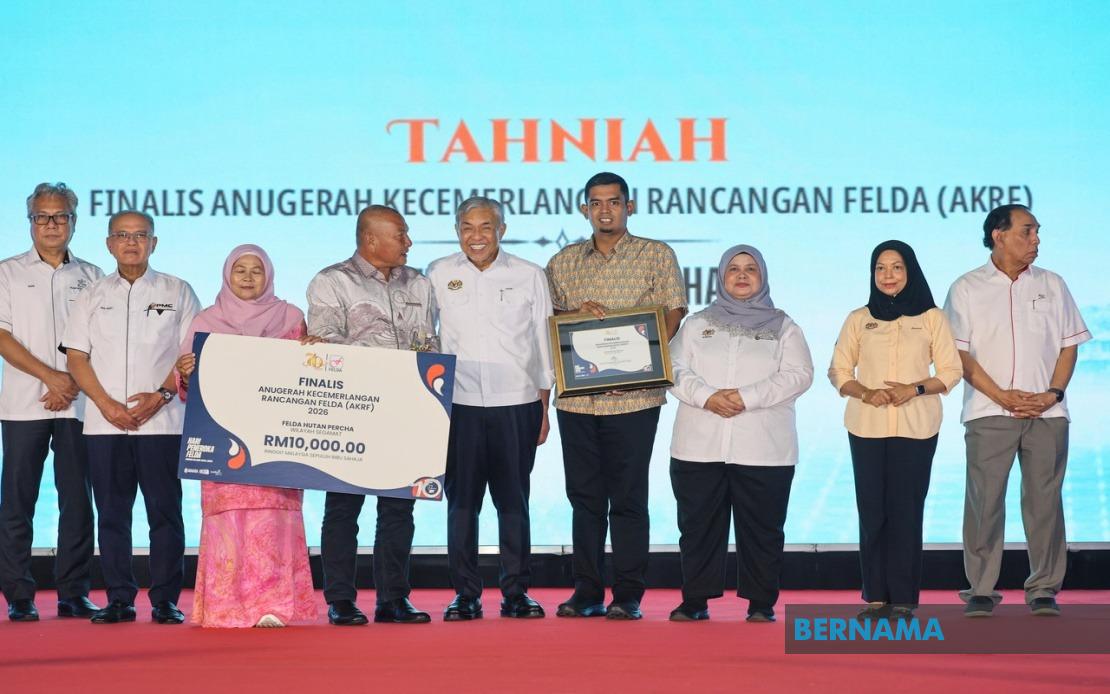
Deputy Prime Minister Datuk Seri Dr Ahmad Zahid Hamidi has called for a fundamental shift in how Malaysia approaches rural development, arguing that the traditional focus on domestic initiatives must give way to a more internationally-oriented strategy that positions rural enterprises within broader ASEAN and global networks. Speaking at the World Rural Development Day 2026 celebration held at Bandar Tun Razak Stadium in Maran, the Rural and Regional Development Minister stressed that rural entrepreneurs require both the mindset and support systems to venture beyond Malaysia's borders and compete on regional and international platforms.
The Deputy Prime Minister's remarks reflect a growing recognition within government circles that rural economic prosperity cannot be achieved in isolation. With neighbouring ASEAN economies increasingly integrated through various trade frameworks, Malaysian rural producers risk being left behind if they remain confined to domestic markets with limited growth potential. Ahmad Zahid specifically highlighted the global halal economy as a strategic opportunity for rural businesses, noting that Malaysian products and brands possess inherent competitive advantages that have yet to be fully leveraged in international contexts.
At the heart of Ahmad Zahid's vision is the National Rural Economy Agenda, which he positioned as Malaysia's comprehensive framework for the next phase of rural transformation. This blueprint represents a departure from earlier rural development models that emphasised infrastructure provision as an end in itself, moving instead towards creating sustainable, market-responsive enterprises capable of competing across borders. The strategic shift underscores the government's acknowledgment that rural development must be economically dynamic rather than purely infrastructural.
To operationalise this vision, the Rural and Regional Development Ministry has rolled out initiatives designed to enhance the marketability and competitiveness of rural entrepreneurs. The RisSMart and IkonDesa programmes, introduced over the preceding three years, have become central to efforts enabling rural business owners to access wider markets and establish stronger commercial networks. These initiatives reflect a data-driven approach to rural economic development, moving away from generic support mechanisms towards targeted interventions addressing specific bottlenecks in rural entrepreneurship.
The quantifiable results from these efforts demonstrate substantial economic momentum. More than 7,000 new rural entrepreneurs have been developed through various government support mechanisms, generating approximately 15,000 employment opportunities across rural communities. The economic output is equally impressive, with these enterprises collectively achieving sales exceeding RM1.77 billion. These figures suggest that the ministry's interventions have successfully catalysed rural economic activity, though questions persist about whether these enterprises possess sufficient scale and sophistication to compete in international markets without additional support.
Beyond enterprise development, Ahmad Zahid highlighted the government's commitment to human capital enrichment as foundational to rural competitiveness. The achievement of nearly 500 Orang Asli students gaining university admission represents a historic milestone and signals the government's intent to equip rural populations with tertiary education credentials necessary for participation in knowledge-intensive sectors. This educational investment carries particular significance for indigenous communities, whose educational access has historically lagged behind national averages and whose participation in professional employment remains substantially underrepresented.
Infrastructural improvements have remained a substantial government investment during the 12th Malaysia Plan period. Nearly 5,000 kilometres of rural roads underwent upgrading to enhance connectivity and facilitate commerce, while electricity connections reached more than 7,000 additional homes and clean water supply extended to over 10,000 rural households. The government also constructed or refurbished nearly 10,000 homes, collectively benefiting approximately 40,000 rural residents. These investments address fundamental development prerequisites, yet their economic impact depends significantly on whether improved infrastructure translates into sustainable business activity rather than remaining mere provision of public goods.
The international dimension of Ahmad Zahid's remarks gains further context through Malaysia's participation in the newly-established World Rural Development Day observance. The United Nations General Assembly proclaimed July 6 as the annual date for this global commemoration, marking the establishment anniversary of the Centre on Integrated Rural Development for Asia and the Pacific. Malaysia's formal adoption of this observance from 2026, following the inaugural global celebration in 2025, positions the country within an international framework increasingly focused on rural development coordination and knowledge-sharing among developing economies.
The implications of this internationalised approach extend beyond individual enterprise performance to systemic economic reorganisation. If Malaysian rural entrepreneurs successfully penetrate ASEAN markets, the resulting demand would likely stimulate agricultural and manufacturing sectors in rural areas, potentially reversing decades of rural-urban migration that has depleted rural communities of working-age populations. The ASEAN halal economy, valued at billions of dollars annually and dominated by Muslim-majority nations, presents particularly fertile opportunities for Malaysian rural producers who benefit from established halal certification frameworks and supply chain networks.
However, realising Ahmad Zahid's vision requires addressing persistent structural constraints. Rural entrepreneurs often face disadvantages in accessing credit, navigating international regulatory requirements, and competing against larger, better-capitalised firms from urban centres. The success of RisSMart and IkonDesa will ultimately depend on whether these programmes provide adequate ongoing support rather than functioning as one-off interventions. Additionally, market access alone cannot overcome quality inconsistencies or supply chain vulnerabilities that frequently undermine rural enterprises attempting international expansion.
The emphasis on border-transcending development also reflects Malaysia's regional economic positioning within ASEAN. As member states deepen integration through frameworks such as the ASEAN Economic Community, rural economies that remain domestically-focused risk becoming economically marginalised. The Deputy Prime Minister's call for rural entrepreneurs to embrace international markets represents not merely aspirational rhetoric but an economic imperative reflecting the structural realities of contemporary regional commerce.
Looking forward, the success of Ahmad Zahid's rural development model will be measured not only by enterprise creation statistics but by the proportion of rural businesses achieving sustainable international market presence. The policy framework emphasising human capital, infrastructure, and market access addresses critical preconditions, yet implementation effectiveness and the willingness of rural entrepreneurs to embrace cross-border commerce remain open questions. For Malaysian rural communities and the broader Southeast Asian region, the outcomes of this development approach may demonstrate whether domestically-focused rural economies can successfully transform into internationally-competitive participants in regional value chains.

