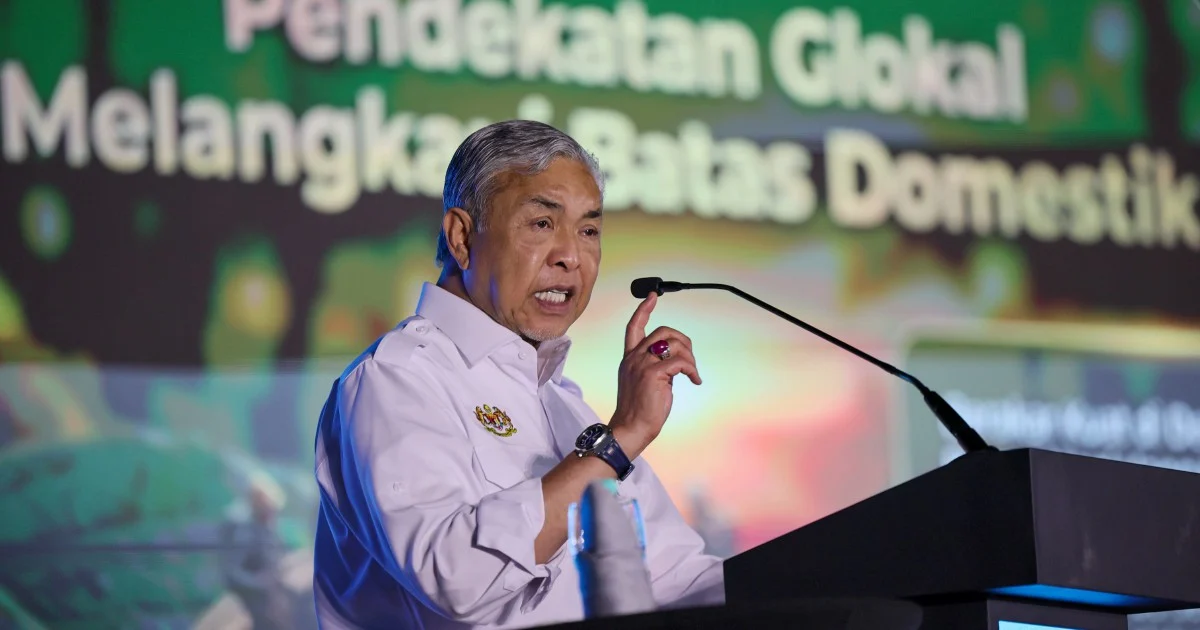
Deputy Prime Minister Datuk Seri Dr Ahmad Zahid Hamidi has underscored the critical importance of synchronising Malaysia's rural development trajectory with broader global economic and policy currents, positioning the National Rural Economic Agenda as a comprehensive roadmap for this transformative shift. Speaking at the MARAN conference in Maran, Zahid emphasised that rural progress cannot be pursued in isolation from international developments, suggesting that sustainable advancement in Malaysia's countryside requires careful calibration between domestic aspirations and external realities.
The Deputy Prime Minister's remarks come at a time when Malaysia faces the dual challenge of modernising its rural economy while maintaining competitiveness in an increasingly interconnected world. The National Rural Economic Agenda, according to Zahid's framing, represents more than merely a domestic policy initiative; it functions as a blueprint capable of ushering in a new developmental epoch characterised by strategic alignment between rural prosperity and Malaysia's obligations within the global arena. This conceptualisation reflects growing recognition among policymakers that rural communities cannot benefit from insular economic strategies that ignore international market trends, technological disruption, and shifting consumer preferences.
Zahid's emphasis on parallel progression between rural and global agendas addresses a longstanding tension in Malaysian development policy. Rural regions have historically operated according to sectoral priorities—agriculture, fisheries, and small-scale industries—often designed with limited reference to global supply chains or international regulatory frameworks. The Deputy Prime Minister's position suggests a deliberate policy recalibration, one that seeks to integrate rural economic actors into broader value networks whilst preserving their competitive advantages grounded in local resource endowments and cultural identities.
The timing of these remarks holds particular significance for Southeast Asia more broadly. As regional economies navigate post-pandemic recovery, geopolitical repositioning, and the acceleration of digital transformation, countries like Malaysia must consider how rural populations participate in these transitions. Rural areas frequently lag in digital infrastructure adoption, skills development, and access to international markets—challenges that demand strategic intervention at both national and international levels. By tethering rural development to global agendas, Zahid's approach implicitly acknowledges these gaps and signals intent to bridge them through deliberate policy coordination.
The integration of rural growth with global development priorities carries implications for multiple sectors. Agricultural producers in rural Malaysia, for instance, increasingly face pressure to meet international sustainability standards, climate commitments, and food safety regulations. Similarly, rural manufacturing and service industries must align with regional trade agreements and international quality benchmarks. The National Rural Economic Agenda, if constructed with these considerations at its core, could facilitate smoother transitions for rural enterprises navigating such complexities. This alignment reduces the risk that rural development becomes a silo disconnected from market realities, whilst simultaneously ensuring that global imperatives do not overwhelm local distinctiveness.
Zahid's framing also reflects Malaysia's positioning within the Association of Southeast Asian Nations and broader Indo-Pacific frameworks. Rural development strategies cannot ignore the region's commitment to initiatives such as the Regional Comprehensive Economic Partnership or bilateral trade partnerships. Rural entrepreneurs and producers, particularly those in agribusiness and light manufacturing, benefit from understanding these international commitments and positioning themselves strategically within resulting value chains. The Deputy Prime Minister's remarks suggest awareness that rural communities merit inclusion in Malaysia's international economic strategy, rather than serving merely as domestic constituencies.
Implementing such an integrated approach presents considerable administrative and technical challenges. Coordinating multiple levels of government—federal, state, and local authorities—with international engagement requires robust institutional frameworks and clear communication channels. Rural development agencies must work in concert with international trade bodies, environmental regulators, and technology providers. Additionally, rural communities themselves require capacity building to understand and engage with global standards and opportunities. The success of the National Rural Economic Agenda will ultimately depend on whether such institutional coordination translates into tangible benefits for rural residents and enterprises.
The emphasis on global alignment also carries implications for financing rural development. International development banks, climate funds, and multilateral institutions increasingly direct investment toward projects demonstrating alignment with global sustainability goals and development paradigms. By positioning rural Malaysia within this international framework, Zahid's approach may open pathways for accessing such funding sources. This financial dimension underscores a pragmatic recognition that rural development in the 21st century demands investment levels that domestic budgets alone may struggle to sustain, making international engagement not merely philosophically desirable but economically necessary.
Zahid's pronouncements on rural development strategy indicate a maturing approach to regional economic policy, one that acknowledges the irreversible interconnectedness of modern economies. Rural Malaysia's prosperity increasingly hinges on the ability of its communities and enterprises to participate effectively in regional and global markets, adopt international best practices, and meet standards set by international consumers and regulators. The National Rural Economic Agenda, positioned as a bridge between local aspirations and global realities, represents an attempt to construct development pathways that advance rural livelihoods whilst maintaining coherence with broader strategic imperatives shaping Malaysia's position in the world economy.

