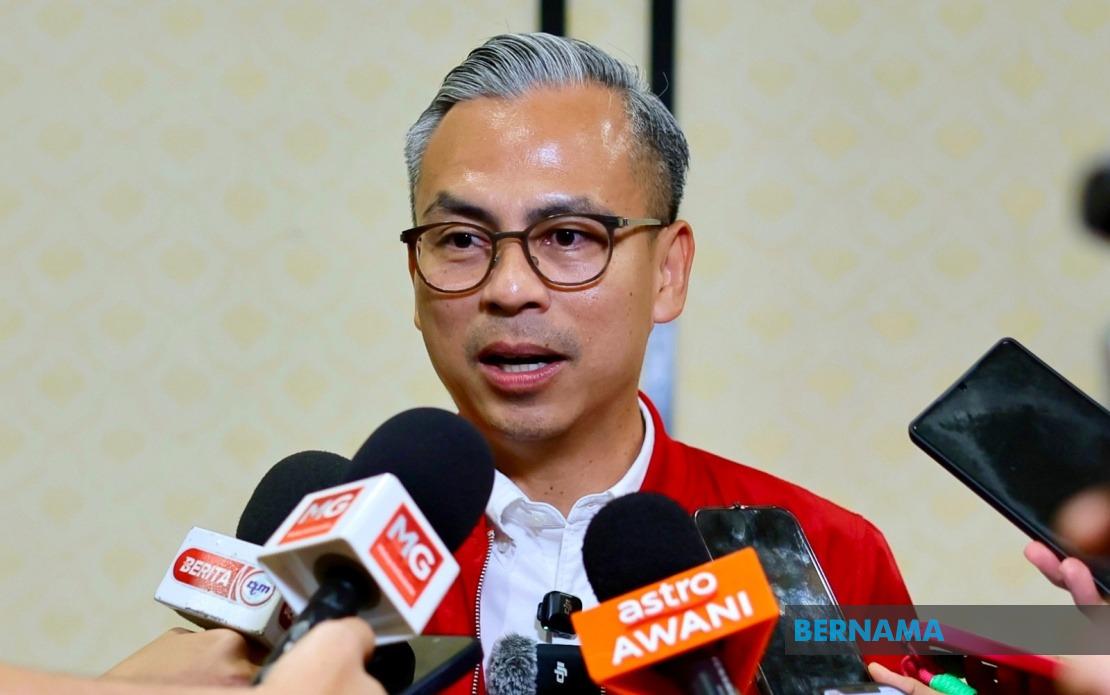
Communications Minister Datuk Fahmi Fadzil has extended an offer to facilitate a live televised dialogue between incumbent Johor Menteri Besar Datuk Onn Hafiz Ghazi and Pakatan Harapan's Dr Maszlee Malik, the PH candidate contesting the Puteri Wangsa state seat. Speaking in Muar, Fahmi indicated that Radio Televisyen Malaysia would be willing to broadcast the exchange if both parties agree, with the discussion to centre on Johor's development trajectory and long-term vision for the state.
The proposal comes amid ongoing debate within political circles about whether Pakatan Harapan should first declare its Menteri Besar candidate before engaging in public discourse with the ruling coalition. Fahmi sought to reframe the conversation, arguing that the primary purpose of such a platform would not be partisan point-scoring but rather a substantive exchange of ideas rooted in policy and governance. He emphasised that this represents an opportunity for both leaders to demonstrate their capacity to engage constructively with competing perspectives, a quality he characterised as fundamental to effective state stewardship.
Fahmi stressed that the logistics are flexible and that both participants could meet at a mutually convenient time and location, whether in Johor Bahru or elsewhere. The minister indicated his personal readiness to facilitate the arrangement through RTM TV1, underscoring the government's commitment to ensuring voters have access to meaningful dialogue between contenders. This stance reflects broader efforts by Pakatan Harapan to present itself as open to public accountability and direct engagement with voters during the campaign period.
The Communications Director of Pakatan Harapan also praised Dr Maszlee's recent initiative to engage with forty-one young voters in an interactive session devoted to exploring Johor's future aspirations and development challenges. This commendation suggests that the party views such dialogues as valuable instruments for connecting with younger demographics, who represent an increasingly significant voting bloc in Malaysian electoral contests. By highlighting Maszlee's willingness to listen to youth perspectives, Fahmi attempted to position the PH candidate as genuinely invested in intergenerational dialogue rather than conventional campaigning.
The proposed debate framework would deliberately eschew the confrontational tone often associated with political debates, instead aiming for a respectful discussion anchored in substantive policy positions. Fahmi expressed confidence that Onn Hafiz, as an experienced and responsible leader, would demonstrate openness to engaging with alternative viewpoints in such a setting. This framing implicitly challenges any perception that elected officials should shy away from direct comparison of their respective visions for the state.
The Puteri Wangsa contest has emerged as a particularly competitive battleground in the Johor election landscape. Beyond the two main contenders, Dr Maszlee faces Barisan Nasional's Teow Chia Ling, Nicholas Paul Vincent representing Parti Bersama Malaysia, MUDA's Rashifa Aljunied, and independent candidate Wang Wee Seong. This five-way race underscores the increasingly fragmented nature of Malaysian state politics, with voters presented with diverse ideological positions and candidate profiles.
Meanwhile, in the Machap constituency, Onn Hafiz will contest against Nor Hafiz Roslan of Pakatan Harapan in what amounts to a direct two-candidate confrontation. This straight fight configuration suggests high stakes for both Barisan Nasional and Pakatan Harapan in this particular seat, with the outcome potentially carrying symbolic weight within their respective party structures. The juxtaposition of the Puteri Wangsa multi-way race and the Machap two-cornered contest illustrates the varied competitive dynamics across different constituencies within Johor.
The polling day for the sixteenth Johor state election is scheduled for July 11, with early voting designated for July 7. This timeline provides approximately two weeks for candidates and parties to conduct their campaigns and for voters to deliberate on their choices. Fahmi used the occasion to appeal to younger voters especially, urging them to overcome any logistical difficulties in casting their ballots and to recognise voting as a fundamental civic responsibility that shapes the state's development priorities for the next five-year term.
The Communications Minister's appeal to young voters reflected awareness that younger demographics sometimes face particular barriers to participation, whether through work commitments, unfamiliarity with voting procedures, or perceived detachment from electoral politics. By framing voting as an essential mechanism through which young people can exercise agency over Johor's future direction, Fahmi attempted to mobilise youth engagement and counteract patterns of lower youth turnout. This emphasis on younger voters carries significance beyond the immediate Johor contest, as it reflects broader awareness among political actors of the need to refresh electoral participation rates and sustain democratic legitimacy.
The offer of an RTM platform represents one element of a broader media and communications strategy designed to present Pakatan Harapan as serious, professional, and committed to elevating political discourse above personal attacks. By emphasising the development agenda and inviting substantive dialogue, the party seeks to differentiate itself from perceptions of negativity or purely oppositional politics. The emphasis on respect and professional engagement also serves to humanise political competition and present elected officials as individuals capable of agreeing to disagree without compromising civility or democratic norms.
The Malaysian Broadcasting landscape, and RTM's role within it, carries particular significance for state-level campaigns given the reach of national television services into rural and suburban constituencies where campaign advertising might otherwise be limited. An RTM broadcast would therefore provide substantial exposure to both candidates across Johor's diverse communities, potentially influencing perceptions among voters who rely heavily on television news and current affairs programming for electoral information. This consideration likely informed Fahmi's confidence in proposing the public broadcaster as the appropriate venue.
As the Johor election enters its final campaign phase, the proposal for a structured, development-focused dialogue between major contenders signals an effort by Pakatan Harapan to shift the tenor of political competition toward policy substance. Whether this invitation receives a positive response from Barisan Nasional remains uncertain, but the offer itself constitutes a strategic positioning that reflects calculations about voter expectations and democratic norms. The coming weeks will demonstrate whether such proposals materially influence the Johor electoral outcome or voter perceptions of the competing parties' seriousness and commitment to responsible governance.

