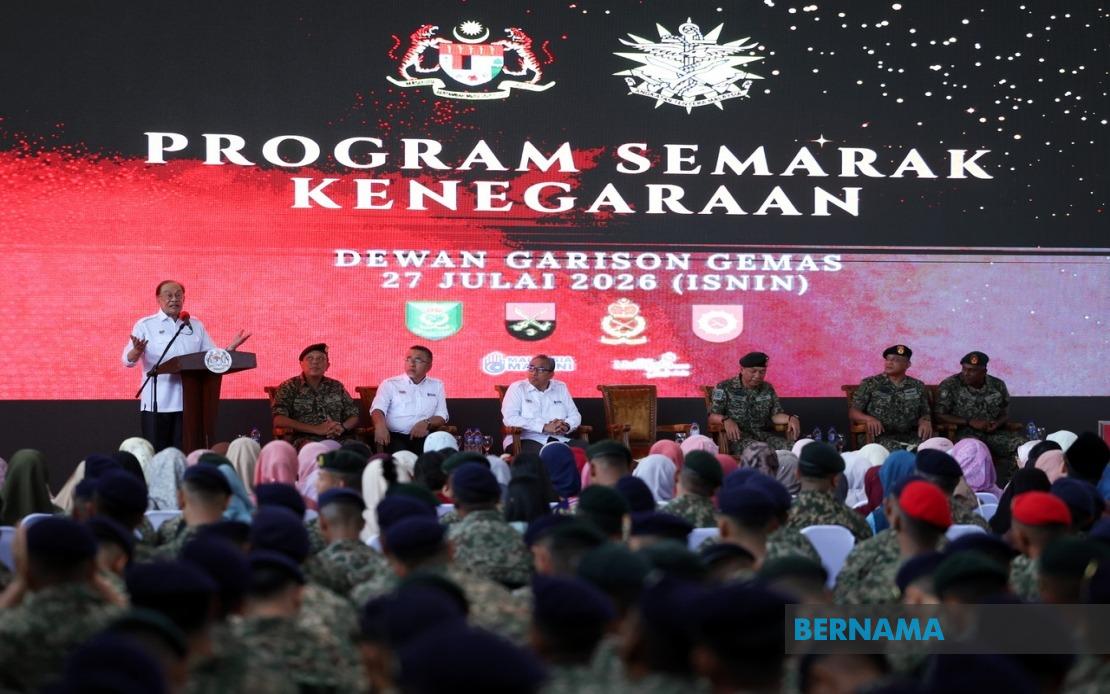
Prime Minister Anwar Ibrahim has credited Malaysia's selection as a Formula 1 host to a confluence of factors centred on the nation's peaceful environment and the strong personal relationship between Sultan Ibrahim and King Hamad bin Isa Al Khalifa of Bahrain. The premier's remarks underscore how diplomatic ties at the highest levels continue to shape Malaysia's ability to secure prestigious international events, reflecting broader regional dynamics within the Gulf Cooperation Council sphere and beyond.
Anwar emphasised that Malaysia's consistent track record of organising world-class competitions has positioned the nation as a reliable venue for marquee sporting occasions. This proven competence extends beyond the racing circuit—the country has successfully hosted major conferences, sporting championships, and cultural festivals that have drawn international attention and investment. The stability of Malaysia's institutional frameworks, combined with its developed tourism and hospitality infrastructure, makes it an attractive proposition for Formula 1's global organising bodies, which require assurance of seamless execution across multiple years of racing agreements.
The premier also highlighted Malaysia's elevated standing within the Arab world, attributing this in part to the nation's stewardship of ASEAN during its chairmanship in the preceding year. He characterised that tenure as among the bloc's most effectively managed and organised, signalling to external partners that Malaysia possesses both the diplomatic skill and organisational capacity to manage complex multilateral arrangements. This regional leadership role has naturally enhanced Malaysia's profile among wealthy Gulf states seeking partnerships and investment opportunities in Southeast Asia.
Crucially, Anwar sought to broaden credit for the achievement beyond the executive office, distributing recognition across the entire national ecosystem. He explicitly noted that the success reflects not the prime minister personally, but the cumulative efforts of Malaysia's governmental and civil systems, the armed forces, law enforcement agencies, and the private sector spanning hospitality, food service, and tourism. This framing is significant in Malaysian political discourse, where institutional credit-sharing can influence perceptions of governance competence and national cohesion.
The relationship between Sultan Ibrahim and King Hamad represents a personal diplomatic channel that transcends formal government-to-government relations. Such ties at the level of heads of state often facilitate smoother negotiations on major projects and events, as they bypass bureaucratic intermediaries and allow for candid discussions on mutual interests and concerns. In the context of Formula 1, which generates substantial economic activity and media exposure, such personal trust may have tipped deliberations in Malaysia's favour over competing bidders.
National peace and security emerged as a paramount consideration in Anwar's reasoning. He stressed that the absence of significant civil unrest, terrorism, or political instability is non-negotiable for attracting international sporting franchises and their global audiences. Formula 1 teams, sponsors, and broadcasters operate within environments of considerable capital investment and logistical complexity; any suggestion of vulnerability would deter participation. Malaysia's relative stability, despite periodic political tensions, positions it as a safer bet than many regional alternatives.
The prime minister's remarks also hint at Malaysia's strategic importance to Bahrain and the broader Gulf region. As a Muslim-majority nation with strong ties to the Arab world yet embedded within Southeast Asia, Malaysia occupies a unique diplomatic niche. Bahrain's royal family may view collaboration with Malaysia on high-profile international events as strengthening their own soft power and diversifying their regional partnerships beyond traditional Gulf-centric arrangements.
The hospitality and service sectors feature prominently in Anwar's explanation, reflecting Malaysia's competitive advantage in providing the infrastructure and human resources necessary for hosting Formula 1. Hotels, restaurants, transportation networks, and entertainment venues must meet international standards whilst remaining cost-effective relative to developed Western venues. Malaysia's mature hospitality ecosystem, coupled with a trained and multilingual workforce, addresses these requirements efficiently.
From a Malaysian perspective, securing Formula 1 carries implications extending well beyond motorsport. The event generates tourism revenue, employment opportunities, and global media exposure that boosts the nation's international brand. For a country seeking to position itself as a regional hub for commerce, finance, and culture, such high-profile associations are invaluable. The arrangement also reinforces Malaysia's attractiveness as a destination for corporate conferences, investment forums, and other premium international gatherings.
Anwar's emphasis on collective national effort rather than individual political accomplishment reflects a leadership approach that privileges institutional resilience and social cohesion. In Malaysian political culture, where factional rivalries within and between political parties remain pronounced, this inclusive framing may serve to buffer the government against opposition criticism and reinforce a narrative of national unity in achieving strategic objectives.
The selection also carries symbolic weight for Malaysia's diplomatic standing in the Muslim world. As president of a Muslim-majority nation respected for moderate governance and intercommunal stability, Anwar's government can leverage the Formula 1 partnership as evidence of Malaysia's ability to maintain both Islamic identity and engagement with international secular institutions. This duality remains central to Malaysia's self-conception as a bridge between worlds.
Looking forward, the Formula 1 commitment signals Malaysian confidence in its trajectory despite periodic economic and political headwinds. The multi-year nature of hosting such events requires faith in sustained stability and institutional performance. For investors, expatriates, and international partners contemplating engagement with Malaysia, such confidence from the highest levels of government carries considerable weight in decision-making calculus.

