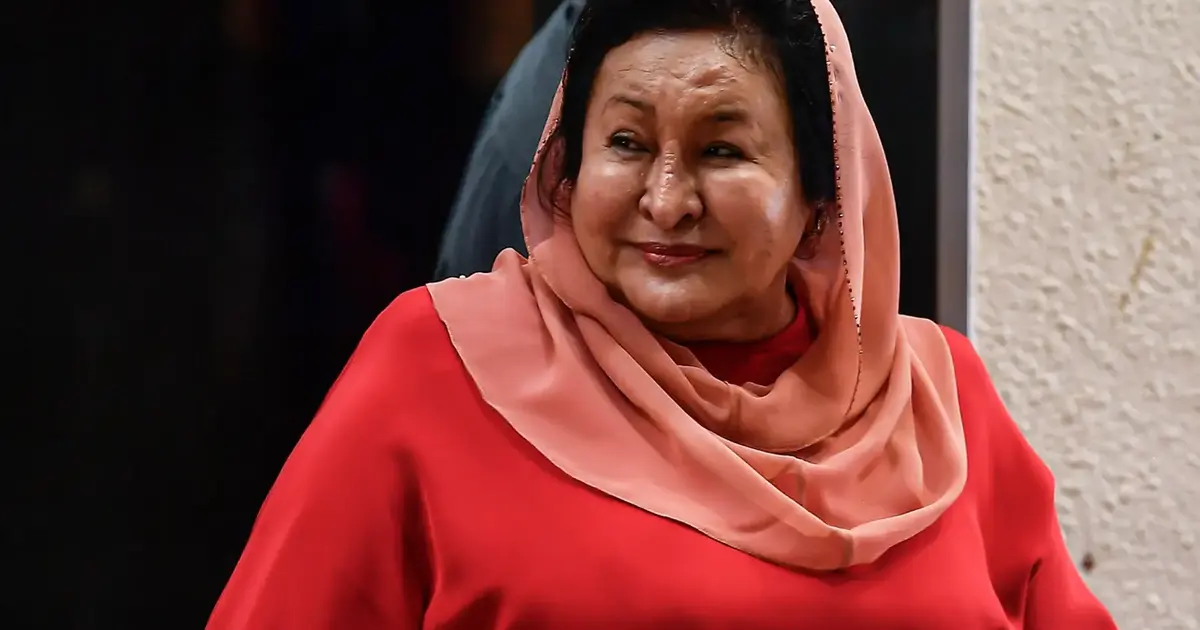
Former Malaysian first lady Rosmah Mansor has moved to present additional evidence in her ongoing appeal of a corruption conviction tied to a controversial solar hybrid project, arguing that the prosecution's case was fundamentally compromised by witness intimidation. The development marks a significant tactical shift in her legal strategy as she continues to challenge the charges that have defined the final years of her husband Najib Razak's administration and the subsequent political upheaval in Malaysia.
At the heart of Rosmah's fresh appeal lies an assertion regarding Rayyan Radzwill Abdullah, a prosecution witness whose testimony proved damaging during her initial trial. Rosmah's legal team contends that Rayyan did not testify freely or voluntarily, but rather provided his evidence under duress or pressure applied by prosecutorial authorities. This claim strikes at the credibility of the entire case constructed against her, suggesting that the conviction itself may have been built on a foundation weakened by procedural impropriety.
The allegations of witness coercion carry significant legal weight in Malaysian jurisprudence. If Rosmah's team can demonstrate that Rayyan's testimony was obtained through improper means, it could undermine the integrity of the entire trial and provide substantial grounds for appellate relief. Courts take such allegations seriously, recognising that justice cannot prevail when witnesses are pressured into compliance rather than testifying from genuine knowledge and honest recollection.
Rosmah's case has been closely scrutinised throughout Malaysia's political transformation. The solar hybrid project at the centre of the graft allegations became emblematic of perceived financial impropriety during the Najib administration. The specific details of the contract, the beneficiaries involved, and the circumstances of the project's approval all featured prominently in Malaysia's anti-corruption narrative following the change of government in 2018.
The timing of this appellate manoeuvre comes as Malaysia continues to grapple with high-profile corruption cases involving former government officials. The country's efforts to address systemic graft have depended heavily on witness testimony and cooperation from those with knowledge of alleged wrongdoing. However, this case underscores the procedural complexities and potential vulnerabilities that can arise when building cases against senior figures with substantial resources to mount sophisticated legal defences.
Rosmah's position as the former prime minister's wife added unprecedented dimensions to her prosecution. Her case attracted international attention and reflected broader questions about accountability and the rule of law in Malaysia's transition to a new political era. The appeal process itself has become a barometer of Malaysia's judicial independence and its commitment to fair proceedings, even in cases with significant political resonance.
The assertion regarding witness pressure warrants careful examination by the appellate court. Malaysian legal precedent recognises multiple forms of witness coercion, ranging from explicit threats to more subtle forms of pressure or inducement. The burden will rest with Rosmah's legal team to present evidence sufficiently compelling to convince the appellate bench that Rayyan's testimony was compromised in ways that affected the trial's fairness.
For Malaysian legal observers, the case illustrates the tension between pursuing accountability for high-level corruption and maintaining procedural fairness that withstands appellate scrutiny. Malaysia's courts have consistently emphasised that convictions must be based on evidence obtained through proper channels, with due regard for witnesses' rights and the protection against coercion. Any shortcomings in these areas can provide legitimate grounds for appeal, regardless of the political profile of the defendant.
The implications extend beyond Rosmah's individual situation. Her appeal touches on broader questions about how Malaysia conducts complex corruption investigations and prosecutions involving former senior officials. The mechanisms through which witnesses are identified, engaged, and prepared for testimony in such cases have come under increasing scrutiny as Malaysia works to strengthen its anti-corruption institutions.
Regional observers have noted that Southeast Asian countries pursuing high-profile corruption cases must navigate the delicate balance between effective prosecution and procedural integrity. Malaysia's approach to these matters influences perceptions of the region's commitment to the rule of law and fair judicial processes. The courts' handling of Rosmah's appeal will send important signals about these commitments.
As her legal team prepares to present the fresh evidence, attention will focus on whether the appellate court finds the allegations of witness coercion sufficiently substantive to warrant reconsideration of the conviction. The decision could have ripple effects on other pending cases and on the broader framework governing how Malaysian prosecutors conduct witness interviews and testimony preparation in high-stakes graft cases.
The case also reflects the ongoing political dimensions of corruption prosecutions in Malaysia. While the judicial system operates independently, public perception of fairness and impartiality remains crucial to maintaining confidence in anti-corruption efforts. Rosmah's appeal, whatever its ultimate outcome, will contribute to the national conversation about balancing accountability with procedural fairness in Malaysia's evolving anti-corruption landscape.

