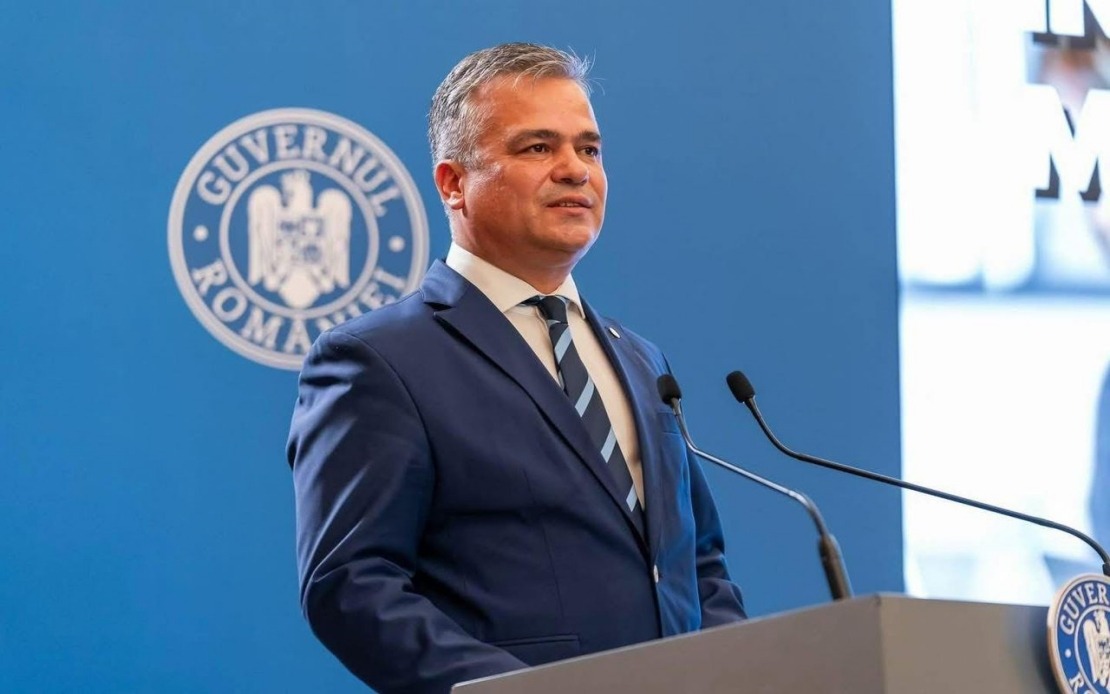
Adrian Vestea, designated as Romania's next prime minister, has taken a significant step toward forming his administration by formally submitting both his government's strategic programme and the complete list of ministerial appointments to the Romanian Parliament on Monday. The submission represents a critical transition point for the country, as Vestea seeks to move past a period marked by political uncertainty and institutional fragmentation. Through a social media statement, Vestea characterised the move as essential for restoring confidence in Romania's governmental institutions and establishing the predictable environment necessary for effective governance.
The backing of the Social Democratic Party constitutes a crucial endorsement for Vestea's proposed government. The SDP's decision came during a party meeting held the previous day, providing the parliamentary support coalition framework upon which Vestea's cabinet would depend. This coalition arrangement reflects the complex political mathematics that contemporary Romanian governance demands, particularly in efforts to assemble a parliamentary majority capable of advancing a coherent agenda across diverse policy areas.
Vestea's tenure as first vice-chair of the National Liberal Party positions him as a bridge figure within Romanian politics, particularly given the evolving relationship between his party's formal leadership and the coalition composition he is proposing. Notably, while the NLP's official party apparatus has publicly maintained its refusal to enter formal coalition arrangements with left-leaning political forces, Vestea's government structure incorporates both Social Democratic representatives and NLP members who have aligned themselves with his leadership vision. This apparent paradox—between official party positions and practical coalition governance—illustrates the degree to which personal political capital and cross-party alignments now shape Romanian executive formation.
The government's strategic framework rests upon five foundational pillars that collectively address Romania's most pressing contemporary challenges. Political stability ranks foremost among these priorities, acknowledging that sustained institutional confidence underpins all subsequent policy implementation. Accelerating the absorption of European Union funds represents perhaps the most economically consequential objective, as Romania continues to lag peer economies in utilising available Brussels funding streams for development projects. This gap in fund absorption has historically represented a missed opportunity for infrastructure modernisation and sectoral advancement.
Economic stability constitutes the third pillar of Vestea's proposed agenda, positioning macroeconomic management as central to the government's mandate. Investment in comprehensive infrastructure projects forms the fourth priority, directly complementing EU fund acceleration by channelling external resources toward tangible domestic improvement. National security strategic initiatives comprise the fifth pillar, reflecting Romania's geopolitical positioning within the NATO alliance and its borders with Ukraine during ongoing regional tensions.
The composition and approval of Vestea's proposed cabinet remained subject to parliamentary deliberation at the time of submission, with Romanian media outlets indicating that formal endorsement of the ministerial lineup had not yet been secured. This procedural uncertainty, while standard in parliamentary systems, underscores the dynamic political negotiations occurring within the legislature. Different parliamentary factions retain leverage over specific ministerial portfolios, potentially resulting in modifications to Vestea's initial proposals before final cabinet confirmation.
For Malaysian observers and policymakers, the Romanian situation offers instructive parallels regarding coalition governance in post-transition democracies. Romania's experience demonstrates how formal party positions often diverge from practical governing arrangements, particularly when individual leaders command significant cross-party support networks. The emphasis on EU fund absorption reflects challenges that developing economies across Europe and Southeast Asia similarly face—the technical and administrative capacity to convert external financing into implemented projects remains constrained in many jurisdictions.
The Romanian case also highlights how regional security concerns increasingly shape economic and institutional priorities within European governments. Vestea's inclusion of national security strategy among his government's core pillars reflects the altered security environment across Eastern and Central Europe since Russia's invasion of Ukraine in February 2022. This reordering of policy priorities—elevating security considerations alongside traditional economic governance—may foreshadow similar shifts elsewhere, including within Southeast Asian strategic calculations.
Romania's geographic position between NATO and Ukraine, combined with its EU membership, creates policy pressures distinct from Southeast Asian contexts yet instructive for how regional dynamics condition governmental agendas. The multifaceted approach Vestea proposes—balancing institutional stability, external resource maximisation, domestic economic management, infrastructure investment, and strategic security—represents a comprehensive governance framework addressing the simultaneous demands facing contemporary post-transition democracies navigating international integration alongside institutional consolidation.