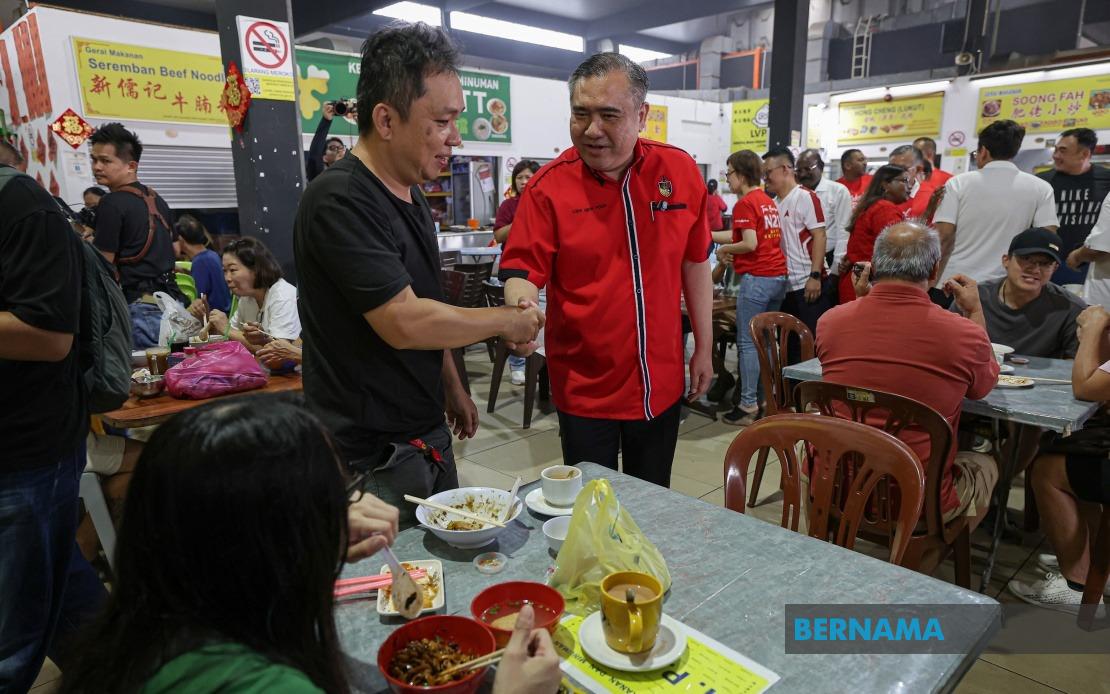
Transport Minister Anthony Loke has declared that traffic compliance and road safety are non-negotiable requirements for all participants in the ongoing 16th Negeri Sembilan state election campaign. Speaking after a walkabout with Pakatan Harapan candidates in Seremban on July 19, Loke emphasised that maintaining an orderly and secure campaign environment depends fundamentally on all parties adhering to established traffic regulations without exception.
The DAP secretary-general has taken a personal stand in enforcing these standards within his own party's campaign machinery. He has issued direct instructions to all party campaign teams that wearing helmets while riding motorcycles is mandatory throughout the campaign period, not optional or negotiable. This directive underscores Loke's conviction that accident prevention must take precedence over campaign momentum, recognising that winning office carries responsibilities that supersede competitive ambitions.
Loke illustrated his commitment through concrete action during the nomination process. On the previous day, he participated in a convoy travelling from Pekan Titi to Kuala Klawang, where he made his expectations abundantly clear to all participants: those without helmets would not join the convoy. This zero-tolerance approach establishes a measurable standard that removes ambiguity and demonstrates leadership by personal example rather than mere rhetoric.
Beyond motorcycle safety, Loke has identified additional reckless practices that warrant immediate cessation. He specifically warned candidates and their supporters against riding on the tailgates of moving four-wheel-drive vehicles, characterising such behaviour as dangerous and incompatible with responsible campaigning. This expanded focus acknowledges that road safety encompasses multiple risk categories that demand equal attention during the high-pressure campaign environment.
The minister's message extends beyond DAP and Pakatan Harapan members. He has called upon all political parties, their leaders, and campaign workers to embrace the same standards of traffic law compliance. By framing adherence to regulations as leadership responsibility, Loke positions traffic safety as a matter of political integrity and community stewardship rather than mere bureaucratic requirement.
The timing of these directives reflects the intensity and scale of the ongoing campaign. The Negeri Sembilan state assembly was dissolved on June 5, setting polling day for August 1 and early voting for July 28. Nearly 890,000 registered voters—comprising 867,151 ordinary voters plus military personnel and police officers exercising early voting rights—will participate in this election, making the 16-seat state assembly contest a significant political event.
The campaign environment creates particular pressure points where safety can be compromised. High-energy campaign convoys, rapid mobilisation between multiple constituencies, and the desire to maximise candidate visibility and supporter engagement all create conditions where traffic violations and risky behaviour become more likely. Loke's intervention targets these structural vulnerabilities rather than assuming participants will naturally prioritise safety over electoral advantage.
This emphasis on traffic compliance during campaigning carries broader implications for Malaysian political culture. Elections frequently generate transportation-related incidents that mar campaign periods and occasionally result in injuries or fatalities. By elevating road safety to a matter of ministerial priority and partisan discipline, Loke contributes to establishing norms where election victory achieved through rule-breaking carries reputational costs that outweigh any competitive gains.
For Negeri Sembilan voters observing the campaign, the minister's directives offer one measure of how different parties prioritise public welfare alongside electoral objectives. Candidates who demonstrate commitment to road safety during campaigning signal broader respect for community interests. Conversely, any instances of traffic violations or disregard for safety regulations during the campaign period provide voters with indicators about candidates' actual values beyond their campaign messaging.
The six Pakatan Harapan candidates accompanying Loke during his Seremban walkabout—Ho Weng Wah in Temiang, Lee Kai Yet in Mambau, Siau Meow Kong in Rahang, Nicole Tan in Bukit Kepayang, S. Mugunthan in Seremban Jaya, and Chew Seh Yong in Lobak—represent the coalition's presence across the state's diverse constituencies. Their participation in a campaign event emphasising traffic compliance sends a unified message about party standards extending across all candidate levels.
Implementing these standards effectively requires buy-in from campaign volunteers and supporters, not merely candidate compliance. Enforcement mechanisms and internal party monitoring become necessary to translate ministerial directives into observable behavioural change among the thousands of individuals involved in campaign activities. The specificity of Loke's instructions—naming helmet-wearing and tailgate-riding—provides concrete focal points for monitoring and accountability.
As the campaign accelerates toward the August 1 polling date, maintaining these traffic safety standards will test the commitment of all involved parties. Campaign intensity typically increases as election day approaches, potentially straining adherence to safety protocols. However, Loke's early, high-profile intervention establishes a baseline expectation that will make violations more visibly inconsistent with declared party values.

