The rapid expansion of Malaysia's largest motorcycle gathering has created a pressing safety crisis that demands immediate intervention from multiple stakeholders. Shahrim Tamrin, drawing on his experience as a former board member of the Malaysian Institute of Road Safety Research, has issued a stark warning that the RXZ Members programme cannot continue operating under its current safety framework without catastrophic consequences.
The numbers paint a grim trajectory of deteriorating conditions. Over the past three years, deaths connected to the event have climbed from two in 2024 to five in 2025, reaching eleven during the most recent iteration in 2026. These figures represent not random misfortunes but rather a systematic pattern that intensifies with each passing year, suggesting fundamental deficiencies in how the event is managed. When Bukit Aman Traffic Investigation and Enforcement Department director Datuk Seri Muhammed Hasbullah Ali reported 46 road accidents involving motorcyclists across just four days during the RXZ Members 8.0 programme, the scale of the problem became impossible to dismiss as isolated incidents.
The July 30 to August 3 event held at the Gong Badak Motor Racing Circuit in Kuala Nerus attracted over 200,000 participants, making it the largest edition since the programme's inception in 2017. This exponential growth, while testament to the event's popularity, has outpaced the capacity of traditional enforcement approaches to maintain safety. Shahrim emphasises that managing such massive assemblies cannot rely on conventional police tactics alone but instead requires the systematic application of large-scale event risk management principles.
A proper risk management framework, according to Shahrim's proposals, should encompass participant projections, strategic planning of entry and exit routes, designated rest areas where riders can safely recover from fatigue, pre-positioned ambulance units at high-risk locations, and a dedicated emergency response centre. Additionally, comprehensive communications protocols must be established beforehand to ensure that critical safety information reaches all participants, whether through mobile applications, social media, or coordination with group leaders. A pre-event risk assessment would identify specific hazards unique to the motorcycle riding environment and the particular demographics attending the gathering.
Equally important is the introduction of post-event safety audits that examine accident data systematically rather than reactively. Such audits should investigate the specific locations where crashes occurred, the timing patterns of incidents, underlying causes, characteristics of affected riders, motorcycle-related factors such as mechanical condition or modifications, and the actual effectiveness of enforcement operations. By publishing these findings before the next edition, organisers and authorities could base improvements on evidence rather than guesswork or panic-driven responses after tragedies repeat themselves.
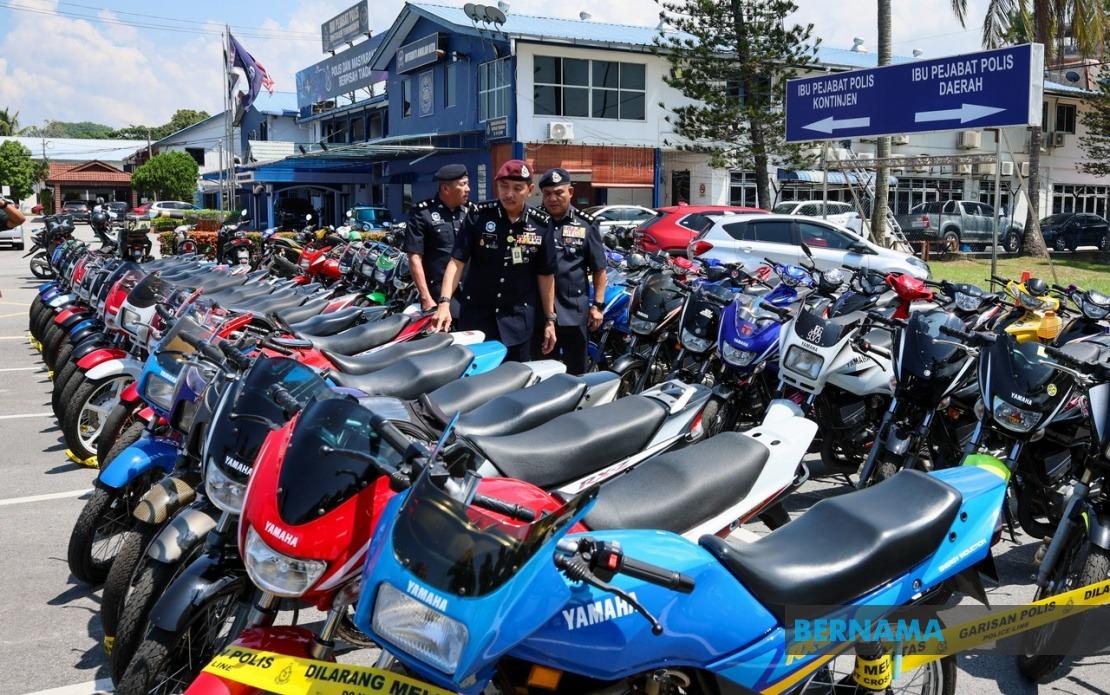
A particularly complex issue involves the thousands of Yamaha RXZ motorcycles that remain popular among participants despite being between 20 and 35 years old. Many have changed ownership multiple times or undergone restoration and modifications that create documentation problems. Shahrim recommends that the Road Transport Department (JPJ) review registration procedures to accommodate roadworthy vehicles that face bureaucratic obstacles, provided they pass inspection at the Computerised Vehicle Inspection Centre (Puspakom). However, he insists that motorcycles modified in ways compromising safety should not receive automatic approval; instead, they must either be restored to original specifications or denied registration entirely. This approach ensures that all machines operating during the event carry valid road tax and insurance coverage, protecting both riders and the public.
Enforcement gaps extend beyond mechanical safety to environmental concerns that have generated resident complaints. Local communities around the Gong Badak venue have reported excessive noise and smoke pollution caused by non-compliant exhausts and noise systems. Shahrim has urged authorities to strengthen enforcement of existing standards for noise and emission levels, a measure that would improve public relations for the event whilst protecting air quality and community wellbeing.
The human dimension of safety coordination deserves particular attention. Shahrim recommends that police and JPJ collaborate with RXZ clubs and programme organisers to conduct formal training for marshals and group leaders responsible for supervising safe convoy movements. These volunteer leaders occupy a critical position in disseminating safety culture throughout the massive gathering, yet they typically receive minimal formal instruction. Structured training programmes covering convoy protocols, hazard recognition, and emergency procedures could substantially reduce rider-to-rider collisions and panic responses during incidents.
Travel advisory systems, already proven effective by highway concessionaires during festive seasons, should be adapted for the RXZ event. Such systems would inform participants of peak travel periods to avoid congestion, suggest alternative routes to distribute traffic loads, and identify recommended rest stops where riders can address fatigue before it becomes dangerous. Real-time information dissemination during the four-day event could help manage the movement of 200,000 motorcycles far more effectively than static enforcement operations.
For Malaysian road safety advocates, the RXZ Members programme represents a critical test case. The event demonstrates both the capacity of motorcycle culture to mobilise hundreds of thousands of riders and the vulnerability of such large gatherings to preventable tragedies. Successfully implementing comprehensive risk management at RXZ could establish a template for other large-scale motorcycle events across Southeast Asia, where motorcycle ownership and informal rallies continue proliferating. Conversely, failure to act decisively suggests that road safety agencies lack the institutional capacity to manage modern social phenomena that transcend traditional enforcement boundaries, with implications extending far beyond any single event.

