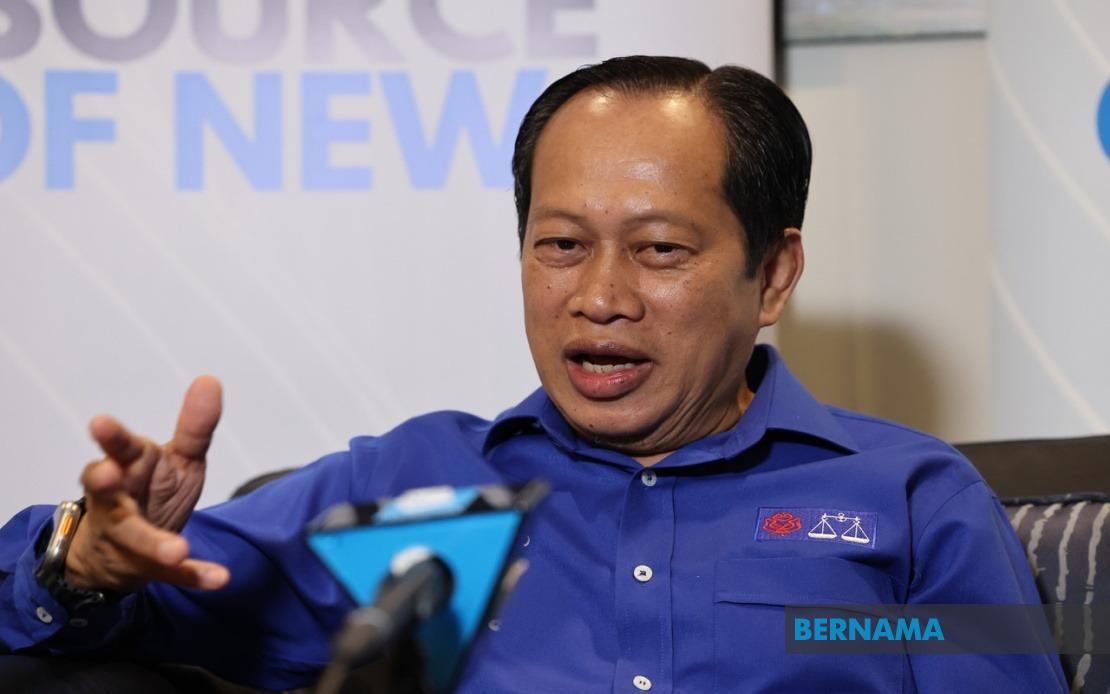
Effective road maintenance across Malaysia hinges on a coordinated approach involving elected officials, government departments, and municipal authorities all pulling in the same direction, according to Deputy Works Minister Datuk Seri Dr Ahmad Maslan. Speaking in Johor Bahru on July 2, he underscored that no single entity can resolve infrastructure challenges in isolation, emphasizing instead the necessity for comprehensive engagement across the governance hierarchy to tackle deteriorating road conditions and ensure swift remedial action.
The deputy minister has directed the Public Works Department (JKR) to accelerate its repair operations on compromised road networks, signalling that the federal government is treating infrastructure maintenance as a priority issue. Alongside this administrative directive, Ahmad has called upon all relevant parties to discharge their assigned responsibilities with vigour, creating a unified operational framework where maintenance initiatives progress without unnecessary delays. The emphasis on acceleration reflects mounting public frustration with road conditions across the country and suggests growing political attention to what constituents perceive as preventable deterioration of essential infrastructure.
Ahmad articulated a clear division of responsibilities in the maintenance ecosystem. State assemblypersons, Members of Parliament, and local government bodies must actively identify problematic road sections and initiate corrective measures once defects are reported or detected. This multi-layered accountability structure theoretically ensures that no problematic stretch escapes attention, as different administrative levels maintain oversight of their respective jurisdictions. The model places responsibility for identifying and escalating issues at the grassroots level, where elected representatives are most directly connected to constituent concerns.
The deputy minister cited his extensive fieldwork as evidence of his commitment to the matter. Having visited all ten district JKR offices operating across Johor, Ahmad conducted development briefings and personally urged officials to respond expeditiously whenever road maintenance requirements emerge. This hands-on approach suggests that senior ministerial attention is now focused on accelerating response times and overcoming bureaucratic inertia that may previously have delayed repairs. The visibility of high-level engagement can serve as both motivation for departmental staff and reassurance to the public that oversight mechanisms are functioning.
Ahmad's comments emerged in response to recent actions by Dr Maszlee Malik, the Pakatan Harapan candidate contesting the Puteri Wangsa state seat. On June 29, Maszlee undertook a deliberate inspection journey along Jalan Tebrau, driving a Perodua Myvi from Kampung Melayu Majidi to Ulu Tiram to assess road conditions firsthand. The excursion was motivated by accumulated social media complaints highlighting deteriorating surfaces and congestion problems along this critical route, transforming online grievances into tangible political action and public visibility.
The conditions Maszlee encountered during his assessment appeared to validate public complaints. His vehicle experienced noticeable jolting across multiple stretches due to uneven and damaged road surfaces, while observations of peak-hour congestion demonstrated the compounding effects of poor infrastructure on traffic flow. By documenting these conditions and sharing his experience publicly, Maszlee drew political attention to maintenance failures and implicitly challenged the adequacy of existing response mechanisms. Such opposition scrutiny, though politically motivated, highlights genuine infrastructure concerns affecting daily commutes for thousands of residents.
The administrative framework governing road maintenance funding reveals a somewhat complex approval architecture. Federal allocations designated for maintaining federal roads, highways, and bridges flow through the State Economic Planning Unit (UPEN) and state executive councils rather than moving directly to implementing agencies. This intermediary approval process allows applications to undergo assessment and prioritization procedures before official endorsement. While such gatekeeping mechanisms theoretically ensure judicious resource allocation aligned with strategic priorities, they can also introduce delays in addressing urgent maintenance needs.
The layered approval structure Ahmad described reflects broader Malaysian governance practices where multiple administrative tiers must align before funds flow toward implementation. Applications submitted by district JKR offices presumably undergo scrutiny at state level through UPEN before advancing through executive council consideration. This bureaucratic sequencing demands coordination across institutional boundaries, with timing dependent on the frequency of state council meetings and the workload pressures facing planning units. For communities experiencing deteriorating road conditions, such procedural requirements may feel unnecessarily protracted, especially when safety concerns mount.
The road maintenance challenge Ahmad addressed touches on a broader Southeast Asian infrastructure governance issue. As urbanization accelerates and vehicle populations expand throughout the region, maintenance backlogs accumulate faster than resources can address them. Malaysia, possessing relatively developed infrastructure compared to some neighbours, nonetheless faces the persistent tension between construction of new capacity and preservation of existing networks. Political pressure mounts when aging roads become visibly compromised, generating public complaints that reverberate through social media and into electoral calculations.
For Malaysian voters and residents, the disagreement implicitly acknowledged in Ahmad's remarks reflects real frustration with service delivery. While the deputy minister attributes delays to coordination failures, the underlying reality suggests that maintenance resources may be inadequate relative to the network's deterioration rate. Whether better coordination alone can resolve the problem or whether substantially increased budgetary allocation is necessary remains an open question that Ahmad's remarks did not directly address. The political incentive exists for opposition figures like Maszlee to highlight such deficiencies, while government officials must balance acknowledgment of problems against the appearance of operational competence.
Moving forward, Ahmad's public emphasis on accountability and acceleration may introduce subtle pressure within JKR and state administrations to prioritize maintenance more visibly. By naming the ten Johor district offices and indicating personal follow-up engagement, he signals that failure to respond promptly will reflect poorly on officials' records. Whether this top-down pressure translates into sustained improvement or represents a temporary intensification during politically sensitive periods remains to be observed. The real test of whether coordinated multi-stakeholder approaches can meaningfully improve road conditions will emerge in subsequent months as residents assess whether potholes are filled more rapidly and traffic congestion eases on routes like Jalan Tebrau.

