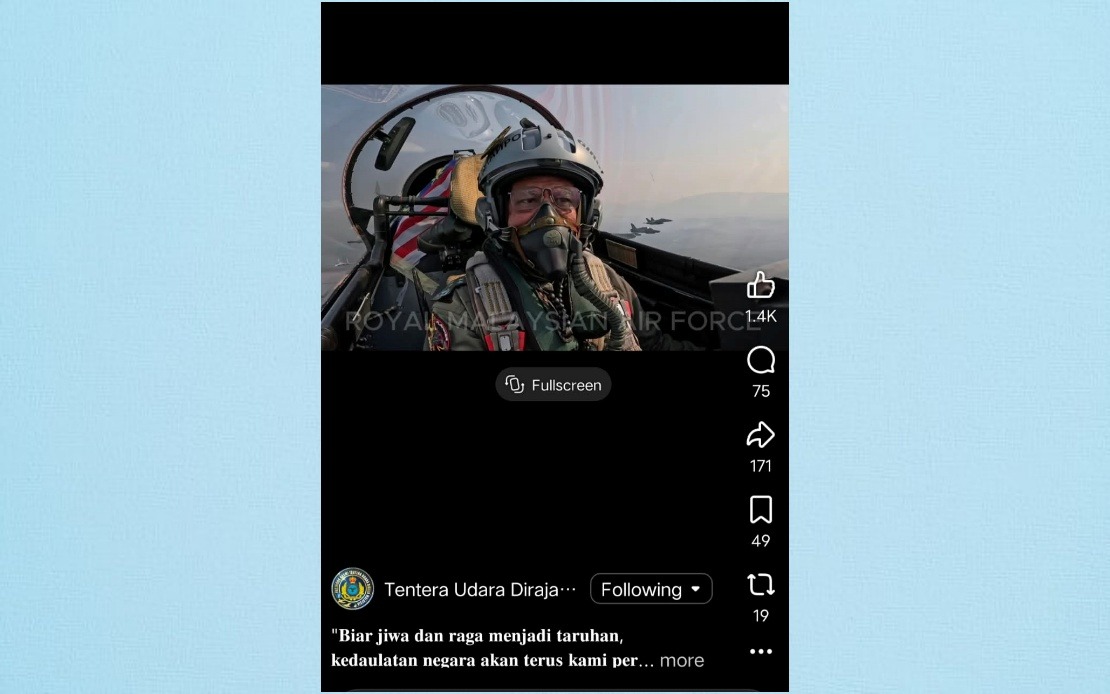
The skies above Putrajaya resonated with the powerful engines of military aircraft on August 31 as the Royal Malaysian Air Force orchestrated a dramatic aerial showcase to commemorate Malaysia's 69th National Day. The display served as a centerpiece of the patriotic celebrations in the federal administrative capital, drawing thousands of spectators who gazed upward as combat and transport jets executed synchronized manoeuvres overhead.
General Tan Sri Muhamad Norazlan Aris, the RMAF chief, continued a tradition he established last year by personally commanding the air show from the cockpit of a Sukhoi Su-30MKM fighter jet. This hands-on leadership underscores the RMAF's commitment to demonstrating both operational capability and institutional pride during the nation's most important civic observance. His decision to lead from the front rather than observe from the ground sends a symbolic message about the force's readiness and the commander's confidence in his personnel.
The formation comprised eleven combat aircraft in total: four Sukhoi Su-30MKM jets, four F/A-18D Hornet fighters, and three BAE Hawk 208 aircraft. This carefully selected composition showcased Malaysia's diverse air defence capabilities, representing platforms acquired over several decades that form the backbone of the RMAF's operational strength. The Su-30MKM remains the force's most advanced multi-role fighter, while the American-built Hornets provide additional strike capability. The Hawks, though smaller, demonstrate the RMAF's commitment to training and lighter operations.
Precision and coordination defined the ten-minute routine that commenced at 9.30 in the morning. The pilots executed a series of carefully choreographed formations—the Kite, Diamond, Delta and Victory Combine—each representing different tactical configurations that audiences might witness during actual operations. These formations require extensive rehearsal and absolute trust between pilots, as aircraft fly in close proximity at high speeds. The complexity of these manoeuvres illustrates the professional standards demanded of RMAF pilots and the countless training hours invested to achieve such coordination.
Three military commentators—Major Patrick Dinnesh, Major Neny Suhaida Ab Suki and Captain Muhammad Iqbal Nasrudin—provided real-time narration explaining the significance of each formation and the technical aspects of the aircraft manoeuvres. This educational component transformed the display from mere spectacle into an informative demonstration, helping civilians understand the capabilities and roles of different platforms within the RMAF inventory. By demystifying military aviation through professional commentary, the RMAF enhanced public appreciation for its mission and personnel.
Following the fighter jet segment, the display shifted focus to the RMAF's airlift and transport capabilities with appearances by the C-130H Hercules, A400M Atlas, and CN235 aircraft. These platforms represent the force's ability to project power across the archipelago, conduct humanitarian operations, and sustain military operations far from main bases. The inclusion of transport aircraft alongside fighters conveyed a complete picture of air force versatility—not merely combat-focused but fundamentally committed to logistical support and national resilience.
Helicopter formations added another dimension to the showcase. The EC725 and AW139 helicopters operated by the RMAF flew in coordinated patterns, performing in conjunction with rotary-wing assets from the Malaysian Army, Royal Malaysian Navy, Fire and Rescue Department, and Royal Malaysia Police. This joint display emphasized inter-service cooperation and the integrated approach Malaysian security forces adopt toward national defence and emergency response. In an era of complex security challenges ranging from maritime piracy to disaster relief, such coordination is essential and highly valued by policymakers and the public alike.
The response from spectators gathered at Dataran Putrajaya was overwhelmingly enthusiastic. Thousands maintained their attention skyward throughout the entire routine, with sustained applause and cheers punctuating each significant manoeuvre. This public engagement reflects both the entertainment value of the display and deeper patriotic sentiment that the National Day celebration evokes. For many Malaysians, witnessing their air force in action reinforces national pride and confidence in institutional capabilities.
The thunderous acoustic environment created by multiple jet engines flying in proximity generated an atmosphere of national power and pride. The federal administrative capital, chosen deliberately as the venue, amplified the symbolic importance of the event. Putrajaya's role as seat of government meant that the RMAF's demonstration reached an audience predisposed to civic consciousness and national engagement.
From a strategic perspective, the air display served multiple institutional purposes for the RMAF. It provided public relations value by showcasing operational readiness and equipment quality to domestic audiences. It demonstrated the force's ability to execute complex operations with precision and coordination. It also offered valuable training opportunities for pilots and ground crews involved in coordinating such large-scale activities. The biennial National Day display has become an expected highlight of Malaysia's patriotic calendar, and the RMAF invests considerable resources in ensuring excellence.
The inclusion of various platforms and services reflects broader defence policy emphasis on joint operations and inter-agency coordination. Rather than promoting service rivalry, the display presented a unified vision of Malaysian security forces working toward common national objectives. This message resonates with civilian audiences and government officials alike, reinforcing the importance of Defence Ministry initiatives aimed at improving coordination and resource sharing among the various armed services.
For defence enthusiasts and aviation observers across Southeast Asia, Malaysia's National Day air display provides insights into the RMAF's modernization trajectory and equipment priorities. The prominence of the Su-30MKM and F/A-18D signals continuing investment in advanced combat capabilities, while transport and helicopter assets indicate recognition of the diverse operational demands facing the force in an era of natural disasters and transnational security threats. The display thus constitutes a window into Malaysian defence planning and strategic priorities.

