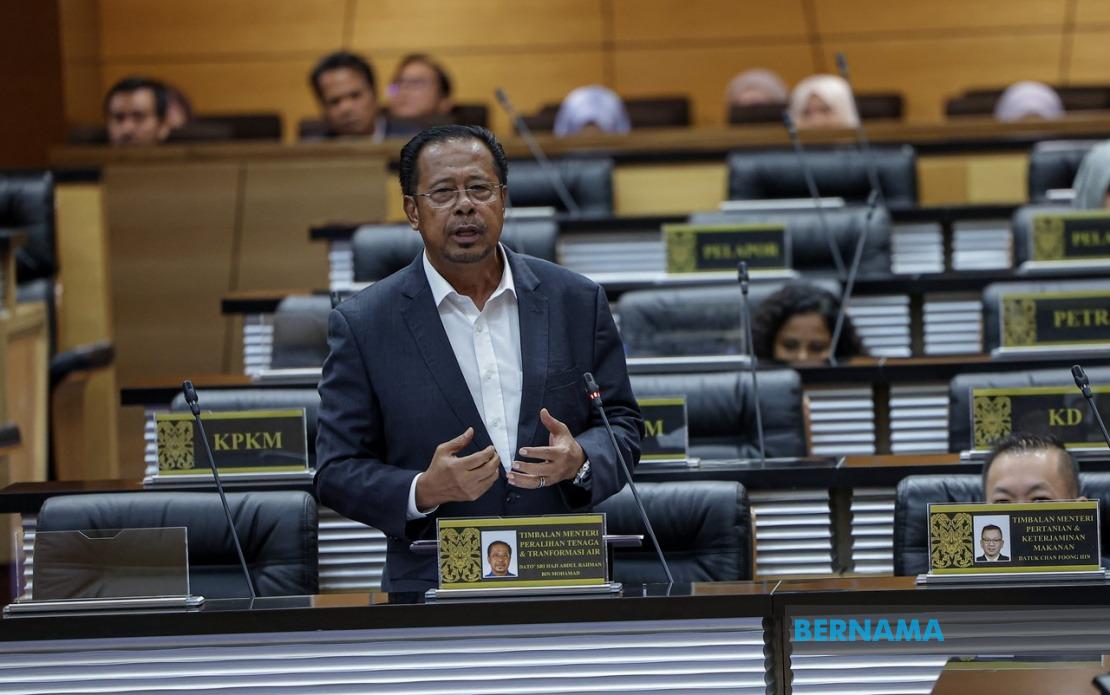
Parliament was briefed this week that a RM99.8 million Integrated River Basin Development scheme targeting Sungai Skudai in Johor will deliver substantial flood protection and environmental restoration benefits to roughly 15,000 residents upon completion. The initiative, incorporated within the 12th Malaysia Plan framework, represents a major investment in addressing chronic water management challenges along the 46-kilometre waterway that has repeatedly inundated surrounding communities. Deputy Minister of Energy Transition and Water Transformation Datuk Seri Abdul Rahman Mohamad outlined the project's scope during questioning in the Dewan Rakyat, responding to concerns raised by Suhaizan Kaiat, the Member of Parliament for Pulai.
The initiative remains in preparatory phases, with detailed planning, soil surveys, and site assessments still underway before heavy machinery arrives. A consulting firm was contracted in May 2025 to develop the comprehensive concept report, while survey fieldwork commenced in November 2025 with an anticipated completion date of May 2027. Simultaneously, the land acquisition process kicked off in June 2026 and is expected to conclude by August 2027. These parallel workstreams establish the technical and administrative groundwork necessary before the government can issue procurement tenders and formally appoint construction contractors.
The project carries particular significance for Johor's flood-prone districts, where the current drainage infrastructure frequently reaches saturation during seasonal downpours. Physical construction is pencilled in to commence in mid-2027, contingent upon the satisfactory resolution of all preliminary requirements. The Deputy Minister stressed that the government remains committed to adhering to this timeline, though officials have flagged identified bottlenecks in land acquisition that could affect later stages. The 46-kilometre river will undergo comprehensive bank reinforcement, with strategic sections widened to approximately 15 metres to substantially increase water discharge capacity and prevent overflow into adjacent residential zones.
Beyond flood mitigation, the Sungai Skudai initiative addresses multiple environmental and socioeconomic dimensions of river management that have been neglected during decades of rapid urbanisation around Johor Bahru and Kulai. The scheme is designed to rehabilitate the river ecosystem, facilitating fish migration and improving water quality through controlled flow dynamics. The improved navigability of the waterway will particularly assist local fishing communities who depend on river access for livelihood activities. Enhanced operational capacity for maritime security agencies and emergency response teams represents an additional dimension, enabling more effective patrolling and disaster management along the entire river corridor.
To bridge the gap before the main construction phase begins, the Ministry of Water Transformation is implementing six smaller complementary projects valued at approximately RM700,000. These interim initiatives target immediate vulnerability reduction at identified flood hotspots, concentrating resources on the most critical sections. Officials have identified approximately 50 locations along the Sungai Skudai system where flooding predictably occurs, including five concentrated in the Kulai municipal area. By systematically addressing these acute pinch-points through targeted interventions, authorities aim to deliver tangible relief to affected residents well ahead of the comprehensive 2027 launch.
The announcement also addressed broader infrastructure connectivity in the region, as the Ministry of Works disclosed details of the RM174.53 million Phase Three expansion of the Pasir Gudang Highway, a critical commercial and commuter artery in southern Johor. Minister Datuk Seri Alexander Nanta Linggi clarified that the highway upgrading would not necessitate acquisition of land parcels owned by Keretapi Tanah Melayu Berhad, the national railway operator, thereby circumventing potential delays and jurisdictional complications. Instead, the government will obtain standard work permits and right-of-way approvals from KTMB to conduct necessary works adjacent to railway infrastructure.
This approach represents a pragmatic accommodation between two major infrastructure operators sharing overlapping geography in one of Malaysia's most economically productive corridors. The railway-adjacent phases of the highway project are scheduled between February 2027 and December 2028, overlapping partially with the Sungai Skudai river project timeline. Coordinating these concurrent major works will require meticulous project management to prevent logistical conflicts and construction delays. The Pasir Gudang Highway serves as a vital link connecting Port Klang's commercial operations with Johor's industrial estates and the port facilities at Pasir Gudang itself, making timely completion essential for regional competitiveness.
For Malaysian readers, particularly those residing in Johor's urban centres, these two infrastructure announcements signal the government's commitment to addressing long-standing bottlenecks that have constrained economic productivity and quality of life. The flooding challenges along Sungai Skudai have historically disrupted commercial activities, damaged property, and occasionally claimed lives during severe weather events. The river basin development project acknowledges that reactive emergency response must yield to proactive structural intervention. Investment in both drainage infrastructure and highway capacity reflects recognition that Southeast Asian cities must simultaneously manage climate resilience and accommodate increasing traffic volumes.
The scale of the Sungai Skudai investment—nearly RM100 million—positions it among Malaysia's larger regional infrastructure commitments in recent years. This allocation demonstrates that federal planning agencies have prioritised Johor's development within the current Malaysia Plan cycle, reflecting the state's significance as an economic engine and the gravity of its recurring flood crises. The project timeline, stretching from current planning phases through to mid-2027 commencement, will test government efficiency in coordinating multiple agencies and contractors. Previous major river basin projects in Malaysia have occasionally experienced cost overruns and timeline extensions, making vigilant project governance essential.
The environmental rehabilitation component warrants particular attention, as many of Malaysia's urban rivers have undergone ecological degradation from decades of industrial pollution and uncontrolled development. The Sungai Skudai restoration aims to reverse some of this damage through improved water quality management and habitat restoration. Successful implementation could serve as a demonstration model for similar initiatives along other commercially and residentially significant waterways throughout Malaysia. The fisheries dimension also reflects acknowledgment that traditional communities' livelihoods merit protection even as modernisation transforms surrounding landscapes.
Looking forward, the success of this initiative will substantially depend on execution discipline during the construction phase beginning mid-2027. The Deputy Minister's parliamentary assurances regarding adherence to timelines will require continuous validation as the project advances. Cost management will similarly prove critical, as budget overruns could compromise the completion scope or timeline. For the 15,000 residents and broader Johor community dependent on flood mitigation outcomes, the coming months of survey work and land acquisition represent the crucial foundation upon which actual flood relief will ultimately rest.

