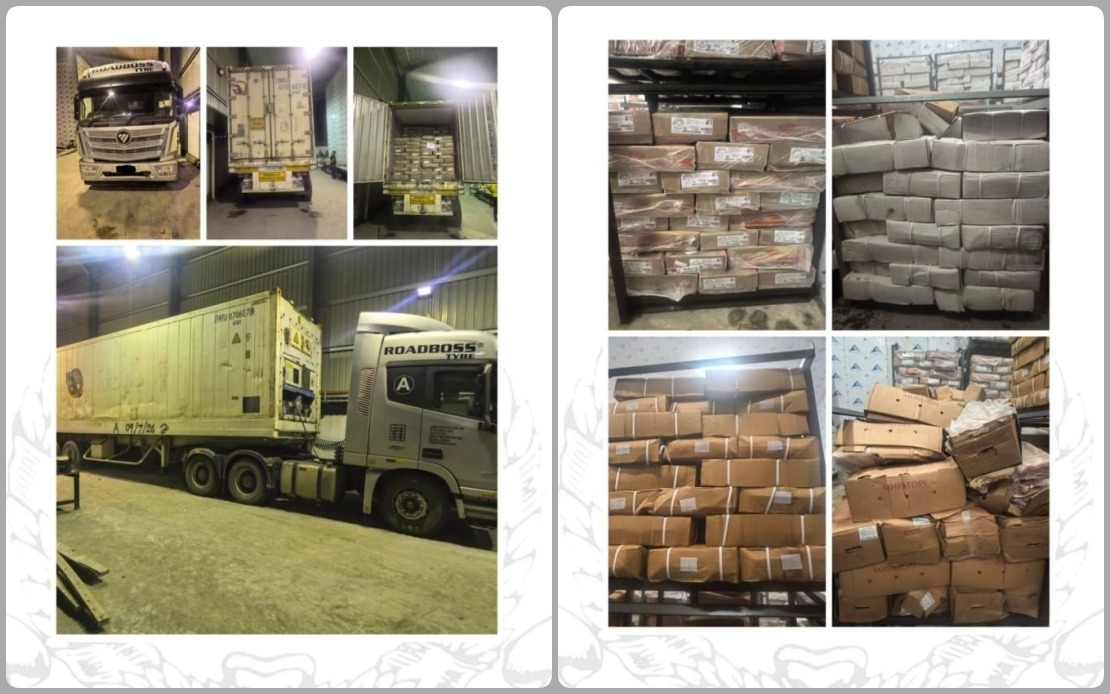
Malaysian police conducted a major enforcement operation against illegal food importation in Miri, Sarawak, resulting in the arrest of a 26-year-old local resident and the seizure of RM6.19 million worth of frozen pork products that lacked valid import permits. The operation, designated Op Taring Chiller, took place at a warehouse facility during the evening of July 9, with the suspect apprehended at 8 pm. The coordinated action reflects the Internal Security and Public Order Department's escalating focus on dismantling networks involved in the unauthorised movement and distribution of food items with uncertain halal certification status.
The warehouse inspection uncovered a substantial cache of pork products in various forms and quantities, highlighting the scale of the suspected smuggling operation. Authorities discovered 30,000 kilogrammes of cooked frozen pork large intestines, 18,000kg of pork loin distributed across 15 pallets, 750kg of pork occupying a single pallet, multiple pallets of bone-in pork bellies featuring rind, and frozen pork shoulder. The sheer volume and diversity of products suggests an operation geared towards commercial distribution rather than personal consumption, indicating potential linkages to broader supply chain networks within Sarawak and possibly beyond.
The raid was executed as a collaborative effort involving multiple government agencies, demonstrating the increasingly integrated approach to enforcement operations across Malaysia. The Wildlife Crime Bureau's Special Investigation Intelligence unit spearheaded the operation, working in tandem with the Miri district police headquarters and the Sarawak Veterinary Services Department's Miri Division. This inter-agency coordination reflects recognition that combating food-related smuggling requires expertise spanning customs control, wildlife trafficking investigation, and veterinary oversight, each bringing distinctive investigative capabilities to the table.
Legal proceedings against the detained individual will proceed under the Veterinary Public Health Ordinance 1999, specifically Sections 9(1) and 9(3), which address unlicensed importation and distribution of controlled food products. Beyond the arrest itself, authorities have issued a compound notice valued at RM25,000, providing a financial enforcement mechanism alongside criminal investigation. The selection of this ordinance underscores Malaysian authorities' treatment of undocumented food imports as a veterinary and public health concern, not merely a customs matter, reflecting concern over potential contamination, disease transmission, or the deliberate introduction of non-halal products into supply chains serving Malaysian consumers.
The seizure forms part of a broader enforcement campaign spanning the nation. Between January 1 and July 10 this year, the Wildlife Crime Bureau's Special Investigation Intelligence unit executed 201 raids nationwide, resulting in 375 arrests. These operations targeted diverse contraband categories, including goods evading customs duties, diverted subsidised commodities, illegal frozen foodstuffs, wildlife trafficking proceeds, and electronic waste. The aggregate value of materials seized during this six-month period reached RM264.86 million, illustrating the substantial economic scale of smuggling activities that law enforcement agencies are confronting.
The targeting of frozen pork products reflects particular enforcement priorities within Malaysia's regulatory environment. The emphasis on verifying halal status and ensuring proper documentation aligns with Malaysia's distinctive position as a Muslim-majority nation where halal certification carries both religious and commercial significance. For Malaysian consumers, untraced frozen pork products pose dual concerns: they may enter the supply chain without proper health certifications or temperature maintenance records, and they represent a potential breach of halal protocols that shape purchasing decisions for observant Muslims. The unlawful nature of the importation suggests these products bypassed the documentation and inspection procedures that legitimate suppliers must navigate.
This enforcement action carries implications for Sarawak's broader commercial landscape. The state, while possessing a significant non-Muslim population and different dietary practices compared to peninsular Malaysia, remains subject to federal food safety and import regulations. The discovery of a large-scale warehouse operation supplying undocumented frozen pork suggests either demand from specific consumer segments or potential transit arrangements for distribution to other regions. For legitimate food importers and retailers in Sarawak, the raid serves as a reminder that law enforcement will pursue competitors operating outside regulatory frameworks, potentially affecting market dynamics and pricing structures.
The police department has committed to intensifying intelligence gathering and monitoring operations to dismantle organised smuggling networks. This declaration reflects recognition that individual raids, while operationally significant, address symptoms rather than root causes of smuggling activities. Effective disruption requires sustained intelligence development, tracking of financial flows, identification of border crossing points, and coordination with international partners where transnational smuggling networks are involved. The statement implicitly acknowledges that food product smuggling often occurs within larger organised crime structures that may simultaneously traffic other contraband categories, making comprehensive investigative strategies essential.
The broader context of food security and supply chain integrity carries relevance across Southeast Asia. As regional trade grows and cross-border movement of goods accelerates, smuggling operations adapt increasingly sophisticated methods to circumvent detection. Malaysia's enforcement response, visible through operations such as Op Taring Chiller, demonstrates commitment to maintaining regulatory control over imported foodstuffs. For consumers throughout the region, effective enforcement in Malaysia influences confidence in food supply systems, as leakage from Malaysian distribution networks can affect neighbouring markets. The seizure therefore represents not merely a domestic law enforcement success but a contribution to regional food safety standards.
The halal and religious dimensions of this enforcement warrant particular attention for understanding Malaysian regulatory priorities. While countries elsewhere manage food smuggling primarily through customs and health authorities, Malaysia's involvement of veterinary oversight alongside criminal investigation reflects the integration of religious compliance into national food safety frameworks. This approach distinguishes Malaysia's regulatory model and reflects the political and social significance of halal certification within the Malaysian state. The raid sends a signal that importers cannot treat halal documentation as a bureaucratic formality—it constitutes a genuine enforcement priority backed by criminal investigation resources.
Looking forward, the seizure may prompt importers of pork products to reassess their compliance procedures. Legitimate suppliers serving non-Muslim populations in Malaysia and the region understand they must maintain complete documentation, coordinate with appropriate veterinary authorities, and undergo proper customs procedures. The financial scale of the seized goods—RM6.19 million—means the operator faced substantial economic loss, a consequence that reverberates through any network dependent on that warehouse operation. For law enforcement, the operation demonstrates capacity to locate, raid, and secure large caches of contraband, sending a deterrent message to potential smugglers evaluating risks versus rewards.

