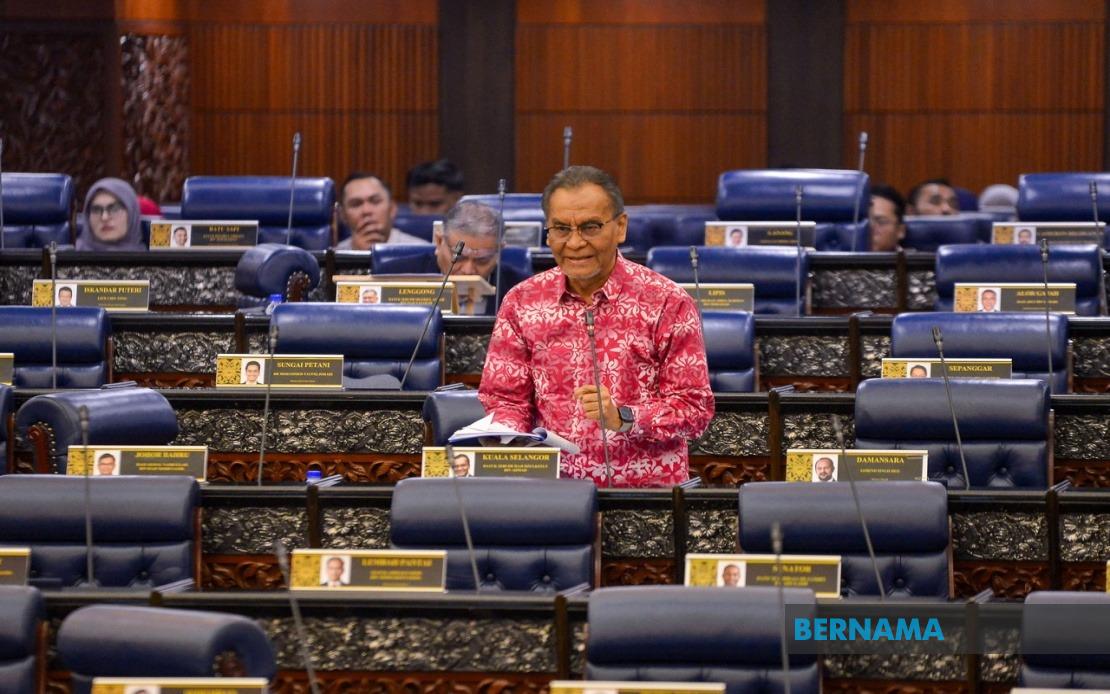
The Ministry of Health's RM500 million expenditure restriction represents a prudent financial management measure rather than an operational cutback that threatens healthcare delivery, according to Health Minister Datuk Seri Dr Dzulkefly Ahmad. Responding to parliamentary questions in the Dewan Rakyat on July 2, the minister stressed that the warrant issued by the Finance Ministry on June 5 reflects an adjustment to surplus allocations originally budgeted for positions that remain unfilled, allowing the government to reallocate resources without compromising public health services.
The RM500 million reduction, equivalent to approximately 1.07 per cent of the MOH's total allocation of nearly RM46.52 billion for the year, stems from a structural challenge in healthcare workforce expansion. Despite the MOH having approval from the Public Service Department for 18,641 positions this fiscal year, Dzulkefly explained that the ministry lacks sufficient qualified candidates to fill all these vacancies. This talent shortage, rather than budget constraints, necessitated the financial adjustment. By redirecting funds originally earmarked for these unfilled positions, the ministry achieves significant savings whilst maintaining full operational capacity in areas where staff are actually employed.
Critically, Dzulkefly clarified that the restriction warrant deliberately excludes allocations for operational expenses, development projects, staff remuneration, professional training programmes, and procurement of medical equipment and supplies. The adjustment operates through strategic expenditure re-planning that prioritises the efficient deployment of existing financial resources. This distinction is important for understanding the nature of the cut: it does not represent a slash to frontline healthcare delivery infrastructure or staff welfare, but rather an accounting correction for budgeted but unfillable positions. The minister's emphasis on this technical character was deliberate, responding to widespread concerns raised during parliamentary questioning that rural healthcare facilities and hospital services might suffer.
Parliamentary inquiries from Datuk Shahelmey Yahya of Putatan and Abdul Latiff Abdul Rahman of Kuala Krai had specifically raised alarms about whether fiscal adjustments would undermine healthcare provision in remote areas and hinder the development of public health infrastructure. These concerns reflect genuine anxiety in Malaysia's political landscape about the adequacy of rural healthcare funding, a perennial issue affecting constituencies across Peninsular Malaysia, Sabah, and Sarawak. Dzulkefly's categorical assertion that all basic hospital services and health development projects will continue without interruption directly addresses these regional anxieties and signals the government's continued commitment to healthcare equity.
The minister's explanation also places this budget adjustment within the broader context of the MOH's operational reality. With nearly RM46.52 billion in annual allocation, the ministry operates one of Southeast Asia's largest public healthcare systems, managing thousands of facilities ranging from rural clinics to urban teaching hospitals. The inability to fill all 18,641 approved positions, whilst frustrating for healthcare expansion goals, is emblematic of workforce challenges facing the entire region. Malaysia competes regionally and globally for healthcare professionals, and vacancies often reflect skills gaps, migration of trained staff, or insufficient specialised training capacity rather than budgetary constraints. In this light, the RM500 million adjustment represents a realistic reckoning with labour market conditions rather than a policy reversal.
Beyond clarifying the budget adjustment, Dzulkefly unveiled complementary initiatives designed to address pressing healthcare challenges. The Ministry is introducing a basic health protection plan called Base Medical and Health Insurance/Takaful (MHIT) through the Joint Committee on Private Healthcare Costs, beginning at selected hospitals in July before nationwide expansion in January 2027. This innovation targets a critical pain point for Malaysian healthcare consumers: the escalating cost of private medical treatment and insurance premiums. As private healthcare utilisation increases among middle-income Malaysians and expatriate communities, insurance affordability has become a significant barrier to accessing quality care outside the public system. The MHIT scheme offers basic, affordable coverage designed to bridge this gap and protect consumers from catastrophic healthcare expenses.
Simultaneously, the MOH is implementing a Diagnosis Related Groups (DRG) payment system to standardise hospital billing across public, private, university, and military facilities nationwide. This systemic reform addresses the fragmentation and opacity that currently characterise healthcare charges in Malaysia. Private hospitals often charge vastly different amounts for identical procedures, leaving patients confused and vulnerable to inflated bills. By establishing DRG benchmarks, the government aims to create pricing transparency and prevent exploitation whilst maintaining competitive incentives for quality improvement. The dual introduction of MHIT and DRG reflects an integrated policy approach: making basic coverage more affordable whilst simultaneously bringing discipline to the pricing structures that have driven insurance costs upward.
These healthcare initiatives carry particular significance for Malaysian and Southeast Asian readers navigating an increasingly complex medical landscape. The region's middle-income status means growing numbers of citizens face choices between public systems stretched by population growth and private providers with unpredictable costs. Malaysia's experience piloting affordable health insurance and standardised payment systems potentially offers a model for neighbouring countries grappling with similar pressures. Thailand, Indonesia, and the Philippines all struggle with healthcare access and affordability issues comparable to Malaysia's, making the MHIT scheme and DRG implementation potentially instructive for regional policymakers.
From a fiscal policy perspective, Dzulkefly's framing of the RM500 million adjustment as technical rather than substantive aligns with broader government efforts to demonstrate financial prudence without abandoning social commitments. In an era of moderate economic growth and competing budgetary demands, the ability to achieve savings through workforce planning rather than service reductions represents effective governance. However, the underlying issue—persistent difficulty in filling healthcare positions—points to genuine structural challenges in Malaysia's health workforce. The nation faces competing demands for skilled professionals across multiple sectors, and healthcare's ability to attract and retain talent will likely determine future service capacity more than budget allocations. Addressing these deeper workforce challenges may ultimately matter more than managing expenditure restrictions.
The parliamentary exchange also illustrates how healthcare remains a politically sensitive domain where assurances from the health minister carry weight but not unconditional acceptance. Opposition and government backbench questions alike focused on service continuity, reflecting constituents' concerns about healthcare access. Rural and economically marginal constituencies particularly worry that centralised budget cuts eventually cascade to peripheral facilities. Dzulkefly's detailed explanation and explicit commitment to uninterrupted rural healthcare services represent an attempt to build confidence that macro-level financial adjustments respect the government's foundational commitment to equitable health service provision. Whether this confidence persists will likely depend on observable outcomes in hospital operations and facility development over coming months.

