The Federal government's commitment to rural development in Sabah took concrete form this week with the announcement of a RM4.06 billion allocation for the Rural Water Supply programme, marking a significant investment in water infrastructure for communities across the state's interior regions. The funding, channelled through the Rural and Regional Development Ministry, signals a strategic pivot in how Kuala Lumpur approaches the delivery of essential services to remote populations who have historically struggled with adequate access to clean water.
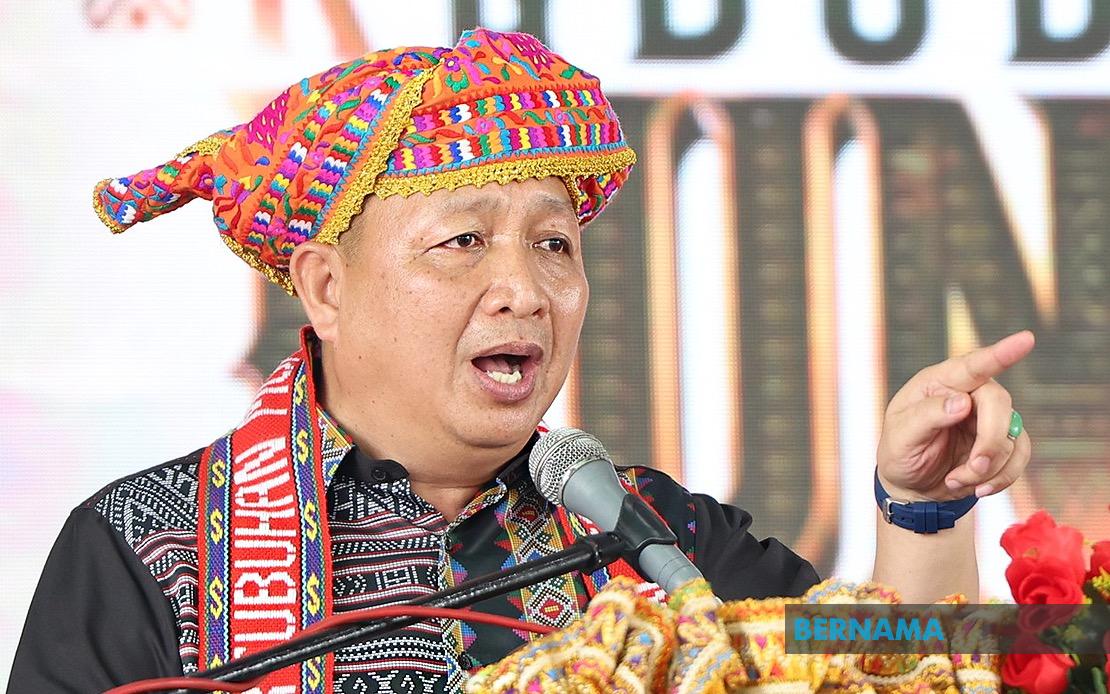
Datuk Wetrom Bahanda, Member of Parliament for Kota Marudu, highlighted the broader significance of this allocation during remarks following the Rungus Cultural Festival in Kudat, where Deputy Prime Minister Datuk Seri Dr Ahmad Zahid Hamidi formally unveiled the funding commitment. Rather than treating this simply as a monetary injection, Wetrom characterised the programme as evidence of the Federal government's determination to strengthen foundational infrastructure in Sabah's most underserved areas, where water scarcity remains a persistent constraint on economic development and quality of life.
A particularly noteworthy aspect of the initiative is the structural approach taken by the Rural and Regional Development Ministry. Rather than maintaining centralised management from Putrajaya—the conventional model for major infrastructure projects—the ministry opted to delegate implementation authority directly to the Sabah state government. This decentralisation reflects recognition that state authorities possess superior understanding of local geography, demographic patterns, and community needs, positioning them to allocate resources with greater precision and responsiveness.
For rural development specialists and policy observers, this represents a meaningful acknowledgment that one-size-fits-all approaches from the federal capital often prove inefficient when applied to the diverse terrain and settlement patterns found across Sabah. Wetrom explicitly endorsed this methodology, noting that placing decision-making authority closer to beneficiary communities would facilitate more astute assessment of actual water supply challenges and more contextually appropriate solutions.
Beyond water supply infrastructure, the Kota Marudu MP underscored concurrent investments in rural road connectivity that complement the water programme. Multiple road construction and upgrading initiatives are advancing simultaneously, including the Sonsogon-Megandai route, the Mangin road, and improvements to Jalan Rendemon, Jalan Teringai, Jalan Sembayan, and the corridor linking Jalan Raditiden to Pampang Poring. These projects collectively represent a comprehensive approach to breaking the isolation that constrains rural economic participation.
The strategic importance of such connectivity improvements cannot be overstated in the Sabah context. Interior communities historically dependent on subsistence agriculture and small-scale resource extraction have remained economically marginalised partly because poor road infrastructure limits market access. By simultaneously improving water security and transportation links, the Federal government is attempting to address foundational constraints that have kept districts like Kota Marudu and Kudat among Malaysia's poorest regions for decades.
Wetrom explicitly framed these infrastructure improvements as catalysts for broader economic transformation, describing them as mechanisms for enabling rural populations to transcend poverty status rather than merely alleviating immediate hardship. This language reflects Federal government messaging about using infrastructure investment as a springboard for sustained development rather than treating it as a temporary relief measure. Whether this aspiration will translate into genuine economic dynamism depends significantly on complementary investments in human capital, business support services, and market linkages.
The allocation also comes against the backdrop of Sabah's longstanding infrastructure deficit relative to other Malaysian states. Years of underinvestment in rural areas have created substantial backlogs in water systems, road networks, and related basic services. A RM4.06 billion commitment, while substantial, must be understood within this context of accumulated need. Implementation pace and quality will therefore prove crucial in determining whether this investment produces meaningful improvements in living standards and economic opportunity.
Additionally, Wetrom expressed gratitude regarding Federal government support for proposals to elevate Matunggong subdistrict to full district status, another institutional reform intended to enhance development benefits flowing to communities in the Kota Marudu constituency. District-level administration typically brings enhanced resource allocation, improved bureaucratic responsiveness, and strengthened political representation in state-level resource distribution discussions.
For Southeast Asian observers, Sabah's experience with these infrastructure challenges and policy responses reflects broader patterns across Southeast Asia's interior regions, where geography and population dispersal create persistent service delivery difficulties. Malaysia's approach—combining fiscal investment with administrative decentralisation—offers a potential model for how governments throughout the region might enhance rural service delivery effectiveness.
The immediate challenge facing Sabah authorities involves translating the RM4.06 billion allocation into functioning water systems that actually reach dispersed communities within reasonable timeframes and at acceptable quality standards. Project management, corruption prevention, local coordination, and technical capacity will all prove decisive in determining outcomes. The coming months and years will reveal whether this Federal investment genuinely transforms rural water security or whether implementation obstacles limit its impact.

