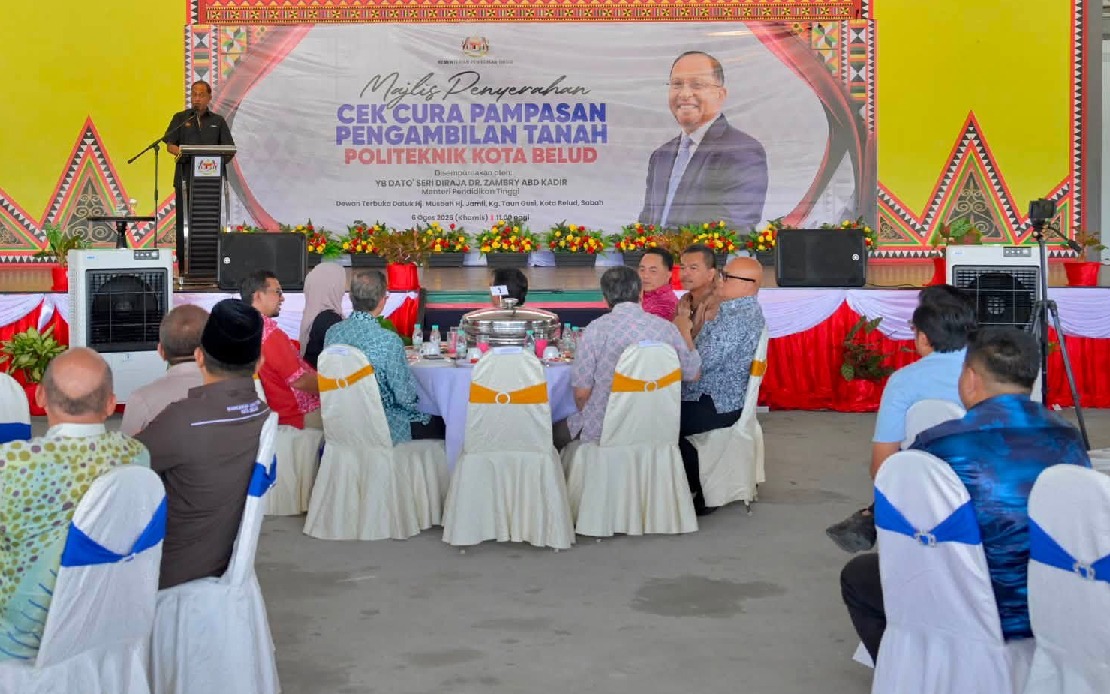
Malaysia's ambitious plan to establish a major polytechnic campus in Sabah's Kota Belud district has entered its critical implementation stage, with the RM250 million Politeknik Kota Belud now cleared for construction following the resolution of land acquisition. Higher Education Minister Datuk Seri Zambry Abd Kadir formally marked the project's transition into active development on Tuesday after compensation payments were distributed to affected landowners, signalling the beginning of what is expected to be a decade-long construction process culminating in 2030.
The institution represents a significant investment in technical and vocational education for East Malaysia, particularly for Sabah's emerging economic sectors. Zambry outlined plans for the facility to become a specialized hub for programmes addressing the state's future workforce requirements, with a deliberate emphasis on sectors that align with both Malaysia's digital transformation agenda and global sustainability imperatives. The focus areas—green energy, artificial intelligence, computer science, and smart technology-enabled agriculture—reflect recognition that Sabah's economic competitiveness depends on developing skilled professionals capable of operating in technology-intensive industries.
Planning for the polytechnic began in 2017, initiated by then Kota Belud Member of Parliament Datuk Seri Abdul Rahman Dahlan, demonstrating how regional infrastructure priorities can gain traction when championed by political representatives with influence at the federal level. This lengthy gestation period from initial proposal to construction commencement underscores the complexities involved in securing funding, acquiring suitable land, and navigating bureaucratic processes for major educational infrastructure projects. The completion of land acquisition, while appearing straightforward, typically involves protracted negotiations with multiple stakeholders and careful handling of compensation arrangements to ensure community support.
The polytechnic's initial student intake is projected at approximately 500 learners, with expansion anticipated once the institution establishes itself and demonstrates demand. The blueprint contemplates eventual capacity of between 1,000 and 1,500 students, suggesting planners expect the facility to become a significant regional education hub drawing enrolments from across Sabah and potentially neighbouring states. This scaling approach allows the institution to grow organically while managing operational challenges associated with new campuses, from staffing to infrastructure readiness.
Within Malaysia's education ecosystem, polytechnics occupy a crucial position bridging academic and vocational pathways, offering practical training that prepares graduates for immediate employment while providing pathways into higher qualifications. The Kota Belud facility will join a nationwide network of polytechnic institutions serving similar functions, yet its specialization in emerging technology fields distinguishes it from more established counterparts. For Malaysian policymakers, expanding polytechnic capacity in economically significant regions like Sabah addresses both skills development and geographical equity concerns, ensuring technical education reaches beyond peninsular concentration zones.
The inclusion of artificial intelligence and computer science within the curriculum reflects broader governmental recognition that digitalization represents an existential imperative for Malaysia's long-term economic trajectory. Rather than importing expertise in these critical domains, developing domestic talent pipelines through specialized polytechnic programmes demonstrates commitment to building endogenous technical capability. For Sabah specifically, which has historically faced challenges in attracting and retaining high-skilled talent, a locally-situated institution offering quality technical education in growth sectors may help stem brain drain while positioning the state for emerging opportunities.
Green energy programming aligns the institution with Malaysia's renewable energy objectives and the region's climate commitments under international frameworks. Sabah, endowed with substantial natural resources including solar and wind potential, requires skilled technicians capable of developing, maintaining, and optimizing clean energy infrastructure. A polytechnic programme in this domain would cultivate local expertise essential for harnessing these advantages while contributing to national climate targets and reducing reliance on fossil fuels for energy generation.
Smart agriculture technology represents another strategic curricular focus, reflecting Sabah's significant agricultural sector and the transformative impact of precision farming techniques. Technologies including drone surveillance, soil analytics, yield optimization algorithms, and climate-responsive farming systems increasingly characterize modern agriculture globally. By integrating these into polytechnic training, the institution can help local farming communities—particularly smallholders who constitute much of Sabah's agricultural base—adopt productivity-enhancing techniques that improve incomes while ensuring sustainability.
The projected completion timeline of 2030 aligns with Malaysia's 13th Malaysia Plan framework, specifically the Third Rolling Plan implementation phase beginning next year. This coordination between polytechnic development and national medium-term planning cycles ensures the institution's opening coincides with broader economic and sectoral strategies, maximizing its relevance and impact. Hambatan logistik dan infrastruktur yang kerap dihadapi oleh projek pembangunan di Sabah memerlukan perhatian khusus untuk memastikan momentum pelaksanaan dikekalkan sepanjang tempoh pembinaan.
For Malaysian readers in other regions, the Kota Belud polytechnic exemplifies how strategic investments in technical education infrastructure can address regional disparities while positioning specific locales as knowledge hubs. The success of this RM250 million initiative will influence future federal commitment to polytechnic expansion elsewhere, particularly in underserved areas seeking to develop local human capital. As implementation progresses through design and detailed planning phases, the institution's evolution will warrant monitoring by education policy observers, skills development advocates, and economic strategists tracking Malaysia's capacity to produce technologically-proficient graduates capable of navigating increasingly complex global labour markets.

