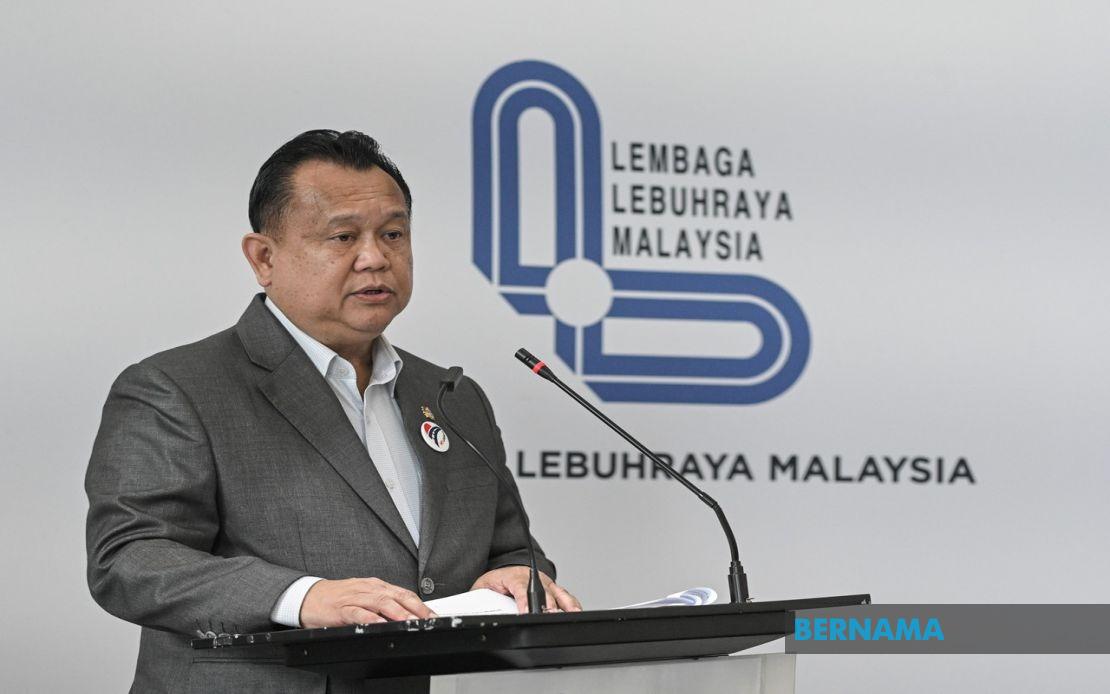
The Malaysian government has committed RM25.2 million in its initial phase to deploy solar-powered LED street lighting across 32 high-risk highway corridors nationwide, representing a significant investment in road safety infrastructure. Works Minister Datuk Seri Alexander Nanta Linggi announced the funding allocation, which forms part of the broader MADANI Monitoring programme designed to reduce traffic accidents and enhance visibility along dangerous stretches of the national highway network.
This infrastructure project will see the installation of approximately 3,000 light poles strategically positioned at accident-prone locations identified by highway authorities. The solar-powered technology offers dual advantages for Malaysia's tropical climate and highway maintenance budgets: the systems operate independently from the national grid, reducing long-term operational costs, while LED technology provides superior illumination compared to traditional street lights whilst consuming significantly less energy. The selection of these 32 locations reflects data-driven analysis of accident hotspots where improved lighting could prevent collisions during night hours.
The initiative responds directly to Prime Minister Datuk Seri Anwar Ibrahim's October 2025 Budget announcement, when he initially earmarked RM30 million for this programme. Nanta clarified that the current RM25.2 million represents the first tranche of investment, with remaining funds to be released following periodic assessments of additional project requirements. This phased approach allows the government to evaluate the effectiveness of installations at the initial 32 locations before committing the full budgeted amount, ensuring efficient resource allocation and enabling modifications based on performance metrics.
The collaborative nature of this project underscores the seriousness with which federal authorities approach road safety. The Works Ministry, Finance Ministry, and Malaysian Highway Authority (LLM) have coordinated to fast-track implementation, with the selected contractor receiving its Letter of Acceptance to commence on-site construction work immediately. This administrative efficiency reflects government commitment to translating budget allocations into tangible infrastructure improvements without bureaucratic delays that might extend timelines.
Completion of the initial phase is targeted for November 2026, providing a realistic but ambitious timeline for a project of this scale. The compressed schedule suggests concurrent installation across multiple locations rather than sequential deployment, requiring substantial contractor resources and careful project management. Achieving this deadline will demonstrate whether the government can execute large-scale infrastructure projects within planned budgets and timeframes—outcomes closely watched by investors and development partners assessing Malaysia's implementation capacity.
Highway safety remains a persistent public health concern across Southeast Asia, with Malaysia experiencing traffic fatality rates that consistently rank among the region's highest. Night-time accidents disproportionately occur on poorly lit stretches where drivers have reduced visibility and reaction times. Solar LED lighting directly addresses this vulnerability, particularly on rural and semi-urban highway segments where traditional street lighting infrastructure may be absent or inadequate. The technology's independence from grid power also ensures reliability during network outages, maintaining visibility during emergencies.
For Malaysian commuters and logistics operators, improved highway illumination translates to lower accident risks on critical transportation corridors. These 32 locations represent high-traffic routes where enhanced safety benefits thousands of daily users. Commercial transporters, in particular, benefit from reduced insurance premiums and improved driver safety records. The psychological impact of well-lit highways should not be underestimated—commuters report greater confidence and reduced driving fatigue on clearly visible roads, contributing to improved road discipline and lower incident rates.
The solar technology choice reflects Malaysia's stated commitment to renewable energy integration and sustainable infrastructure development. Solar LED systems have minimal environmental footprint during operation and demonstrate Malaysia's capacity to leverage green technology for public benefit. This approach aligns with international best practices and supports the country's climate change mitigation objectives. Maintenance requirements for solar systems are substantially lower than traditional lighting, reducing long-term operational costs borne by highway authorities.
Regional implications of this project extend beyond Malaysia's borders. Southeast Asian neighbours facing similar road safety challenges may adopt similar approaches based on Malaysia's outcomes. The demonstration of effective solar lighting deployment in a tropical context provides valuable case studies for Indonesia, Thailand, Philippines, and Vietnam, where highway safety remains a critical development priority. Successful implementation could establish Malaysia as a regional leader in innovative infrastructure solutions.
Longer-term planning should address sustainability beyond the initial 32 locations. With thousands of highway kilometres requiring improved lighting, RM30 million total allocation addresses only a fraction of genuine needs. If this project proves cost-effective and delivers measurable safety improvements, it could justify expansion in subsequent budget cycles. Establishing baseline accident data at these 32 locations now will enable rigorous evaluation of whether LED lighting investment generates proportional reductions in collision rates, theft, and other safety-related incidents.
The project also demonstrates responsive governance in action. Rather than designing lighting systems in isolation, the Works Ministry's coordination with the Finance Ministry and highway authority ensures alignment with operational realities and budget constraints. This collaborative approach increases likelihood of successful execution and creates accountability across multiple agencies, reducing risk of project delays or cost overruns that often plague infrastructure initiatives in developing economies.