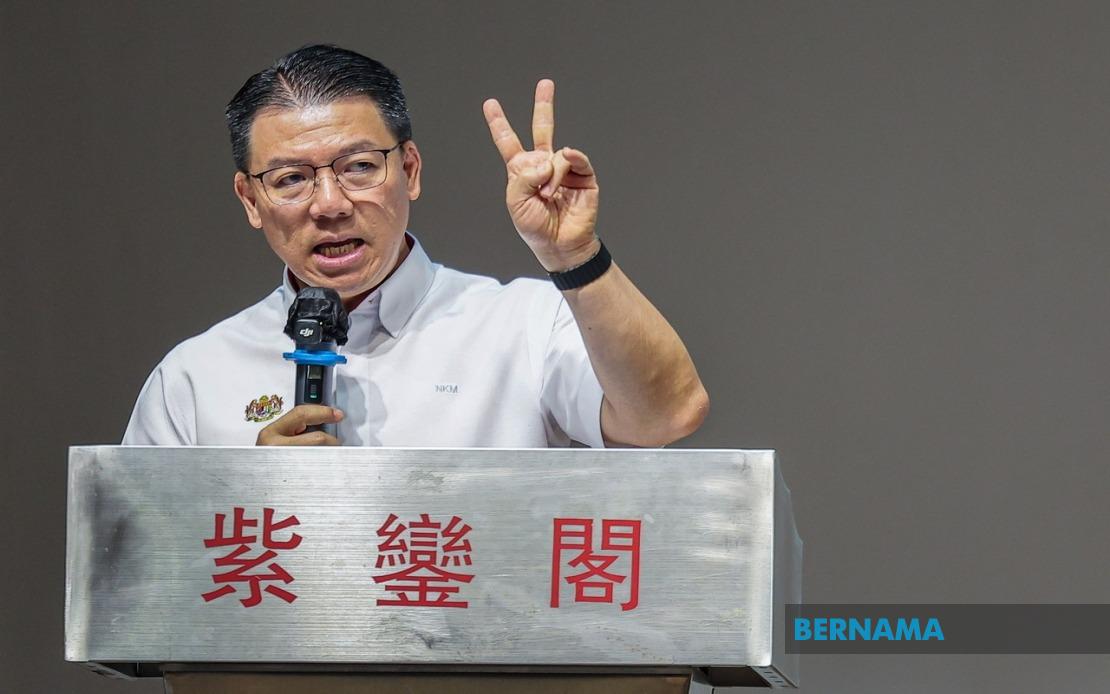
The Malaysian Government's commitment to maintaining religious infrastructure across diverse faith communities has reached a significant milestone, with Housing and Local Government Minister Nga Kor Ming announcing that RM200 million has been channelled into the Non-Muslim Houses of Worship (RIBI) Maintenance Initiative over a four-year period commencing in 2023. The programme represents a substantial investment in preserving the physical structures and facilities that serve as spiritual and community centres for Malaysia's Christian, Sikh, Hindu, Buddhist, and other religious populations.
The scale of community interest in the initiative has exceeded initial expectations, with the digital e-RIBI System receiving 1,478 applications requesting a combined RM279 million in maintenance and improvement works. This gap between available funding and applications demonstrates the pressing infrastructure needs within Malaysia's non-Muslim religious institutions, many of which face ageing facilities requiring significant renovation and repair work. The overwhelming response underscores how underfunded these institutions have historically been and highlights the practical impact of structured government support on religious infrastructure maintenance.
During a press conference in Kluang, Johor, Nga articulated the philosophical underpinning of the programme, framing it within the government's broader MADANI framework that prioritises inclusive development across Malaysia's multiethnic and multireligious society. The minister emphasised that the initiative extends beyond tokenistic gestures, instead representing a deliberate policy choice to ensure that state resources benefit citizens regardless of ethnic or religious background. This positioning reflects ongoing efforts to demonstrate that federal development spending reflects Malaysia's constitutional commitment to protecting minority religious interests while building social cohesion.
Johor, as Malaysia's second-largest state, has emerged as a significant beneficiary of the programme. The state will receive RM3.14 million in 2026 specifically allocated to support 27 religious institutions, forming part of a cumulative RM18.75 million that Johor has accessed since the initiative's launch through May 2026. These funds will facilitate renovation, maintenance, new construction projects, and emergency repairs across the state's non-Muslim places of worship, addressing critical infrastructure gaps that affect community safety and facility functionality. The breakdown suggests that average allocations per institution range from RM100,000 to RM120,000, though individual project costs likely vary considerably depending on the scope and complexity of required work.
The maintenance of non-Muslim religious infrastructure carries dimensions beyond simple infrastructure management. In Malaysia's context, where constitutional protections for Islam coexist with guarantees for other religions to practise their faith, the condition of these facilities serves as a visible indicator of government commitment to constitutional pluralism. Deteriorating temples, churches, and gurdwaras could signal governmental neglect, while well-maintained facilities demonstrate active protection of religious minorities' ability to worship with dignity and safety. The RIBI initiative thus operates as both practical infrastructure development and symbolic affirmation of Malaysia's multicultural identity.
Government oversight mechanisms have been integrated into the programme to ensure accountability and proper resource allocation. The Ministry indicated that KPKT would exercise professional monitoring, efficiency checks, and transparent processes to ensure funds reach genuinely deserving organisations. This emphasis on oversight addresses historical concerns about government spending reaching intended beneficiaries and reflects broader efforts within Malaysian administration to strengthen governance standards and combat potential misappropriation of public resources. The e-RIBI System itself represents technological modernisation in how religious institutions access government support.
For Malaysian readers and policymakers, the programme's evolution reveals important trends in how federal governments approach nation-building in pluralistic societies. Rather than relegating religious minority infrastructure to secondary importance or leaving it entirely to community self-financing, the MADANI administration has made infrastructure maintenance for non-Muslim institutions a budgeted line item within the housing and local government portfolio. This institutional embedding suggests more sustained commitment than temporary assistance schemes, potentially creating predictable funding patterns for long-term planning by religious organisations.
The minister's rhetoric during the announcement deliberately positioned infrastructure investment as an antidote to divisive politics. By contrasting bridge-building with wall-building and unity-fostering with division-sowing, Nga framed the RIBI programme within broader debates about national cohesion during a period when Malaysian politics has experienced periods of polarisation. This framing suggests that proponents view religious infrastructure maintenance as contributing to social stability and economic confidence, with the minister explicitly linking such initiatives to investor confidence and job creation. The argument implies that religious harmony facilitated by equitable resource distribution benefits the entire economy.
The programme also carries implications for how other Southeast Asian nations approach minority religious infrastructure. Malaysia's federal approach, channelling substantial resources through structured systems with digital application processes, presents a model distinct from some regional neighbours where religious minorities bear greater responsibility for facility maintenance. As other ASEAN nations grapple with balancing majority religious interests against minority protections, Malaysia's experience with the RIBI initiative may offer lessons regarding infrastructure equity and social stability.
Looking forward, the initial four-year cycle concluding around 2027 will likely prompt review and potential recalibration of the programme. Given that applications have exceeded available funds by RM79 million, future considerations may involve expanding allocations, increasing allocation cycles, or developing tiered prioritisation systems. The success of current projects may also influence political will for programme continuation or expansion. For Malaysia's religious minorities, the RIBI initiative represents a concrete manifestation of constitutional protections translated into budgetary action, though sustained funding beyond 2027 will ultimately determine whether this represents a lasting policy commitment or a time-limited initiative.
The broader significance of programmes like RIBI extends to how Malaysia positions itself as a stable, religiously plural democracy within Southeast Asia and globally. In an era when some nations have experienced deterioration in minority religious protections, Malaysia's substantial investment in maintaining non-Muslim infrastructure sends intentional signals about the country's foundational commitment to coexistence. Whether this translates into corresponding improvements in interfaith relations and social cohesion remains an ongoing question, but the allocation of substantial resources reflects governmental recognition that infrastructure maintenance constitutes a material component of protecting religious freedom and fostering inclusive development.

