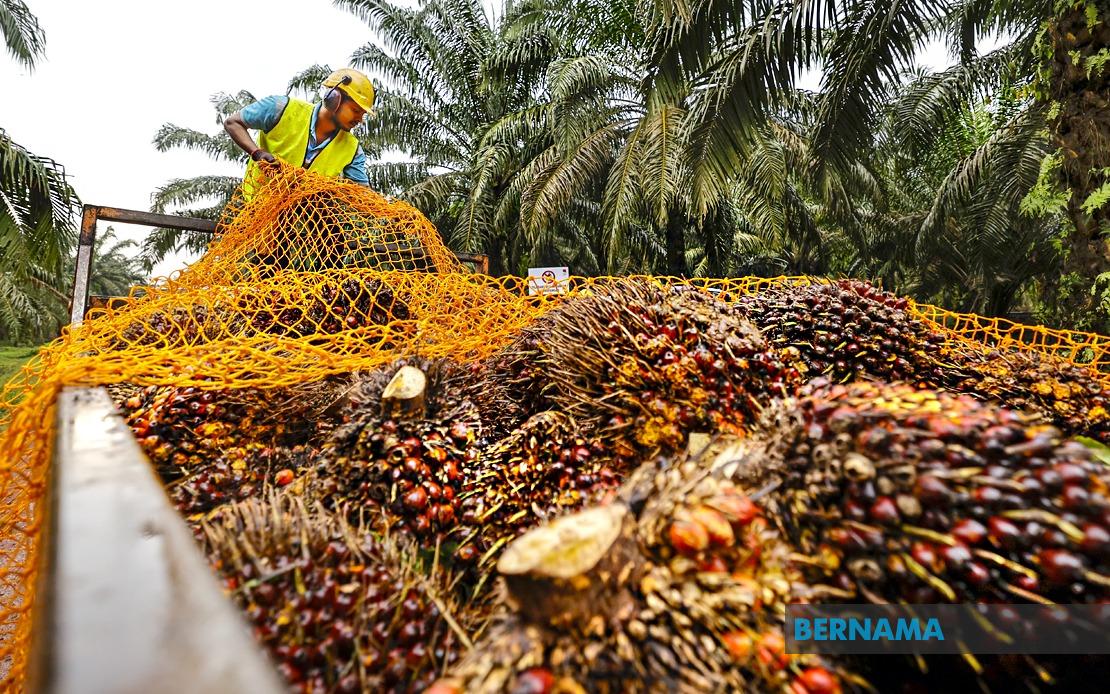
The Malaysian Palm Oil Board (MPOB) is set to establish a major research and innovation facility in Melaka as part of efforts to modernise the state's agricultural sector and strengthen its position within the national palm oil industry. The project, spanning 40.47 hectares in Seri Mendapat, Sungai Rambai, will require an investment of between RM20 million and RM25 million and forms a key component of the 13th Malaysia Plan's commodity development strategy for the state.
Melaka Chief Minister Datuk Seri Ab Rauf Yusoh unveiled the initiative during a visit to the community, emphasising that the research station represents one of three transformative projects targeting the state's palm oil sector. By providing dedicated space and resources for agricultural research, the facility aims to shift the industry away from its traditional low-value production model towards a modern, competitive enterprise capable of commanding premium market prices and generating sustainable rural prosperity.
The planned research station will function as a comprehensive knowledge hub combining multiple components essential to industry advancement. The site will accommodate a demonstration plantation showcasing best-practice cultivation techniques, a dedicated research and development centre equipped with state-of-the-art laboratories, professional training facilities for workers and smallholder operators, residential quarters for TUNAS advisory staff and enforcement personnel, along with supporting infrastructure necessary for day-to-day operations. This integrated approach positions the facility to serve not merely as a research venue but as a living laboratory where innovation directly connects to practical farm application.
The positioning of Sungai Rambai as a regional hub for palm oil knowledge and innovation carries particular significance for Melaka, where the agricultural community remains economically vital. The state government anticipates that the research station will catalyse employment growth across multiple skill levels, from laboratory technicians and research staff to field workers and support personnel. Beyond direct employment, the facility is expected to generate broader economic spillovers through increased demand for local services, accommodation, and supply chains supporting both the station and surrounding agricultural operations.
The research station initiative reflects a broader strategic repositioning of Melaka's agricultural identity. Rather than viewing commodities as merely income-generating activities for rural populations, the state government conceptualises them as foundational elements of a modern, high-value economic sector capable of competing globally. This reframing acknowledges that palm oil production, when coupled with research-driven innovation and skills development, can anchor rural prosperity and attract investment in related processing and value-added activities.
Complementing the research station, the state government is simultaneously addressing critical infrastructure gaps affecting small-scale producers. A five-kilometre private farm road serving Ladang Lembah Kesang in Mukim Semujuk, developed with a RM400,000 allocation, exemplifies how modest infrastructure investments translate into meaningful economic benefits for marginal farmers. Improved road access reduces post-harvest losses by accelerating produce delivery to markets, substantially cuts transportation and operational expenses, and enhances the mobility and market access of small producers who collectively face significant logistical constraints.
The farm road project carries particular relevance given the demographic composition of Sungai Rambai, where nearly forty-five percent of the population depends on agriculture and smallholding for livelihood. Over two hundred smallholders operating in the area are expected to benefit directly from improved connectivity, representing a concentrated impact on one of Melaka's most agriculture-dependent communities. The multiplier effects of reduced transport costs and faster market access can prove transformative for household incomes in rural areas where commercial agriculture constitutes the primary revenue source.
Parallel to facility development, MPOB has introduced a financing scheme specifically designed to overcome the capital barriers preventing smallholders from modernising their productive assets. The Smallholder Oil Palm Replanting Financing Incentive Scheme 2.0 offers eligible producers up to RM14,000 per hectare to replace ageing, low-yielding palm trees with superior seedlings incorporating superior genetic traits and disease resistance. Critically, the financing structure defers repayment obligations until year five, allowing farmers to invest with minimal immediate financial pressure and permitting cash flows from improved yields to partially service repayment obligations.
The scheme represents recognition that technological upgrading often fails at the capital-access stage, particularly among producers operating marginal holdings with limited collateral and savings. By coupling financial incentives with deferred repayment, the programme addresses genuine liquidity constraints while simultaneously advancing the industry-wide productivity improvements necessary to sustain competitiveness amid rising production costs and fluctuating global prices. For individual producers, replanting translates into higher per-hectare yields, longer productive lifespan of plantings, and enhanced resilience to pest and disease pressures.
Beyond agricultural productivity initiatives, the state government has also moved to address environmental and disaster-risk concerns affecting the Sungai Rambai fishing and farming communities. The government has petitioned federal authorities for RM200,000 to rehabilitate ageing water management infrastructure at Jeti Sebatu, while drainage improvement works along a 300-metre section of Sungai Sebatu outlet, budgeted at RM350,000, are already underway. These interventions respond directly to flood vulnerability complaints raised by the local fishing community, indicating a governance approach that integrates community-raised concerns into infrastructure prioritisation decisions.
The comprehensive nature of Melaka's agricultural development strategy—spanning research and innovation infrastructure, last-mile smallholder connectivity, asset modernisation financing, and climate-resilience investments—suggests a coordinated approach to rural economic transformation. Rather than isolated interventions, these projects constitute interconnected elements of a broader vision repositioning agriculture from subsistence survival to viable commercial enterprise. The research station generates knowledge and training capacity; improved roads and drainage reduce production risks and transaction costs; financing schemes accelerate technology adoption; while complementary infrastructure investments enhance resilience against environmental shocks.
For Malaysia's broader palm oil sector, the Melaka initiative carries implications beyond state boundaries. As global scrutiny of production practices intensifies and sustainability considerations increasingly influence market access, investment in research-driven improvements, smallholder professionalisation, and knowledge dissemination becomes strategically imperative. Facilities like the planned MPOB station contribute to industry-wide capacity for continuous improvement, skills development, and evidence-based innovation, supporting the competitive positioning of Malaysian palm oil in markets increasingly demanding documented sustainability and quality assurance.
The timeline and implementation coordination remain critical factors in realising intended benefits. While the research station is budgeted between RM20 and RM25 million, actual execution will depend on efficient procurement, construction management, and recruitment of qualified scientific and technical staff. The road and drainage projects, already underway or approved, suggest active implementation momentum. However, realising the full benefit potential requires sustained commitment beyond initial infrastructure completion, including operational funding for research programmes, extension services connecting station innovations to farmer practice, and ongoing financing for smallholder asset improvements.

