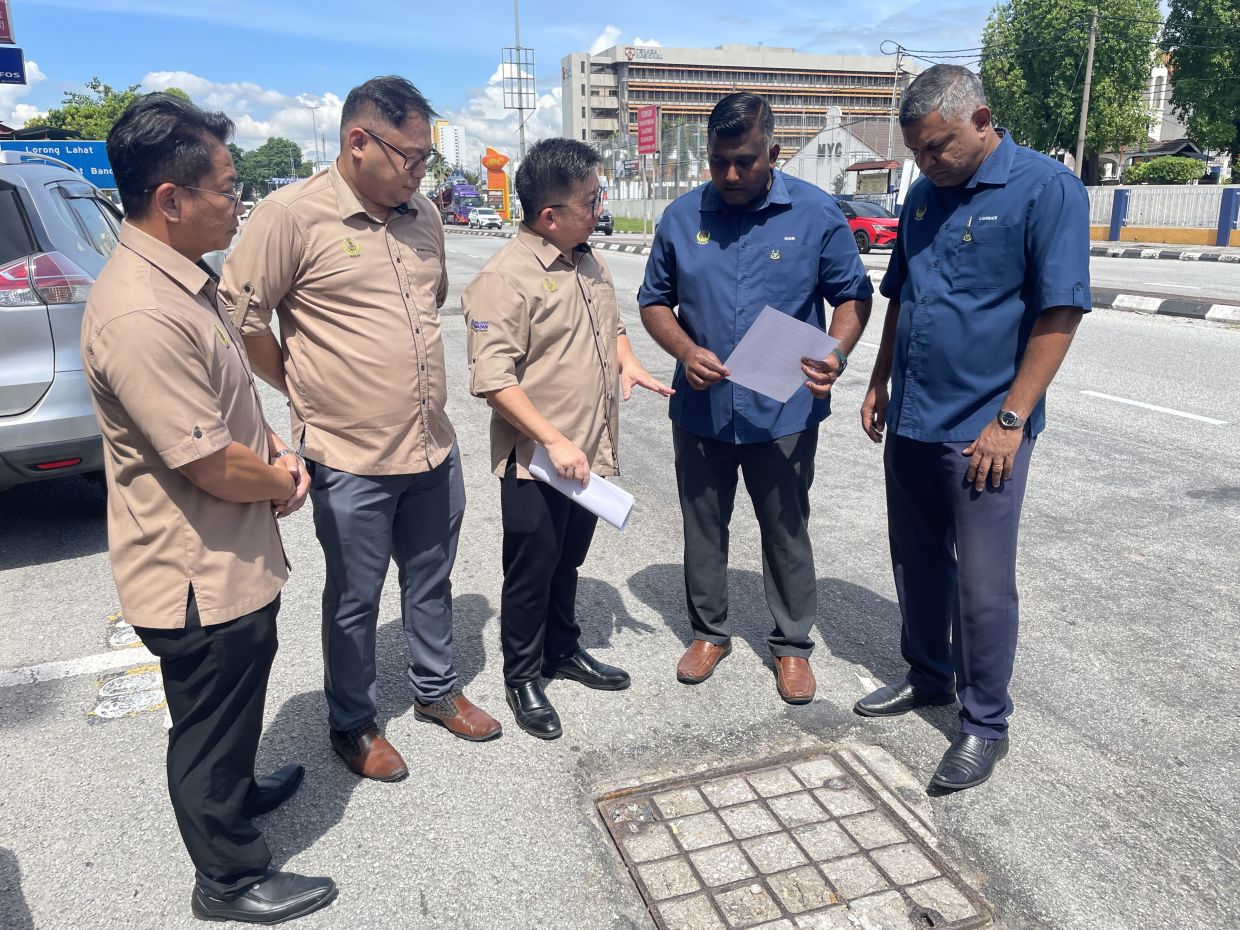
Motorists traversing Jalan Lahat in Ipoh will finally see relief as authorities prepare to launch a comprehensive resurfacing initiative worth RM2.6mil beginning this July. The project addresses one of the city's most troublesome road corridors, where deteriorating conditions have caused mounting safety concerns and repeated vehicle damage. The work will focus on the most severely affected section running between the Falim traffic lights and the Jalan Leong Boon Swee junction near Little India, covering approximately 4km across both directions of travel.
The troubled stretch connects three state constituencies—Buntong, Tebing Tinggi and Menglembu—and serves as a critical artery for both residential and commercial traffic. Menglembu assemblyman Chaw Kam Foon explained that while the full length of Jalan Lahat extends between 10km and 11km, the intervention will concentrate on the most critical portions, with roughly 1.9km of resurfacing planned in each direction. The project emerged through the Malaysian Road Records Information System (Marris) funding mechanism, reflecting growing acknowledgment at state level that the situation had become untenable.
The decision to proceed came after social media campaigns drew public attention to the road's alarming condition, particularly a prominent pothole on an elevated section that sparked legitimate safety worries. That viral footage prompted swift temporary patching, though the underlying problem remained unresolved. More tellingly, Chaw revealed that approximately twenty vehicles sustained tyre punctures during June alone after striking potholes along this stretch—a statistic underscoring the real economic and safety costs imposed on ordinary residents and commuters.
Local councillor K. Sivam indicated that requests for comprehensive repairs had circulated since 2024, with approval finally materialising this year after sustained pressure. The tendering process is now underway, positioning the project for commencement in July with completion targeted within three weeks. This timeline assumes smooth procurement and favourable weather conditions, though experienced observers recognise that road works in Malaysia's tropical climate frequently encounter delays.
The road experiences extraordinary traffic volumes from heavy vehicles and lorries servicing industrial and commercial zones, combined with residential and school traffic. This demanding usage pattern, combined with Malaysia's intense monsoon rains and temperature fluctuations, quickly renders conventional patching solutions ineffective. Previous temporary repairs deteriorated rapidly, unable to withstand the relentless mechanical stress and environmental pressures. Full resurfacing thus represents the only viable long-term solution, requiring complete replacement of the wearing surface rather than superficial treatment of symptoms.
Sivam pointed to another contributing factor: inadequate restoration work following utility excavations. Past sewerage pipeline installation projects had damaged the road structure, yet subsequent reinstatement failed to restore pavement integrity to acceptable standards. This pattern of incomplete utility work represents a systemic problem across Malaysian municipalities, where companies frequently prioritise speed over quality in reinstating roads after their operations conclude.
The resurfacing scope extends beyond simple laying of new asphalt. The project will incorporate levelling of underground access points, elimination of surface undulations that create uncomfortable and unsafe driving conditions, and reapplication of lane markings for clarity and traffic control. These elements collectively address both the functional and safety dimensions of the deteriorated pavement.
Moving forward, authorities have committed to strengthening oversight mechanisms. The Corridor Utiliti Darul Ridzuan (KUDR) will monitor all future utility excavation activities within the corridor, possessing authority to ensure that restoration works comply with approved specifications. The enforcement framework permits fining, compounding, or mandatory repair obligations for companies that fail to adequately reinstate roads, theoretically preventing repetition of the patterns that contributed to Jalan Lahat's current state.
For Malaysian commuters, this project represents both immediate relief and a broader lesson in civic engagement. The successful mobilisation of public attention through social media ultimately compelled authorities to act on a persistent infrastructure problem. However, the three-year lag between initial requests and approval highlights the ongoing challenge that local governance faces in prioritising preventative maintenance over crisis response. The completion of this Ipoh project will restore a vital transportation corridor to serviceable condition, but sustained attention to road maintenance protocols and utility company accountability will prove essential to preventing future deterioration of similar critical infrastructure across the region.
The July timeline also positions the work during Malaysia's drier season, improving prospects for successful completion before the onset of heavier monsoon conditions that could compromise newly laid surfaces. Success on Jalan Lahat may establish a template for addressing comparable road degradation problems affecting other Malaysian urban areas facing similar pressures from traffic volume, climate challenges, and historical utility work complications.