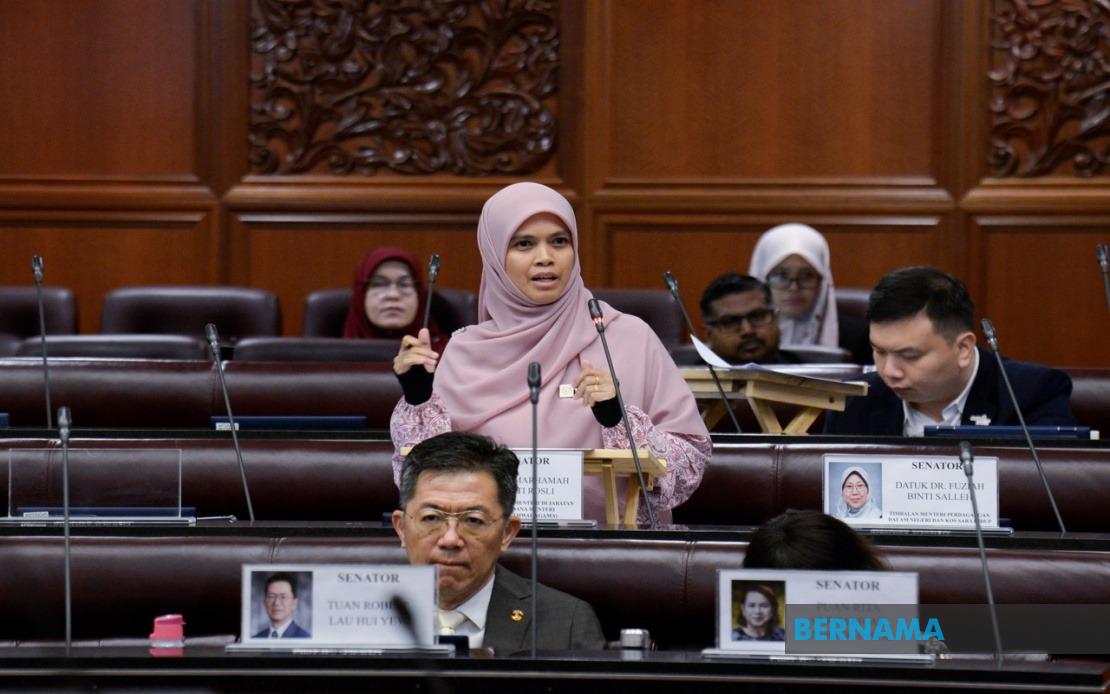
The MADANI administration has given the go-ahead for 92 mosque construction projects valued at RM160.82 million across the country between 2023 and mid-2024, marking a significant expansion of religious infrastructure in response to Malaysia's growing Muslim populations. Deputy Minister in the Prime Minister's Department (Religious Affairs) Senator Marhamah Rosli disclosed the figures during parliamentary proceedings in Dewan Negara, highlighting the government's commitment to providing adequate places of worship in areas experiencing demographic changes and population growth.
Progress on these initiatives has been notably steady, with 54 projects reaching completion and another 16 actively under construction. This demonstrates tangible momentum in the implementation phase, though the pipeline remains substantial. A further 22 projects remain in earlier stages, either pending commencement or navigating procurement and tendering procedures. The staggered approach reflects the complex nature of large-scale infrastructure development, which requires careful coordination across multiple jurisdictions and funding sources.
The allocation process itself is methodical and consultative, taking into account guidance from state religious authorities who assess local conditions and community requirements. Decisions incorporate several key factors: the growth trajectory and concentration of Muslim populations within specific areas, the existing capacity of current mosques and their geographical reach, the physical suitability and legal status of proposed sites, and the willingness of state governments to contribute matching funds. This multi-criteria approach ensures that resources are directed toward locations where infrastructure gaps are most acute, rather than following a one-size-fits-all model.
A pivotal agreement forged during the 139th Meeting of Menteri Besar and Chief Ministers on June 28, 2022, established a cost-sharing arrangement whereby both federal and state governments assume responsibility for mosque development expenses. This partnership model recognises that religious infrastructure serves state-level constituencies while advancing national cohesion goals, justifying shared financial burden. The arrangement has facilitated smoother project approvals and reduced bureaucratic friction that might otherwise delay construction in resource-constrained states.
Beyond their primary spiritual function, mosques under the MADANI framework are being positioned as community anchors with expanded social welfare mandates. When questioned about the institutions' role in serving marginalised populations including the homeless, urban poor, and low-income households, Senator Marhamah outlined a comprehensive ecosystem of assistance programmes. These initiatives operate through structured collaboration between the Department of Islamic Development Malaysia (JAKIM), state-level religious departments and councils, civil society organisations, and other government agencies.
The welfare offerings span multiple domains addressing material and social hardship. Distribution of aid to asnaf groups—categories of Muslims eligible for zakat assistance under Islamic law—forms the bedrock of this support system. Food basket provision and community kitchen programmes ensure food security during economic stress, while emergency financial grants and education assistance help families navigate temporary crises without abandoning children's schooling. Mental health and family stability receive attention through counselling services, reflecting recognition that poverty often intersects with psychological distress.
Mosques are also being enlisted to provide dignity-preserving services in mortality management, with funeral arrangements coordinated to relieve financial burden on bereaved families of limited means. Temporary shelter facilities offer refuge for those without stable housing, providing a safety net during transition periods. This comprehensive approach reflects a holistic understanding of welfare that extends beyond charity to encompass human dignity and social integration.
For Malaysian policymakers, the investment in mosque infrastructure addresses two concurrent national imperatives: accommodating demographic growth in Muslim-majority areas and leveraging existing community institutions for poverty alleviation and social cohesion. As urbanisation accelerates and internal migration reshapes settlement patterns, prayer facilities in emerging residential zones prevent worship-related hardship for growing populations. Simultaneously, positioning mosques as nexuses for welfare service delivery maximises the utility of government investment by creating multipurpose community facilities rather than single-function buildings.
The regional context underscores why this focus matters. Across Southeast Asia, rapid urbanisation has created pockets of acute religious and social infrastructure deficit, particularly in sprawling informal settlements and new suburban developments. Malaysia's systematic approach to mosque expansion tied to population needs offers a template that other Muslim-majority or Muslim-plurality nations might examine. The funding model—coupling federal resources with state-level cost-sharing—also demonstrates how centralised and decentralised governments can collaborate on religious infrastructure without triggering jurisdictional tensions.
The 54 completed projects already represent tangible gains in religious accessibility for communities that previously lacked adequate prayer facilities. As construction accelerates on the 16 projects currently active and the pipeline moves into implementation, further stretches of urban and suburban Malaysia will gain integrated community-religious facilities. The integration of welfare services into mosque operations reflects sophisticated governance thinking that recognises how infrastructure, when thoughtfully designed and multifunctional, can simultaneously address spiritual needs, social cohesion, and material deprivation.

