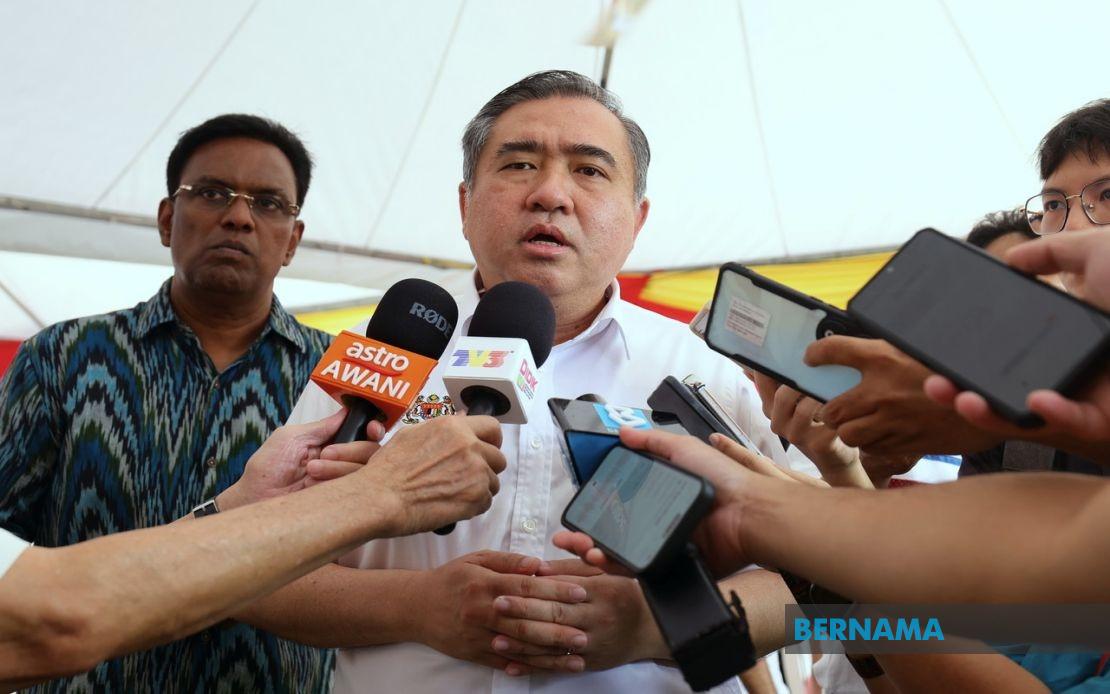
Transport Minister Anthony Loke has allocated RM100,000 to Kampung Bukit Temiang as part of the government's MADANI Adopted Village Programme, marking another step in the administration's strategy to engage directly with rural communities. The financial commitment comes from dual sources: RM50,000 provided by the Railway Assets Corporation, a subsidiary of the Transport Ministry, and an equivalent RM50,000 derived from Loke's own allocation as Member of Parliament for Seremban. This funding arrangement underscores how the initiative operates through multiple institutional channels rather than relying solely on central government coffers.
The deployment of these resources will proceed through the Federal Village Development and Security Committee, which serves as the implementation mechanism for grassroots infrastructure improvements across the nation. Rather than imposing predetermined projects upon the village, the development strategy prioritises resident consultation, allowing community members to articulate their specific needs before construction and repair work commences. This consultative approach represents a departure from top-down developmental models that historically characterised rural upgrading programmes in Malaysia.
Among the priority undertakings identified during engagement with Kampung Bukit Temiang residents are the rehabilitation and modernisation of the community hall, which typically functions as the venue for local gatherings, cultural events, and administrative meetings. Structural repairs to residential properties, particularly roof replacement and restoration, address immediate housing concerns that affect living standards. Equally significant is the planned enhancement of the drainage infrastructure, a critical investment that mitigates flood risk during monsoon seasons and improves public health by preventing waterborne disease transmission.
Loke articulated the flexibility inherent in how these funds may be deployed, explaining that the Railway Assets Corporation will undertake certain works independently whilst the Village Development Committee may either organise community-led gotong-royong initiatives or engage qualified local contractors. This dual mechanism permits project adaptation to local circumstances, enables capacity building within villages through collective labour, and supports the local economy by directing contracts toward neighbourhood tradespeople. Such flexibility enhances community ownership of development outcomes.
The MADANI Adopted Village Programme reflects the broader governmental philosophy under Prime Minister Datuk Seri Anwar Ibrahim's administration, which emphasises direct ministerial engagement with communities rather than bureaucratic distance. By requiring each ministry to adopt and actively develop a village, the initiative creates accountability mechanisms and ensures that government agencies remain cognisant of grassroots realities. This structural approach aims to bridge the traditional gap between policymakers in the capital and ordinary residents in peripheral areas.
Beyond village-level infrastructure development, the Transport Ministry has simultaneously advanced the National MADANI Taxi Renewal Programme through an additional RM10 million allocation announced by Prime Minister Anwar Ibrahim in early July. This complementary funding augments the RM10 million initially committed in Budget 2026, bringing total dedicated resources to RM20 million for the current fiscal year. The government's decision to increase allocation reflects robust uptake from the taxi sector, suggesting that drivers perceive genuine value in the vehicle replacement and modernisation opportunities presented.
The Taxi Renewal Programme extends considerably beyond simple vehicle financing, constituting instead a comprehensive ecosystem addressing multiple dimensions of driver welfare and industry sustainability. Transport Ministry engagement includes briefing sessions that acquaint operators with preferential financing arrangements, revenue-generation opportunities through regulatory partnerships, social protection entitlements, and administrative processes for permit acquisition. This educational component ensures drivers understand the complete scope of available benefits rather than viewing the programme narrowly as equipment replacement.
A particularly significant aspect involves the government's deliberate recalibration of the relationship between traditional taxi services and emerging e-hailing platforms. Rather than framing these sectors as inherent competitors requiring regulatory protectionism, the ministry articulates a vision wherein ride-sharing applications and conventional taxis operate as complementary service providers serving distinct market segments and customer preferences. Under this framework, technology platforms may generate supplementary income for taxi drivers by providing surge-pricing opportunities or diversified work arrangements, potentially enhancing rather than threatening earnings sustainability.
Loke has specifically appealed for comprehensive stakeholder collaboration spanning government agencies, taxi associations, financial institutions, vehicle manufacturers, and e-hailing operators, characterising such cooperation as indispensable for programme efficacy. This multi-actor engagement model recognises that taxi industry modernisation involves interdependent challenges spanning vehicle financing, driver training, regulatory compliance, customer service, and technological adaptation. No single institution commands sufficient resources or expertise to address these dimensions unilaterally.
The Land Public Transport Agency and Ministry of Transport have committed to sustained engagement ensuring smooth implementation and achievement of the programme's intended outcomes, which encompass improved driver livelihoods, enhanced road safety through vehicle modernisation, and long-term viability of the taxi sector amid technological disruption. This commitment signals that the government views the programme as fundamental to preserving livelihoods in an economically vulnerable occupation whilst simultaneously advancing transport sector modernisation.
The dual focus on village-level infrastructure and taxi industry renewal illustrates how the MADANI framework spans economic classes and geographic contexts, addressing both rural development deficits and urban transport sector challenges. For Malaysian policymakers, the initiatives demonstrate an attempt to move beyond centralised, standardised developmental prescriptions toward tailored, stakeholder-informed programmes. The success of these approaches will significantly influence public perception of governmental responsiveness and may establish templates for similar initiatives across Southeast Asia, where analogous tensions between modernisation pressures and livelihood protection similarly confront regional governments.

