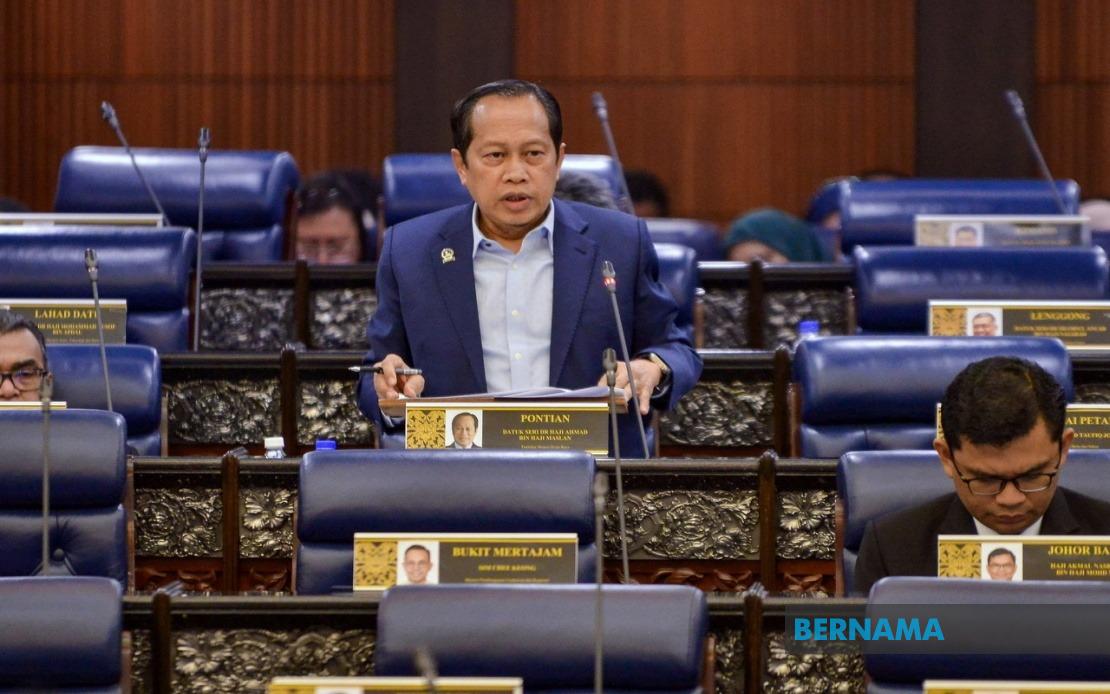
The federal government has released RM1.2 billion in land compensation payments for the Sabah Pan-Borneo Highway Phase 1 Project, according to Deputy Minister of Works Datuk Seri Ahmad Maslan. The corresponding allocation for the Sarawak section of the ambitious infrastructure initiative stands at RM737 million. These payments represent a comprehensive commitment by Kuala Lumpur to protect landowners from financial hardship, with the government absorbing the full burden of compensation alongside associated administrative and loss-recovery expenses.
The substantial compensation figures come as the Sabah PBH Phase 1 has undergone significant cost restructuring. The project's overall budget has swelled to RM24.889 billion, a dramatic departure from the RM12.86 billion initially projected in 2015. This near-doubling of expenditure reflects fundamental changes in project delivery methodology and technical requirements accumulated over nearly a decade of implementation. During parliamentary questioning on the matter, Ahmad Maslan attributed the escalation to the government's 2019 decision to terminate the Project Delivery Partner model and transition to a Federal Conventional Contractor framework.
The pivot away from the PDP model, undertaken ostensibly in the national interest, necessitated a comprehensive reassessment of all remaining construction work and project scope. The original assessment parameters, formulated in 2015, no longer aligned with the evolving technical demands and practical conditions encountered on the ground. This fundamental recalibration meant that engineers and project planners had to evaluate the entire undertaking through fresh lenses, accounting for five additional years of experience and changing circumstances.
Technical considerations significantly influenced the cost expansion. Ahmad Maslan pointed to scope and design modifications, complex geotechnical structures, and extensive soil treatment requirements as major contributors. The relocation of utilities on a large scale—encompassing power lines, telecommunications networks, water pipelines, and other essential services—demanded substantial investment and careful coordination. These geotechnical and utility factors alone can transform project economics, particularly across the challenging terrain of Sabah where ground conditions vary considerably and infrastructure density has historically been lower than peninsular regions.
The project's financial structure reveals a bifurcated approach. Phase 1A comprises 16 work packages valued at RM10.9 billion, while Phase 1B encompasses 19 work packages totalling RM13.989 billion. This subdivision allows for phased delivery and staged resource allocation, potentially enabling earlier completion of critical sections while later phases continue development. The unequal distribution of work packages and budget between phases suggests different complexity levels and geographic spread across the northern and central Sabah corridor.
Global and domestic market dynamics have materially impacted construction costs. Ahmad Maslan specifically identified inflation and the rising prices of key materials—iron, bitumen, and cement—as significant cost drivers. These commodities face volatile international pricing influenced by supply chain disruptions, geopolitical tensions, and fluctuating demand from major construction economies. Malaysia, as a net importer of several critical construction materials, finds itself particularly susceptible to these global price movements. Additionally, machinery and labour costs have escalated, reflecting both inflationary pressures and the increased difficulty of securing skilled workers in remote Sabah locations.
The land compensation mechanism itself warrants scrutiny within the Malaysian development context. By guaranteeing full compensation alongside administrative costs and loss recovery, the government signals commitment to mitigating displacement impacts—a critical consideration for rural Sabahan communities whose livelihoods may depend on affected land. However, the adequacy of RM1.2 billion across Sabah and RM737 million across Sarawak remains difficult to assess without knowing the total number of affected landowners and the acreage involved. These figures must be considered alongside the vastly larger infrastructure investment, raising questions about proportionality and whether compensation truly matches replacement value and opportunity costs for affected communities.
The Pan-Borneo Highway represents one of Malaysia's most ambitious contemporary infrastructure projects, with implications extending far beyond simple road construction. For Sabah and Sarawak, improved connectivity promises to facilitate economic integration, enhance trade flows, and unlock development potential in presently peripheral regions. The federal investment signals long-term commitment to East Malaysian development, though the cost escalation raises legitimate questions about planning rigour and risk management in complex infrastructure delivery. For Malaysian taxpayers and federal finances, the RM24.889 billion represents a substantial commitment that must deliver proportionate economic returns and developmental benefits.
The experience with the Pan-Borneo Highway offers instructive lessons about large-scale infrastructure project management in Malaysia. The 2019 pivot from the PDP model to conventional contracting suggests dissatisfaction with private-sector delivery mechanisms, yet the subsequent cost escalation indicates that public-sector management also encountered significant challenges. This pattern mirrors international infrastructure experiences, where mega-projects frequently experience cost overruns regardless of delivery methodology. Future Malaysian infrastructure initiatives may benefit from more conservative initial budgeting, more rigorous technical due diligence, and clearer risk-allocation frameworks that prevent cost surprises from falling disproportionately on public finances.
For Sabahan and Sarawakian stakeholders, the government's commitment to comprehensive compensation provides some reassurance, though transparency regarding how compensation amounts were determined would strengthen public confidence. The broader infrastructure benefits—improved road networks, enhanced connectivity between population centres, and accelerated economic opportunities—may ultimately justify the elevated costs if implementation timelines remain realistic and construction quality meets standards. However, continued parliamentary oversight and public accountability regarding progress, spending, and delivery schedules remain essential to ensuring that this substantial federal investment achieves its intended developmental objectives.

