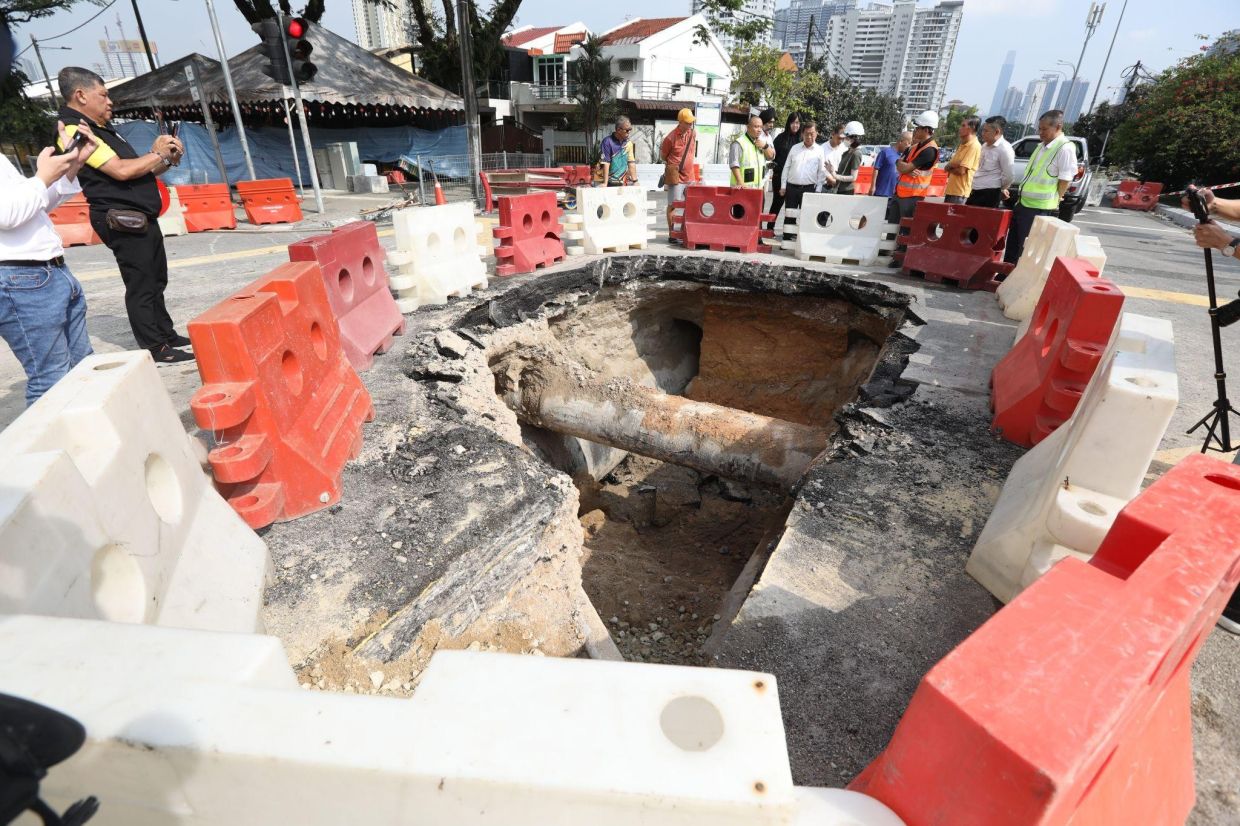
As Malaysia grapples with intensifying rainfall and unpredictable weather patterns, sinkholes have emerged as a growing concern threatening both public safety and urban infrastructure. The problem reflects a broader vulnerability in the nation's underground utility networks, where multiple forces converge to create dangerous subsurface conditions. Understanding the mechanics behind these sudden collapses—and what authorities are doing to prevent them—is critical for communities already experiencing the fallout from extreme weather events.
Sinkhole formation is fundamentally a complex interplay of geological, hydrological, and infrastructural factors. Natural variations in soil composition and rock layers interact with ground-water dynamics, while human activities such as construction and the physical condition of underground assets compound the risk. Each sinkhole event presents unique circumstances that demand detailed forensic investigation to pinpoint root causes. However, the overarching narrative across Malaysia points to a pattern: ageing infrastructure meeting increasingly violent weather systems. The convergence creates conditions where what was once an acceptable risk profile becomes genuinely hazardous.
Indah Water Konsortium, the national sewerage operator, manages an enormous asset base spanning approximately 22,500 kilometres of public sewer pipelines nationwide. Within this vast network, particular vulnerability concentrates in the larger trunk sewers—those reinforced concrete pipes measuring 600 millimetres in diameter and above. These critical conduits typically operate at or near maximum capacity, channelling sewage at high velocities while simultaneously accumulating hydrogen sulphide gas over extended periods. This chemical environment accelerates concrete degradation, systematically weakening structural integrity and creating conditions for eventual failure. In essence, the system's very effectiveness during normal operations paradoxically increases the rate at which infrastructure deteriorates.
To combat this deterioration, IWK has adopted a systematic, risk-based asset management philosophy that emphasises preventive intervention rather than reactive repair. The operator conducts regular condition assessments of critical sewer assets employing cutting-edge inspection methodologies. Ground Penetrating Radar technology penetrates subsurface layers to reveal hidden structural defects, while Closed-Circuit Television crawler inspections provide detailed visual documentation of internal pipe conditions. Push rod cameras and pole cameras serve as complementary tools, each suited to specific site circumstances and operational constraints. This technological arsenal enables IWK to develop a comprehensive picture of asset health before catastrophic failure occurs.
When inspection findings reveal deterioration, IWK proceeds with targeted rehabilitation using modern trenchless technologies—methods that restore structural integrity without requiring extensive excavation that would disrupt urban areas. Sewer lining techniques essentially create a new structural barrier within failing pipes, while strategic replacement of severely defective sections restores full functionality. These interventions directly address the risk chain leading to sinkholes: they eliminate structural weaknesses that allow ground movement, prevent the pressurisation that triggers pipe failure, and crucially, prevent the formation of underground voids that collapse into surface sinkholes.
According to IWK Chief Executive Officer Narendran Maniam, the relationship between extreme weather and underground infrastructure has become unmistakably clear. Heavy rainfall destabilises ground by inducing soil saturation, which causes ground shifting capable of displacing or misaligning sewer pipes. This displacement creates blockages and fractures that compromise system integrity. Simultaneously, intense rainfall dramatically increases hydraulic pressure within sewer lines—a surge that can crack or burst pipes, necessitating complete replacement rather than simple repairs. The compounding effect matters: saturated ground loses structural strength precisely when ageing sewer pipes face maximum internal pressure, creating optimal conditions for failure.
The catastrophic scenario unfolds when pressurised, damaged pipes leak, allowing surrounding soil to be progressively washed away. As these underground voids expand, the surface loses support, and ground above suddenly collapses. What begins as a pipe failure underground transforms into a dramatic surface hazard—sinkholes that endanger public safety, damage roads, and threaten nearby infrastructure. Heavy rainfall also introduces water infiltration through cracks, joints, and maintenance access points, overwhelming sewer networks designed for sewage rather than stormwater. Older pipes prove especially vulnerable to this added burden, shifting and deteriorating as they were never engineered to handle combined loads.
Recognising these vulnerabilities, IWK recently conducted a comprehensive crisis simulation exercise at its Asian Sewerage Training, Research & Innovation Centre of Excellence facility. The scenario depicted a major sinkhole involving casualties and suspected damage to a large sewer pipeline—precisely the emergency that authorities most fear. The simulation tested emergency response procedures from initial crisis notification through operational team mobilisation and inter-agency coordination with the Fire and Rescue Department, Royal Malaysia Police, and other relevant organisations. Beyond simply running through procedures, the exercise validated communication protocols and decision-making frameworks during high-stress circumstances when clarity and coordination directly impact public safety outcomes.
Narendran noted that the simulation enabled IWK to evaluate response effectiveness, strengthen coordination mechanisms between internal teams and external agencies, and refine decision-making processes under crisis conditions. Critically, the exercise produced documented findings that now inform enhancement of crisis management protocols. Standard operating procedures became more detailed and accessible to staff, ensuring employees understand individual roles and broader organisational response architecture. This institutional learning proves invaluable—when actual emergencies strike, personnel operate within established frameworks rather than improvising under pressure.
The simulation operated in a controlled environment without involving actual emergency incidents, yet its value extends beyond the immediate exercise period. Findings directly feed into refinements of IWK's crisis management plans, essentially converting a rehearsal into actionable intelligence about genuine response capability and improvement opportunities. As extreme weather events accelerate in frequency and intensity, preparation becomes increasingly important. IWK's commitment to continuous planning, regular training, and collaborative relationships with emergency agencies reflects recognition that infrastructure resilience ultimately depends on organisational readiness and inter-agency cohesion.
For Malaysian communities and policymakers, these developments underscore a fundamental reality: climate change and extreme weather patterns demand that critical infrastructure operators adopt proactive, technology-enabled asset management approaches rather than deferring maintenance until failures occur. IWK's comprehensive risk assessment programme, investment in advanced inspection technologies, and commitment to emergency preparedness represent a necessary evolution in how water utility operators respond to environmental challenges. The scale of IWK's network—22,500 kilometres of pipes—means that even systematic progress addresses only a portion of national sewer infrastructure in any given year. Sustained investment and political support for modernisation programmes remain essential if Malaysia's underground infrastructure is to withstand the intensifying weather threats ahead.
Ultimately, the sinkhole problem encapsulates broader infrastructure vulnerabilities across Southeast Asia as climate impacts accelerate. Malaysia's experience—and IWK's measured response combining technology, training, and cross-agency coordination—offers instructive lessons for neighbouring countries facing similar pressures on aging utility networks. The challenge extends beyond individual operators to encompass national infrastructure strategy, climate adaptation policy, and financing mechanisms capable of sustaining the comprehensive asset management programmes that modern conditions demand.

